


More than 530 US counties now restrict data center construction as states claw back tax exemptions for Amazon, Meta, and Google facilities, with 69 percent of Americans opposing nearby AI infrastructure.
More than 530 US counties now restrict data center construction as states claw back tax exemptions for Amazon, Meta, and Google facilities, with 69 percent of Americans opposing nearby AI infrastructure.
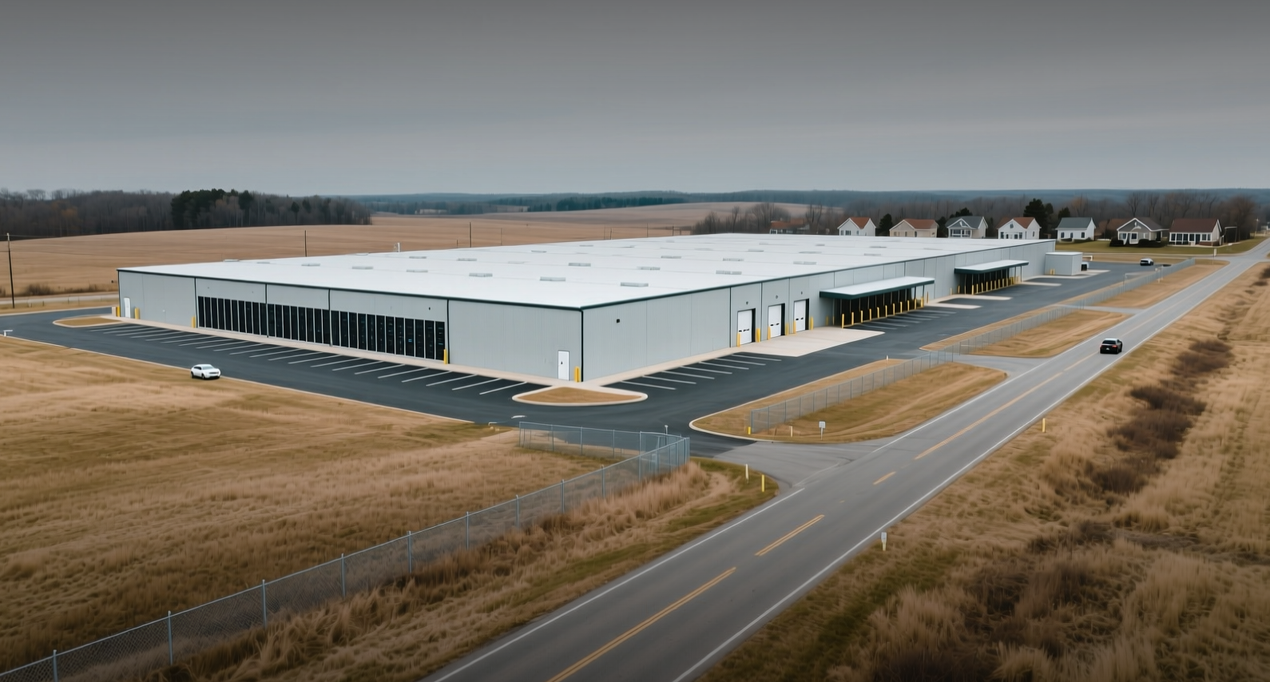
A wave of state governments is dismantling the tax incentive packages that lured Amazon, Meta, and Google to build data centers across the United States, clawing back exemptions worth billions of dollars as local opposition to AI infrastructure reaches a political tipping point. The rollbacks reverse a decade of interstate competition that used property tax abatements, sales tax waivers, and income tax credits lasting up to three decades to attract hyperscale facilities — and they now threaten to raise the effective cost of cloud operations for the three largest providers.
"Communities were sold on data centers as economic development engines, but the promised jobs never materialized at the scale advertised, while the power and water costs became impossible to ignore," said Dawn Vogel, a Republican county supervisor in Virginia who backed a local moratorium on new facilities this year. "You can have all the data you want in the world, but if you don't have water to drink, you don't have humans to use the data."
The reversal is broad-based. New York Governor Kathy Hochul ordered a one-year pause on new hyperscale data centers, while Texas Governor Greg Abbott froze several pending projects pending a required audit. Heatmap Pro data shows more than 530 counties and municipalities have restricted or banned data center construction, and at least 20 proposed projects representing nearly $42 billion in investment were canceled in the first quarter of 2026 after public backlash. Ohio Senator Jon Husted, an early champion of data center development, introduced legislation this year requiring operators to cover added electricity and water costs.
The political shift tracks a collapse in public support. A Decision Desk poll conducted by SurveyMonkey found 69 percent of Americans oppose data center construction near their homes, with 45 percent strongly opposed. Separate research from Heatmap Pro and Embold Research, surveying 2,045 registered voters in August, found 75 percent opposed building a facility near their community, while only 4 percent strongly supported one — down from 13 percent a year earlier. Opposition cuts across party lines: Republicans register 43 percentage points net negative, independents 65 points negative, and Democrats 75 points negative.
The financial stakes for Amazon, Meta, and Google are substantial. States competed aggressively for data center investment over the past decade, offering exemptions from property taxes, sales taxes on equipment, and in some cases income tax credits that can run for 20 to 30 years. The Wall Street Journal reported that the combined value of these incentives runs into the billions of dollars across affected states. Removing them increases the effective cost of operating hyperscale facilities, which already face rising electricity prices — the independent market monitor for PJM Interconnection, the largest U.S. power grid operator, reported data centers drove a 76 percent increase in energy costs.
The rollbacks arrive as the three hyperscalers are committing unprecedented capital to AI infrastructure. Tech companies are on track to spend roughly $700 billion on AI infrastructure in 2026, with nearly 50 percent of corporate bond issuance this year coming from AI companies, according to the Wall Street Journal. Meta announced 8,000 layoffs in April tied to its generative AI investments. Any increase in data center operating costs from lost tax benefits would compress net margins on cloud services at a time when investors are already scrutinizing the return on AI capital expenditure.
President Donald Trump has pushed back against the local opposition, writing on Truth Social that communities rejecting data centers risk "ending up backwards and poor." But the resistance has proven durable across the political spectrum, with local officials from both parties backing moratoriums and restrictions. Developers are responding by shifting projects from contested sites in Wisconsin and Oregon to states like New Mexico and Texas that remain more welcoming, though those states often have weaker environmental standards and greater water scarcity.
The regulatory trend raises a structural question for Amazon Web Services, Google Cloud, and Microsoft Azure — the three dominant cloud platforms that together control more than 60 percent of global cloud infrastructure spending. Tax incentives were a material factor in site selection decisions, and their removal could push future capacity toward states that still offer exemptions or toward overseas markets. Companies may also need to reassess forward capital expenditure guidance if the trend accelerates, since property tax liabilities on hyperscale facilities can run into the tens of millions of dollars annually per campus.
For investors, the key variable is whether the rollbacks remain localized or spread to additional states. If more states follow New York and Texas, the cumulative impact on hyperscaler operating margins could become visible in quarterly results within the next two to three reporting cycles. The last comparable shift came in the early 2000s, when states began clawing back internet tax exemptions, but the scale of today's data center incentives — and the concentration of ownership among three companies — makes this reversal materially larger in dollar terms.
This article is for informational purposes only and does not constitute investment advice.
