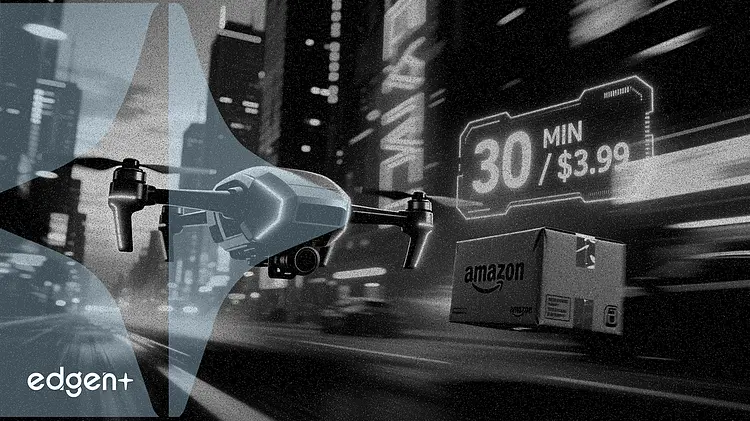
Amazon is shrinking the delivery window to 30 minutes, creating a new front in the retail speed war for a fee that undercuts many competitors.
Amazon.com Inc. is expanding its 30-minute delivery service to dozens of U.S. cities, intensifying the logistics arms race it began more than two decades ago and directly challenging the speed of local commerce rivals like Instacart and DoorDash. The service, named Amazon Now, aims to capture the highest-urgency consumer purchases for a fee that starts at just $3.99 for Prime members.
"Amazon Now is for when you need or want the convenience of getting your Amazon order delivered in 30 minutes or less,” Udit Madan, SVP of Amazon Worldwide Operations, said in a statement. “With thousands of items available for ultra-fast delivery, you can get everything from groceries for dinner, to AirPods before a flight, to household essentials like laundry detergent or toothpaste delivered right to your door.”
The service is now available in cities including Atlanta, Dallas-Fort Worth, Houston, Phoenix, and Orlando after initial pilots in Seattle and Philadelphia. Prime members pay a $3.99 delivery fee, while customers without a Prime membership pay $13.99. A small order fee of $1.99 for Prime members and $3.99 for non-members applies to orders below $15, according to the company.
This move leverages Amazon's vast logistics network to create a new, potentially high-margin revenue stream while further locking customers into its Prime ecosystem. For competitors like Walmart and Target, which have invested billions in their own delivery networks, Amazon's 30-minute benchmark raises the bar and threatens to increase operational costs across the retail sector as consumer expectations for speed accelerate.
A New Logistics Model
The speed of Amazon Now is made possible by a network of smaller, local fulfillment locations strategically placed within dense urban and suburban areas. This model is a departure from the company's sprawling fulfillment centers typically located on the outskirts of cities, which are designed for massive inventory and next-day or two-day shipping. By positioning inventory closer to the customer, these micro-fulfillment sites dramatically reduce the distance and time required for the final-mile delivery.
The selection includes thousands of items, spanning fresh groceries like produce and milk, household essentials, electronics, and over-the-counter medicines. This positions Amazon Now not just against other grocers, but also against convenience stores and local shops, consolidating a wide range of immediate needs into a single, ultra-fast delivery platform.
Reshaping Consumer Expectations
Amazon has a long history of redefining consumer expectations for delivery speed. The introduction of two-day shipping with Prime was a foundational shift for e-commerce. This was followed by next-day and same-day delivery, each step forcing competitors to adapt. The launch of a 30-minute option represents the next logical, albeit technologically and logistically complex, frontier in this battle.
The $3.99 fee for Prime members is particularly aggressive. It puts pressure on services like Instacart, whose priority delivery fees can be significantly higher, and DoorDash, which has been expanding its own non-restaurant retail delivery. Amazon is betting that the convenience of 30-minute access to thousands of products is a service worth paying for, turning logistics from a cost center into a premium, revenue-generating product. For Amazon shares, trading at over 50 times trailing earnings, demonstrating new avenues for growth and margin expansion is critical. This service could add billions in incremental, high-margin revenue if adopted at scale, while forcing competitors like Walmart (WMT) and Target (TGT) to either invest heavily to keep pace or risk losing their most time-sensitive customers.
This article is for informational purposes only and does not constitute investment advice.