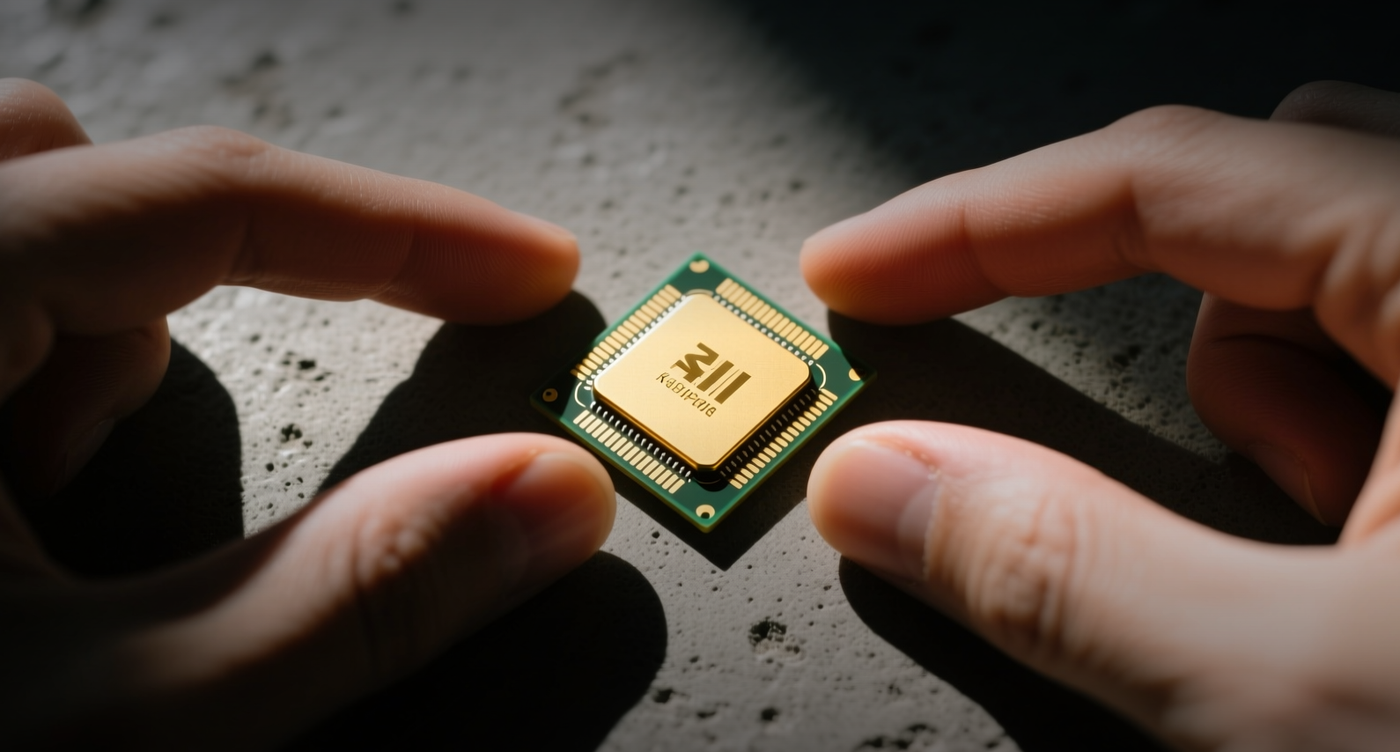
Some of the biggest winners from the artificial intelligence boom are falling out of favor as investors brace for a sharp deceleration in the near-trillion dollar data center spending cycle.
The parabolic rally in AI chipmakers has hit turbulence as concern builds over valuations and the sustainability of their bumper revenues. UBS estimates hyperscaler capital expenditure will surge 76% this year to $673 billion, but growth will slow to 25% in 2027 and just 6% in 2028 — a trajectory that has prompted some active managers to quietly rotate out of semiconductor stocks and into the very companies footing the infrastructure bill.
"We have a massive underexposure to semis right now," said Alexis Bossard, global equity portfolio manager at Edmond de Rothschild Asset Management, who has cut his chip holdings and increased positions in Amazon. He is also favoring areas such as liquid cooling, cybersecurity and selected software firms. "Once they stop increasing their capex, it will definitely be a relief for hyperscalers and a negative signal for the semi industry."
The Philadelphia Semiconductor Index, whose top holdings include Nvidia, Broadcom, Micron, ASML and TSMC, has more than doubled over the past year even after a near-18% drop from its June peak. Bank of America's July fund manager survey found 82% of respondents viewed semiconductors as the most crowded trade, with none reporting a short position. Morningstar data showed chip-focused funds attracted a record $10 billion in net inflows through May.
The question facing investors is how to position if AI spending remains strong but no longer accelerates fast enough to support the expectations embedded across the infrastructure trade. A growing mismatch between moderating capex growth and lofty revenue projections for chipmakers and equipment suppliers suggests something will have to give, according to Empirical Research.
The Rotation Underway
LFG+ZEST Chief Investment Officer Alberto Conca has sharply reduced positions in memory-chip and equipment makers while building stakes in hyperscalers and healthcare stocks, backing that view with put options on selected semiconductor names. He argues that cash flow at the largest tech companies is being almost completely drained by capital spending, which will force greater discipline on future investment.
"Cash flow is starting to be almost completely drained by capex," Conca said, noting that hyperscalers are increasingly turning to external financing. Apollo Chief Economist Torsten Slok observed that cover ratios — a measure of investor demand for corporate bonds relative to supply — have fallen to below two times in July from nearly five times in February, signaling waning appetite for Big Tech debt.
The Basel-based Bank for International Settlements warned in June that disappointment in returns from AI infrastructure could trigger a sudden pullback in financing, turning the capex boom into a protracted bust.
Not Everyone Is Convinced the Party Is Over
DWS senior portfolio manager Madeleine Ronner expects earnings-season commentary from hyperscalers to remain supportive of further investment. Her firm has taken some profits in semiconductor stocks after their strong run but remains overweight the sector, with certain funds adding industrial and electrical equipment exposure following the pullback.
Fidelity Investments Director of Global Macro Jurrien Timmer compared recent pullbacks to the periodic corrections seen during previous tech booms, noting that leading stocks during the late-1990s internet rally suffered repeated 20% to 30% declines before resuming their advance. "The AI story is well known, it's ongoing, the earnings are still supporting the trend," he said.
Still, Timmer believes investors should diversify, noting that beneficiaries of AI adoption such as financials may increasingly matter alongside beneficiaries of AI construction. "I want to participate in the boom, but I also want to protect myself in case that boom is overdone," he said.
TSMC, the world's largest contract chipmaker and a bellwether for the industry, reported a record net profit of 706.6 billion new Taiwan dollars ($22 billion) for the April-June quarter, up 77% from a year earlier. The company raised its annual revenue forecast to slightly above 40% growth from a prior estimate of over 30% and increased its 2026 capital expenditure budget to as much as $64 billion. Chief Executive C.C. Wei said AI-related demand globally continues to be "extremely robust" and should remain strong through 2029 or 2030.
Yet even as TSMC's results underscore the depth of current demand, the forward-looking signals from the capex cycle are shifting. Applied Materials told investors its semiconductor equipment business will grow more than 30% in calendar 2026 — an upward revision from a prior forecast of 20% — but that pace of expansion is unlikely to persist as hyperscaler budgets normalize. The equipment maker's shares have surged 124% year to date.
Growing local opposition to data center construction could also stall spending. New York this month became the first U.S. state to impose a one-year moratorium on large new data centers, as concerns mount over power costs, water supplies and community burdens. Empirical Research estimates about 70% of projects face some degree of pushback.
For investors, the divergence between chipmakers and hyperscalers is becoming a defining portfolio question. Nvidia shares trade at roughly 35 times forward earnings after a more than doubling over the past year, while Amazon trades at about 22 times forward earnings. If capex growth slows as projected, the margin relief for hyperscalers could make them the better bet — but only if the AI demand that justified the buildout in the first place continues to materialize.
This article is for informational purposes only and does not constitute investment advice.