

Anthropic's $2 trillion IPO hinges on cutting inference costs — and the company just hired the engineer who built Google's TPU program.
Anthropic's $2 trillion IPO hinges on cutting inference costs — and the company just hired the engineer who built Google's TPU program.
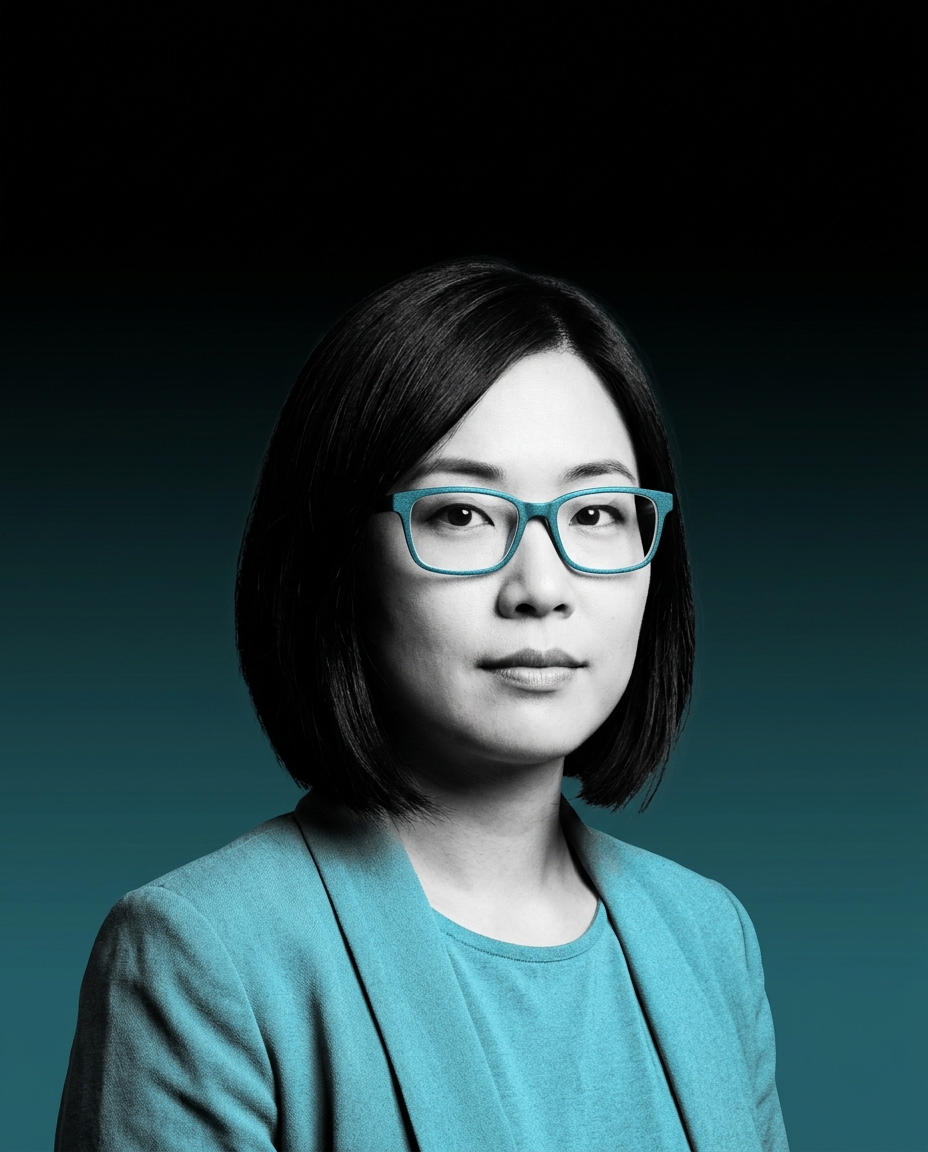
Anthropic hired Amir Salek, founder of Google's TPU chip program, to lead in-house silicon design as it races toward a $2 trillion IPO and seeks to cut an estimated $19 billion annual compute bill.
"This is the most important investment in computing we've made to date," Chief Financial Officer Krishna Rao said, as the company's inference infrastructure gross margin jumped from 38 percent to more than 70 percent in the past year.
Salek spent eight years at Nvidia building system-on-a-chip designs before Google recruited him in 2013 to create its custom silicon division from scratch. He oversaw seven generations of TPUs through 2022 — the chip line that still anchors Google's AI infrastructure and that Anthropic itself rents at scale. The hire lands alongside a $250 million procurement agreement with London-based Fractile, expanded Google and Broadcom partnerships locking in roughly 3.5 gigawatts of next-gen TPU capacity for 2027, and exploratory joint hardware design talks with Samsung.
The dual-track strategy — in-house design plus diversified external procurement — targets the structural cost problem at the heart of Anthropic's IPO math. Annualized revenue has reached $65 billion, with second-quarter preliminary revenue of $11.5 billion up more than 14-fold year over year. But gross margins of 40 percent trail the 77 percent target the company has told investors it needs before listing. Every percentage point of inference cost reduction translates into hundreds of millions of dollars in annual savings at current scale.
The TPU Architect's Second Act
Salek's resume reads like a template for what Anthropic is trying to build. At Nvidia he founded and led a system-on-a-chip design group working on GPU and Tegra processors. Google hired him in 2013 to start its custom silicon effort from the ground up, and he ran that division for nearly a decade, delivering the first seven generations of TPUs along with Edge TPU and other specialized chips. Since leaving Google in 2022, he has been a senior managing director at Cerberus Capital Management, investing in semiconductor and AI companies.
In his new role at Anthropic, Salek will report to James Bradbury and lead the company's AI custom chip design team. Anthropic confirmed it was assembling this team just over two weeks ago, advertising engineering roles paying up to $485,000 a year.
The hire mirrors a broader industry pattern. OpenAI has partnered with Broadcom on the Jalapeno inference chip. Google DeepMind has long relied on its own TPUs. Meta is advancing its MTIA accelerator line. Anthropic's move to bring chip design in-house puts it in direct competition with these efforts — and with Nvidia, whose GPUs still power the majority of AI training and inference workloads.
Renting Less, Owning More
Anthropic's compute strategy has so far run mostly through outside partners. Google backed a $35 billion chip financing package in June and supplies TPUs directly. AMD followed in July with an investment of up to $5 billion tied to deploying its chips in Anthropic's data centers. The company has separately discussed custom silicon with Samsung and pressed SK Hynix for memory supply.
The Fractile deal is the most aggressive bet yet. Anthropic committed $250 million to a 108-person startup whose chips do not exist yet — they are not expected to ship until 2027. Fractile's memory-compute fusion architecture claims to execute 99.99 percent of inference operations directly in on-chip SRAM, eliminating the data movement bottleneck that dominates GPU inference costs. The deal drove Fractile's valuation from roughly $1 billion in May to $6.5 billion in advanced funding talks.
The multi-supplier posture is not redundancy for its own sake. Each relationship covers a different architectural approach to the inference cost problem. Nvidia GPUs handle existing workloads. Google TPUs provide the backbone under a deal that includes 3.5 gigawatts of capacity from 2027. Amazon Trainium powers Project Rainier. Fractile offers a genuine departure from the HBM-dependent memory hierarchy. And the in-house team gives Anthropic the option to design silicon tailored to its own model architecture.
The stakes extend beyond Anthropic's own cost structure. If the in-house chip program succeeds, it could pressure Nvidia's data center revenue, which reached $62 billion in the most recent fiscal year. It would also strengthen the case for Broadcom and Google's TPU platform as viable alternatives to Nvidia's CUDA software stack. For investors, the question is whether Anthropic can close the gap between its 40 percent gross margin and the 77 percent target before its expected Nasdaq listing — and whether the $2 trillion valuation can hold if it does not.
This article is for informational purposes only and does not constitute investment advice.
