


New York's statewide moratorium and similar state actions have turned permitting into the primary bottleneck on US AI data center deployment, delaying or blocking 75 projects worth $130 billion.
New York's statewide moratorium and similar state actions have turned permitting into the primary bottleneck on US AI data center deployment, delaying or blocking 75 projects worth $130 billion.
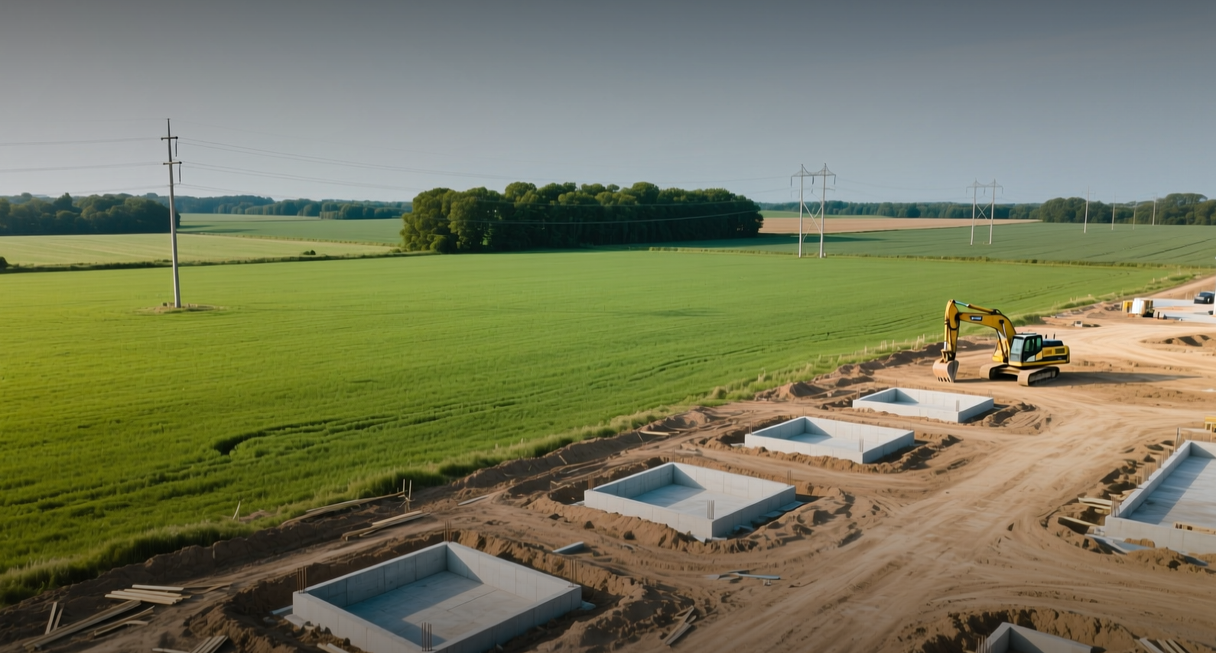
State permitting rules and community resistance have delayed or blocked 75 US data center projects worth about $130 billion, making regulatory approval the new binding constraint on AI compute expansion after chips and power.
"Permitting is becoming the next core bottleneck for AI infrastructure," Barclays analysts wrote in a research note, citing Gallup polling that found 71 percent of Americans oppose data center construction near their homes — a higher share than the 53 percent who oppose nuclear plants.
New York Gov. Kathy Hochul issued a statewide moratorium on new hyperscale data centers in July 2026, the first such pause in the country. Virginia Gov. Abigail Spanberger now requires data centers to pay for transmission infrastructure serving their facilities rather than spreading costs across ratepayers. Texas Gov. Greg Abbott and Pennsylvania Gov. Josh Shapiro have issued executive orders tightening interconnection and permitting review.
The stakes are enormous. Oracle, Meta, Google, Amazon and Microsoft are investing more than $700 billion in US data center projects this year, according to the Associated Press, and every month of permitting delay tightens AI compute supply and raises costs for hyperscalers and their customers.
The political heat starts with the power bill. On the PJM grid, which covers all or parts of 13 states and Washington, D.C., the independent market monitor found that current and projected data center demand raised capacity costs by $9.3 billion for the 2025-26 delivery year — a 174 percent increase versus a scenario without that demand. Residential electricity prices rose 12 percent nationally in the first quarter of 2026 versus the same period in 2024, with Washington state up 24 percent and Virginia and Pennsylvania each up 17 percent.
Barclays pushed back on the argument that data centers lower rates by spreading fixed grid costs across a larger customer base. That logic holds only when generation and transmission capacity has spare room, which is rarely the case in the regions where hyperscalers are building. Data center cooling demand peaks in summer, overlapping with air-conditioning load, so incremental demand typically requires new dispatchable generation and transmission upgrades rather than use of idle capacity.
The affordability issue has become a midterm election flashpoint. Politico, citing an AdImpact review, reported that more than 100 campaign ads this cycle have mentioned data centers, and none of the candidate-run spots it reviewed presented the infrastructure positively. The National Republican Senatorial Committee has warned AI companies that data center backlash could threaten a key Senate seat in Ohio.
Barclays grouped state data center governance into six categories, revealing a patchwork that makes permitting risk highly localized. West Virginia passed the Power Production and Consumption Act in 2025, limiting local government authority over qualifying high-impact data centers and moving primary approval power to the state. Maine's legislature passed a similar moratorium that Gov. Janet Mills vetoed, while proposals in Minnesota, New Hampshire, Oklahoma and South Dakota failed to advance.
In mixed state-local regimes, Texas, Ohio and Pennsylvania leave primary zoning authority with local governments, but state agencies increasingly shape project outcomes through grid planning, interconnection requirements and ratepayer protection policies. Louisiana Gov. Jeff Landry issued an executive order in June requiring data center companies to fully fund their electricity needs to qualify for state tax exemptions, even as the state advances four major projects including Meta's $50 billion facility in Richland Parish and Amazon's $12 billion development in Shreveport-Bossier.
President Donald Trump has weighed in forcefully, posting on Truth Social on Aug. 31 that communities opposing data centers "want to end up being backwards and poor." He has pushed a voluntary Ratepayer Protection Pledge that Amazon, Google, Meta, Microsoft, OpenAI, Oracle and xAI signed in March, with the White House saying by July it covered 80 percent of power delivered to US homes and businesses. But the pledge is non-binding and does not address water use, land use, noise or community impact — the issues driving most local opposition.
Hyperscalers are responding with community engagement programs and infrastructure spending. Microsoft launched a "Community First AI Infrastructure" initiative pledging not to raise existing customer rates. Meta's Hyperion campus in Louisiana includes power infrastructure investments expected to save Entergy Louisiana customers about $2.7 billion. The PORTS-Pike technology park in Ohio — a SoftBank, OpenAI, Nvidia and AEP Ohio venture with up to 8 gigawatts of capacity — has committed about $4.2 billion to grid and transmission upgrades.
Barclays cautioned that many of the issues driving local opposition are structural rather than reputational. Even with credible grid upgrade and emissions commitments, electricity prices in many US regions will keep rising for reasons unrelated to any single company's actions. Water disputes involve trade-offs between direct use, indirect upstream consumption and power-sector emissions that are more complex than they appear. And in the current AI arms race, the priority on securing power quickly has pushed cost and emissions control down the list.
Bring-your-own-power models, where developers build dedicated generation, are gaining attention as a way to bypass interconnection queues. But Barclays noted that most hyperscalers still prefer grid connection when available because grid scale and fuel diversity support the 99.999 percent reliability that mission-critical workloads require. Self-generation projects face their own air permits, pipeline capacity and community acceptance risks — the controversy around xAI's Memphis facility is a case study.
For investors, the regulatory geography is becoming a variable in AI infrastructure economics. Microsoft, Amazon, Alphabet and Meta trade at premium multiples on the assumption that their AI buildouts will proceed on schedule. If permitting delays persist, compute scarcity could benefit hyperscalers with secured power access and existing capacity, while raising costs for those still waiting in interconnection queues. A model can improve in a month, but a transmission line or a gas plant usually cannot.
This article is for informational purposes only and does not constitute investment advice.
