


Big Tech's AI infrastructure buildout carries roughly $3 trillion in off-balance-sheet commitments that could strain balance sheets if the AI demand outlook shifts.
Big Tech's AI infrastructure buildout carries roughly $3 trillion in off-balance-sheet commitments that could strain balance sheets if the AI demand outlook shifts.
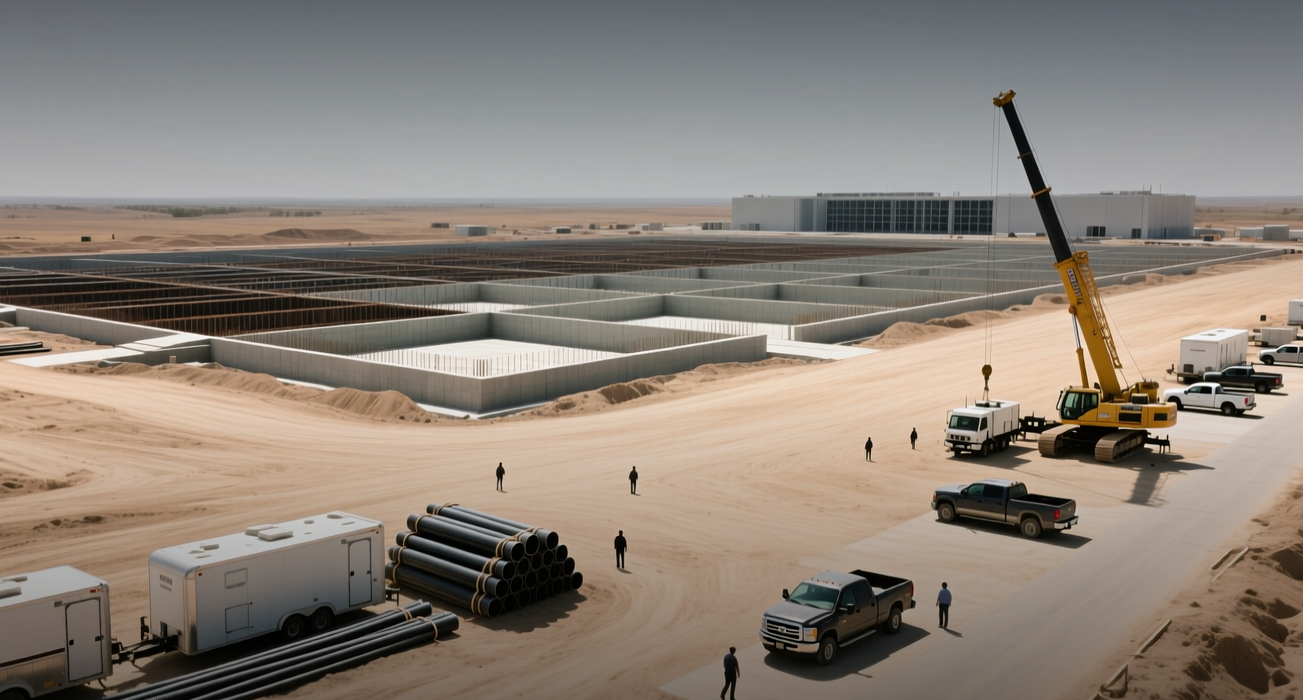
Seven of the world's largest technology companies have committed roughly $3 trillion to AI infrastructure through off-balance-sheet obligations, according to Morgan Stanley, including $1.1 trillion in data center leases that have not yet begun.
"Suppliers and data center developers can borrow against long-dated leases, guarantees, or purchase commitments from investment grade hyperscalers, allowing capacity to be built before the hyperscalers make any payments or recognize liabilities," Morgan Stanley researchers wrote in the analysis.
The hyperscalers — Google, Meta, Microsoft, Oracle and Amazon — have committed $1.1 trillion in payments for data center leases that haven't yet begun. All seven companies, including chipmakers Nvidia and Broadcom, have also agreed to buy $1.7 trillion of chips, memory and networking gear. Google's purchase commitments totaled $707 billion in the most recent quarter, up from $72.5 billion in all of 2025.
These obligations sit on top of an estimated $770 billion in debt and lease obligations already on balance sheets. If AI demand stalls, hyperscalers could face penalties or litigation for canceling contracts, while suppliers like GE Vernova and Vertiv that have built capacity against these commitments would face immediate revenue risk.
How $3 trillion stays off the balance sheet
The off-balance-sheet structure works because investment-grade hyperscalers can guarantee future payments, and suppliers and data center developers can borrow against those guarantees to build capacity before any money changes hands. This financial engineering has accelerated the AI buildout far beyond what traditional balance sheet financing would allow, creating a web of interconnected obligations across the technology supply chain.
Mona Dajani said the AI race will only accelerate, though the lease contracts carry significant risk if the outlook shifts suddenly. The $1.5 trillion in lease obligations alone represents a concentration of financial risk among a handful of companies. These contracts are structured so that even walking away carries a cost — penalties for early termination can run into the billions.
The scale of these commitments has grown rapidly. Google's purchase commitments jumped from $72.5 billion in all of 2025 to $707 billion in the most recent quarter alone. A separate analysis by Nikkei in late July estimated the industry's off-balance-sheet liabilities at $1.65 trillion, putting Morgan Stanley's $3 trillion figure in the same ballpark. The trajectory suggests the total will keep climbing as hyperscalers lock in supply for the next wave of AI infrastructure.
What happens if AI demand cools
The risk is not hypothetical. GE Vernova, which makes natural gas power turbines for data centers, saw orders soar 88 percent last quarter, largely on AI-driven demand. Vertiv, which makes cooling and power management equipment, grew second-quarter sales 24 percent year over year. Both companies have built capacity against hyperscaler commitments that could be canceled, and both saw their shares stumble when The Wall Street Journal first reported on the off-balance-sheet liabilities.
But the contracts themselves provide some protection. Many of these off-balance-sheet commitments are binding agreements that must be honored or resolved through sizable penalties or litigation. And McKinsey's "State of AI in 2026" report found that enterprise AI investments are finally "on the road to ROI," suggesting demand will continue to pull these commitments onto balance sheets as actual spending.
For investors, the key question is whether the $3 trillion in commitments represents a durable multiyear buildout or a high-risk bet that could unwind. GE Vernova and Vertiv shares both remain below analyst consensus price targets and are rated strong buys by the analyst community, but the off-balance-sheet structure means the true exposure is larger than what appears on any single company's financial statements.
This article is for informational purposes only and does not constitute investment advice.
