


Anthropic is designing custom AI chips for Claude, joining OpenAI in a hardware race that could reshape the AI accelerator market.
Anthropic is designing custom AI chips for Claude, joining OpenAI in a hardware race that could reshape the AI accelerator market.
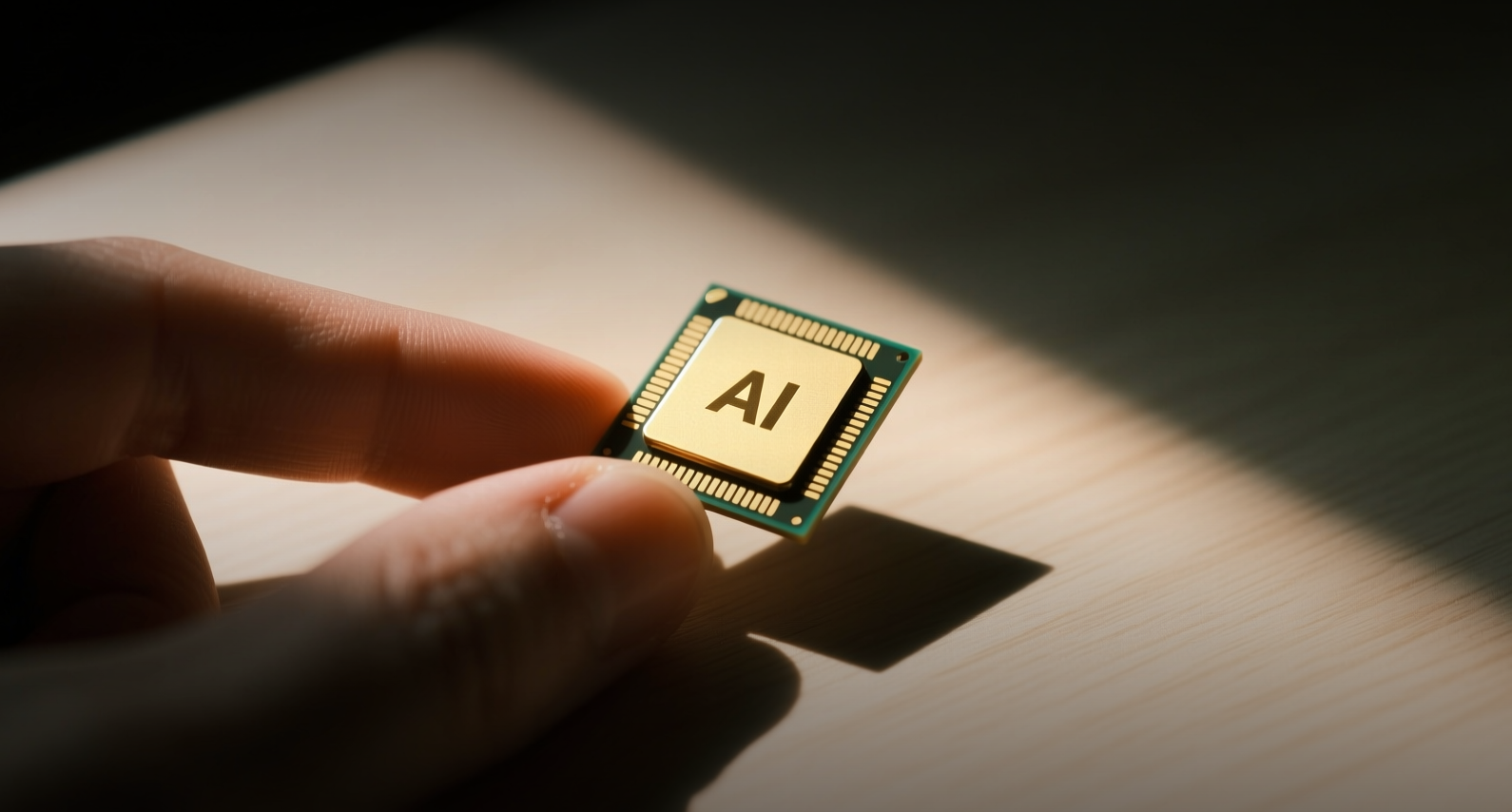
Anthropic is designing custom AI chips for Claude, joining OpenAI in a hardware race that could reshape the AI accelerator market.
Anthropic confirmed it is building an in-house silicon team to design custom chips for Claude, the first public acknowledgment of a plan that could reduce its reliance on Nvidia and AMD accelerators.
"We are building an in-house silicon team to design custom chips for Claude, co-designing hardware and models so Claude runs faster and more efficiently at the scale our customers need," an Anthropic spokesperson said.
The company will adopt a "multi-chip approach" in which hardware from AWS, Google, Nvidia, and AMD remains central to its scaling efforts. A job listing for the "custom silicon team" seeks engineers across semiconductor design and verification domains, offering $320,000 to $485,000 annually. Candidates must demonstrate "direct personal contribution" to the finalization and shipping of semiconductor designs.
The move follows OpenAI's June launch of Jalapeño, a purpose-built chip developed with Broadcom, and shows that leading AI labs are seeking control over their hardware supply chains. For Nvidia, which dominates AI accelerators, the shift toward in-house silicon could pressure its data center revenue over the long term.
The job listing offers a window into Anthropic's ambitions. "This is a role for someone who has shipped silicon, has a realistic relationship with schedules, and is comfortable making consequential calls without a large organization behind them," the listing read. The salary band of $320,000 to $485,000 places these roles at the top of the semiconductor engineering market, comparable to senior positions at Apple and Google's custom silicon teams.
Reuters previously reported that Anthropic was exploring the possibility of designing its own chips, while The Information reported last month that the company had held talks with Samsung Electronics as a potential manufacturing partner. Samsung's foundry business, which trails TSMC in advanced process nodes, could benefit from a marquee AI customer as it competes for leading-edge orders.
The custom silicon push comes as Anthropic battles surging demand for Claude. The company has imposed usage caps on the model as compute constraints bite, and the in-house chip effort is designed to improve inference efficiency — the cost of serving each query — which analysts increasingly view as the decisive metric in AI economics.
Anthropic is the latest AI lab to move into chip design. OpenAI's Jalapeño, developed with Broadcom, marked the first purpose-built semiconductor from a major AI company. Google has long designed its own TPUs for internal use, and Amazon's Trainium chips power parts of AWS's AI infrastructure.
The trend toward vertical integration carries implications for the broader semiconductor supply chain. While Nvidia and AMD remain the dominant suppliers of AI accelerators, custom silicon from AI labs could erode their addressable market over time. Broadcom, which partnered with OpenAI on Jalapeño, stands to benefit as more AI companies seek custom ASIC designs. TSMC and Samsung Foundry would compete for manufacturing contracts.
The economics of inference — not training — will determine the winners. As analysts have noted, the cost of serving each query matters more over the long term than the cost of building the model. Custom silicon tuned to a specific model architecture can cut inference costs dramatically, which is why Anthropic and OpenAI are investing in chip design despite the enormous engineering expense.
The multi-chip approach means Nvidia, AMD, AWS, and Google hardware will remain central to Anthropic's compute strategy for the foreseeable future. But the direction of travel is clear: AI labs want to own their silicon. For investors, the key question is whether custom chips from Anthropic and OpenAI can match the performance-per-watt of Nvidia's latest accelerators, and how quickly they can scale.
This article is for informational purposes only and does not constitute investment advice.
