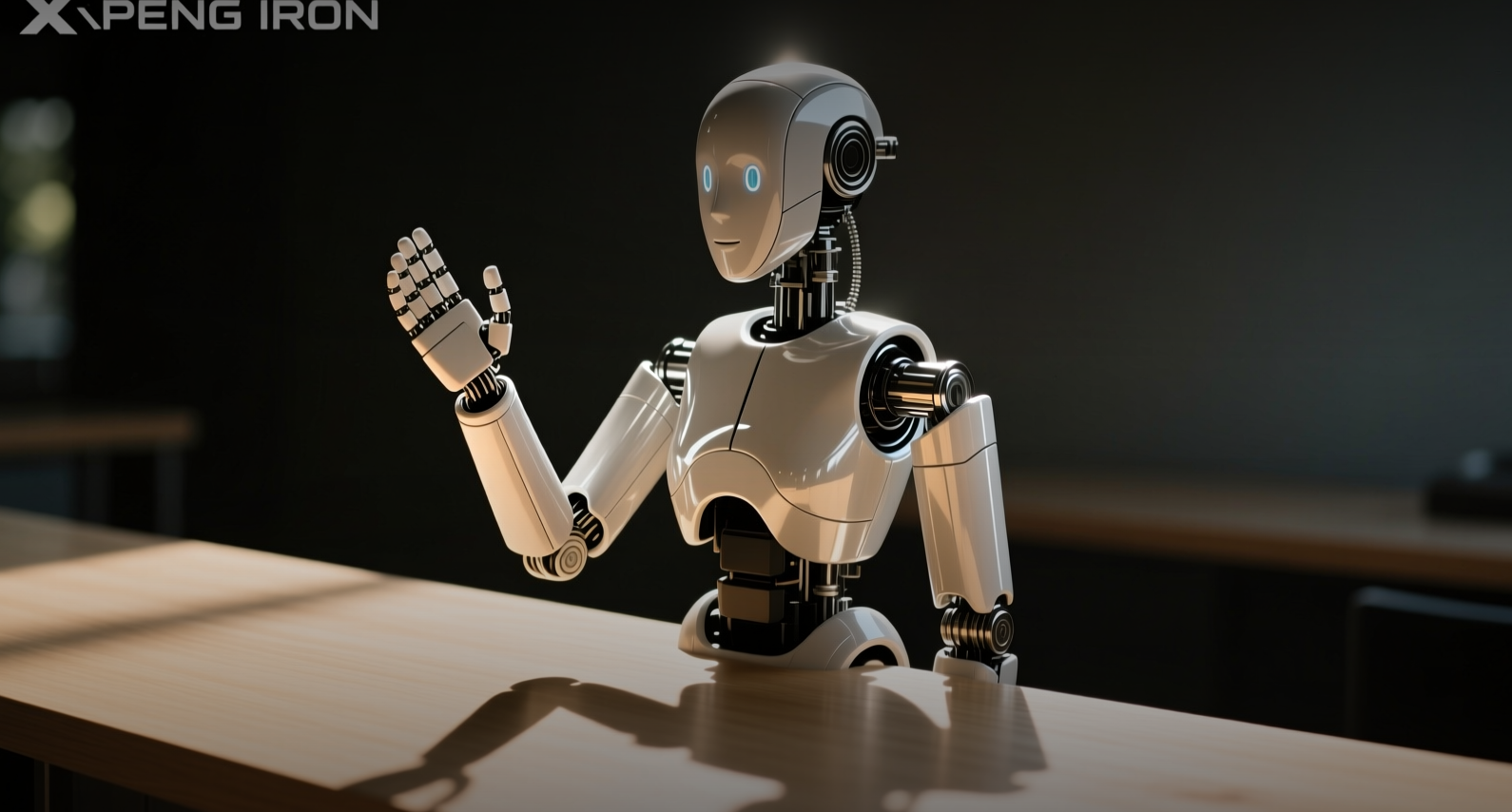
The Chinese EV maker is turning its retail stores into a proving ground for humanoid robots, with mass production set to begin next year.
Xpeng plans to deploy humanoid robots as shopping assistants in its company-owned retail stores across China starting in the first quarter of 2027, marking the EV maker's first concrete step toward commercializing robotics beyond its core auto business.
"The retail environment gives us real-world interaction data that you can't get from a lab," a person familiar with the company's plans said. Xpeng aims to produce more than 1,000 robots a month, according to the Wall Street Journal, as it prepares for a global rollout that could extend beyond China.
The deployment will begin in Xpeng's direct-sale stores, where the robots will assist customers with product inquiries, navigate showroom floors, and guide visitors through vehicle features. The company has not disclosed the robot's specifications, pricing, or how many stores will participate in the initial phase. Xpeng first showed its humanoid robot, called the Iron, in October 2023 — a bipedal machine standing roughly 5 feet tall with dexterous hands designed for both household and industrial tasks. The Iron was built on Xpeng's in-house AI and autonomous driving technology, giving the company a potential cost advantage in perception and navigation software.
For Xpeng, the robot initiative opens a new revenue stream at a time when China's EV market is consolidating amid a price war that has squeezed margins across the industry. The company reported a net loss of 3.9 billion yuan ($540 million) in the third quarter, though vehicle gross margins improved to 8.6% from negative 2.5% a year earlier. A successful robotics business could help offset the pressure on its auto margins and support a higher valuation multiple, analysts say.
The humanoid robotics market is projected to reach $38 billion by 2035, Goldman Sachs Research estimates, as declining sensor and actuator costs and advances in large language models make the technology commercially viable. Xpeng's entry pits it against Tesla, which has demonstrated its Optimus robot performing battery cell sorting in its factories and aims to begin limited production in 2025. China's UBTech Robotics has deployed Walker humanoid robots in hospitality and education settings, while Xiaomi has shown a humanoid prototype called CyberOne. Unlike these competitors, Xpeng's strategy of deploying robots in its own retail stores gives it a controlled environment to gather usage data and refine the product before scaling to external customers.
The shopping assistant use case is a low-risk entry point for humanoid robots. Unlike factory automation, where robots must meet strict safety and precision standards, retail assistance allows for more tolerance in performance while generating valuable human-robot interaction data. If successful, Xpeng could expand the robots to third-party retail chains, hospitality venues, and eventually home use.
Xpeng shares, which trade on the NYSE under XPEV, have gained about 40% year-to-date, partly driven by optimism around its technology ventures including flying cars and robotics. The stock trades at roughly 1.5 times forward sales, a discount to Tesla's 8 times but a premium to other Chinese EV makers like Nio and Li Auto, reflecting the market's mixed view on its diversification strategy. Morgan Stanley analyst Tim Hsiao has an overweight rating on Xpeng with a $15.50 price target, citing the company's technology differentiation as a key catalyst.
This article is for informational purposes only and does not constitute investment advice.