


Key Takeaways: Vertiv, Equinix and Digital Realty all raised full-year 2026 guidance in late July as hyperscaler AI spending pushes power, cooling and interconnection to the front of the data center buildout.
Key Takeaways: Vertiv, Equinix and Digital Realty all raised full-year 2026 guidance in late July as hyperscaler AI spending pushes power, cooling and interconnection to the front of the data center buildout.
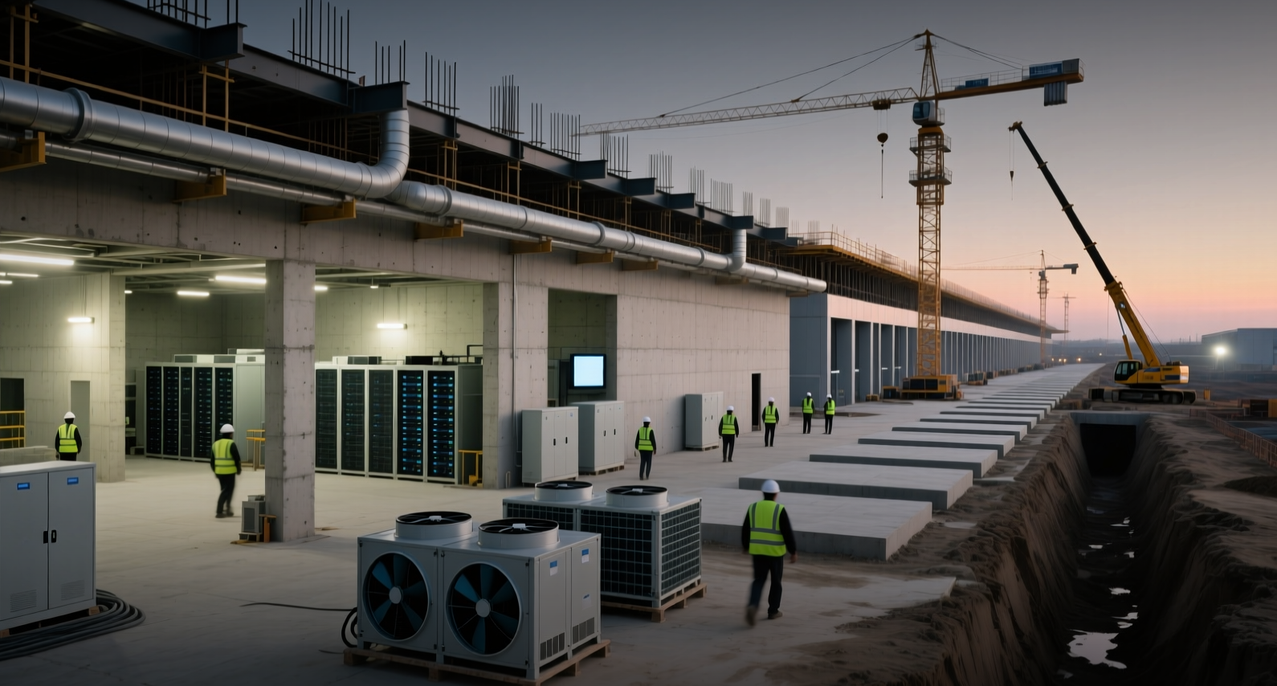
Vertiv Holdings, Equinix and Digital Realty Trust all raised full-year 2026 guidance in late July as hyperscaler AI spending pushes power, cooling and interconnection to the front of the data center buildout.
The AI capex story has moved beyond GPUs. Vertiv Holdings, Equinix and Digital Realty Trust each raised full-year 2026 guidance in late July as hyperscalers race to stand up the physical layer — power, cooling and interconnection — that AI workloads demand.
"This is real, this is happening," Giordano Albertazzi, chief executive of Vertiv, said on the company's earnings call, describing a pipeline spanning hyperscalers, enterprises, colocation and neocloud customers.
Vertiv delivered second-quarter net sales of $3.274 billion, up 24 percent year over year, with adjusted operating margin of 22.6 percent, up 410 basis points. Equinix added 9,700 net interconnections, its highest-ever quarterly addition, and posted annualized gross bookings of $424 million, up 23 percent. Digital Realty reported a record $1.9 billion backlog and 1.4 gigawatts under construction at a total cost of $20 billion.
The three names map directly onto where AI capex lands: power, connectivity and real estate. Amazon, Alphabet, Microsoft and Meta Platforms are expected to spend roughly $720 billion to $745 billion on capital expenditures in 2026, with a large portion directed toward AI infrastructure.
Vertiv builds the power trains, thermal management systems, UPS units and switchgear that keep AI racks running, and its emerging 800-volt DC architectures are being validated for Nvidia's newest rack designs. The company raised full-year sales guidance to roughly $14 billion at the midpoint with adjusted EPS of $6.65 to $6.75, up from a prior range of $6.30 to $6.40.
The stock closed at $261.95 on Aug. 21, up 107 percent over the past year and 62 percent year to date, though it has cooled 13 percent over the past month. Vertiv trades at a forward P/E of 41, with analyst sentiment at 86 percent bullish and a consensus target of $338.15. The risks are concentrated: EMEA organic growth was only 2 percent in Q2, and the 2.08 beta means drawdowns will be sharp when AI sentiment wobbles.
Equinix operates the neutral meeting rooms where clouds, networks and AI model providers cross-connect. Eight of the top 10 model providers and eight of the top 10 neoclouds run key networking workloads on Equinix today, management said. Full-year revenue guidance was raised to 11 to 12 percent growth, and the 2027 to 2029 outlook calls for 10 to 13 percent annual revenue growth with adjusted EBITDA margin of 53 percent or higher by 2029. The caveat: raised capex guidance of $5 billion to $6 billion in 2026 and $5 billion to $7 billion annually through 2029 pressures near-term free cash flow.
Digital Realty owns the megawatts hyperscalers lease years in advance. Just after quarter end, two additional US hyperscale leases added $410 million of annualized GAAP rent at 100 percent share. "Strong operating performance, a record backlog, and healthy customer demand give us increasing confidence in our ability to deliver double-digit earnings growth in 2027 and beyond," CEO Andy Power said. The REIT's risks are macro: interest rate sensitivity, a $1.2 billion cash position plus 12.3 million shares issued for the Blackstone Northern Virginia acquisition, and a -58.7 percent year-over-year earnings comp reflecting accounting noise.
All three names have already run hard, so entry timing matters. Vertiv trades at 41x forward earnings, Equinix at 61x, and Digital Realty yields 2.51 percent with a $4.88 annual dividend. The bull case rests on a decade-long AI infrastructure cycle, but the concentration risk is real: Vertiv relies heavily on a small group of hyperscaler customers, and any slowdown in AI data center spending would hit all three simultaneously.
This article is for informational purposes only and does not constitute investment advice.
