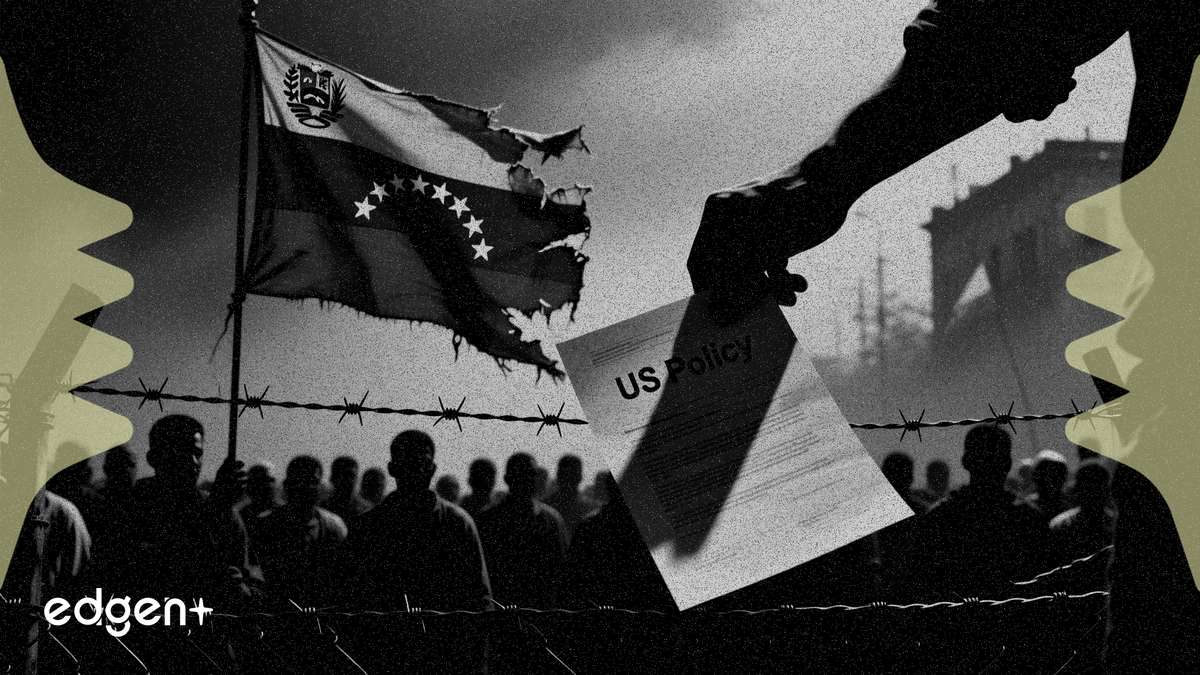
A recent shift in US policy toward Venezuela, which saw President Donald Trump endorse the government of Delcy Rodríguez following the capture of Nicolás Maduro, has failed to improve conditions for ordinary citizens, according to a former American ambassador. The country continues to hold over 400 political prisoners, and no date has been set for new elections.
"Rather than celebrate American Airlines’ return to Caracas, we should cry for Venezuela," Everett Ellis Briggs, who formerly served as U.S. ambassador to Panama, Honduras and Portugal, wrote in a May 11 letter to the Wall Street Journal. Briggs argues that despite the resumption of commercial flights, "nada ha cambiado" (nothing has changed), as the country's electoral commission remains controlled by Chavistas and popular opposition leaders are still in hiding.
The current situation follows a January 3 US military operation that captured Maduro and his wife, Cilia Flores, who are now awaiting trial in Brooklyn on drug and gun charges. Instead of backing a transition led by a prominent opposition figure like María Corina Machado, the Trump administration allowed Vice President Delcy Rodríguez to assume the presidency. According to a Qatari source involved in mediating talks between the US and Venezuela, Machado was never discussed as part of a post-Maduro transition plan.
Some analysts argue the move has established a novel form of external control, or a "neo-protectorate," over the strategically important oil-producing nation. This approach prioritizes stability and US control over oil revenues—which were temporarily deposited in a Qatar-based bank account at the request of the US—over a potentially disruptive democratic transition. The operation avoided a large-scale land invasion and the institutional collapse seen after interventions in Iraq and Libya, suggesting Washington absorbed lessons from past military engagements.
The policy effectively maintains the existing Chavista power structure without Maduro, a move that one analyst called "leadership decapitation paired with authoritarian continuity." While the US has historically avoided invading South American countries, the Venezuela operation marks a crossing of that "geopolitical threshold," with Washington facing little of the diplomatic backlash that followed its 1989 invasion of Panama.
The Trump administration appears to be betting on remote management, using the implicit threat of renewed military action to ensure Caracas complies with its demands. This strategy of control, however, leaves the political future of Venezuela's citizens in a fragile and uncertain state, with hundreds of political prisoners remaining behind bars.
This article is for informational purposes only and does not constitute investment advice.