


Washington's 100 percent drone tariff reshapes who assembles the hardware, but the rare earth magnets and battery cells inside every unit still come from China.
Washington's 100 percent drone tariff reshapes who assembles the hardware, but the rare earth magnets and battery cells inside every unit still come from China.
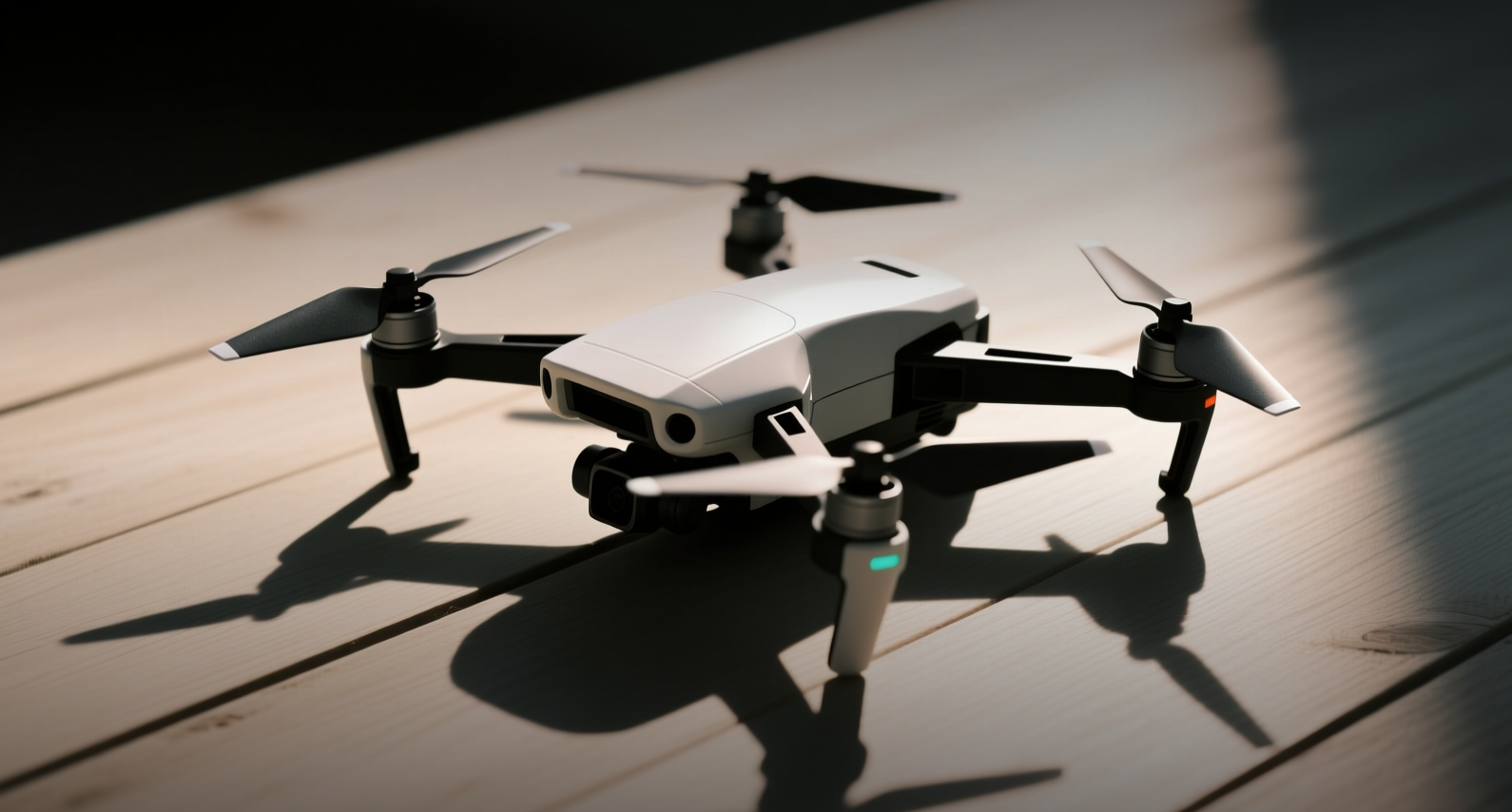
Washington's 100 percent drone tariff reshapes who assembles the hardware, but the rare earth magnets and battery cells inside every unit still come from China.
Washington's Section 232 drone tariff, imposing duties of up to 100 percent on imported platforms, hands US assemblers a cost edge while leaving the rare earth magnets and battery cells that power every unit roughly 90 percent and 99 percent China-sourced, respectively.
"For years, the drone industry rewarded whoever could build the most inexpensively offshore, creating a supply chain now recognized as a national security vulnerability," said Dr. Shaun Passley, chief executive at ZenaTech, which assembles drones in the US with a vertically integrated Taiwan supply chain.
The proclamation, signed August 13 under Section 232 of the Trade Expansion Act of 1962, imposes a 100 percent tariff on drones exceeding 25 kilograms, thermal-imaging platforms, docking stations and certain critical components, effective September 3. Smaller consumer drones face 25 percent, while allied-nation products from the EU, Japan, South Korea, Switzerland, Taiwan and Liechtenstein draw 15 percent and UK goods 10 percent. China, which supplies roughly 90 percent of the world's neodymium-iron-boron permanent magnets and about 99 percent of lithium-ion battery cells, retaliated August 5 by requiring case-by-case approval for every drone shipment to the US.
The tariff stacks an economic barrier on top of a regulatory architecture that already blocked new DJI and Autel models through the FCC's December 2025 Covered List expansion, with DJI holding roughly 70 percent of the US commercial market. Domestic producers including Unusual Machines, Red Cat Holdings and ZenaTech stand to gain share, but the physical supply chain cannot scale fast enough — MP Materials' Texas plant targets about 1,000 tonnes of magnets a year and Vulcan Elements 10,000 tonnes, a fraction of the tens of thousands of tonnes the global drone and defense industry consumes annually.
Unusual Machines surged as much as 22 percent to about $33 on Friday, approaching its 52-week high, while Red Cat Holdings gained about 8 percent to $11.02, AgEagle Aerial Systems climbed roughly 5 percent and Ondas Holdings rose about 4 percent. Defense contractors with drone exposure also moved higher, with Kratos Defense & Security Solutions up nearly 3 percent and AeroVironment about 2 percent. The rally prices in a simple logic: a 100 percent tariff makes Chinese hardware economically unviable in the large-platform and thermal-imaging markets, and a 25 percent rate adds friction to the consumer segment.
Every brushless DC motor inside a commercial or military drone depends on a neodymium-iron-boron permanent magnet, an alloy China manufactures at roughly 90 percent of global capacity, according to the Select Committee on China. Each small drone motor contains 5 to 15 grams of the material. The Army demonstrated the constraint in June when it activated a domestic motor assembly line at Tobyhanna Army Depot in Pennsylvania — the magnets inside those motors still come from China. US production is growing: MP Materials' Independence facility in Fort Worth, Texas, has begun output targeting about 1,000 tonnes a year, and Vulcan Elements, backed by a $620 million Pentagon loan, targets 10,000 tonnes at full capacity. Combined, that remains a fraction of the tens of thousands of tonnes the industry consumes annually.
Thursday's proclamation is the culmination of a US-China drone conflict that began in 2018, when the Pentagon banned DJI systems from military use over data security concerns. The Commerce Department added DJI to its Entity List in 2020, a December 2024 rule barred Chinese manufacturers from new model authorizations, and a June 2025 executive order directed the FAA to accelerate rulemaking. The FCC's December 2025 Covered List action blocked all new foreign drone authorizations, and the tariff now adds the economic instrument. Unlike the International Emergency Economic Powers Act tariffs the Supreme Court struck down in February 2026, Section 232 authority has withstood legal challenge.
China had already moved eight days before the proclamation, announcing retaliatory measures that require strict case-by-case approval for every drone shipment to the US and blacklisting six American companies. The global drone market reached an estimated $96.4 billion in 2026, up from $83.8 billion in 2025, according to Grand View Research. With Beijing tightening export approvals and Washington pricing Chinese hardware out of critical sectors, drones have become the latest flashpoint in a technology trade conflict that has already passed through semiconductors, telecommunications equipment, electric vehicles and humanoid robots.
For operators facing the full 100 percent duty, the effective cost of Chinese-made hardware doubles once the tariff takes effect September 3. Power line inspection companies, agricultural spray operators and search and rescue agencies must shift to Blue UAS-approved domestic or allied-nation alternatives, pay the doubled price, or defer purchases until domestic supply scales. That scaling is not a given — domestic manufacturers still source their core inputs from the same Chinese supply chains the policy is trying to escape.
This article is for informational purposes only and does not constitute investment advice.
