
The White House amended its tariff scope to ban certain Canadian alcohol imports and block specific Canadian automobiles from Sept 29, deepening a US-Canada dispute already carrying $20 billion in mutual duties.
The White House amended its tariff scope to ban certain Canadian alcohol imports and block specific Canadian automobiles from Sept 29, deepening a US-Canada dispute already carrying $20 billion in mutual duties.
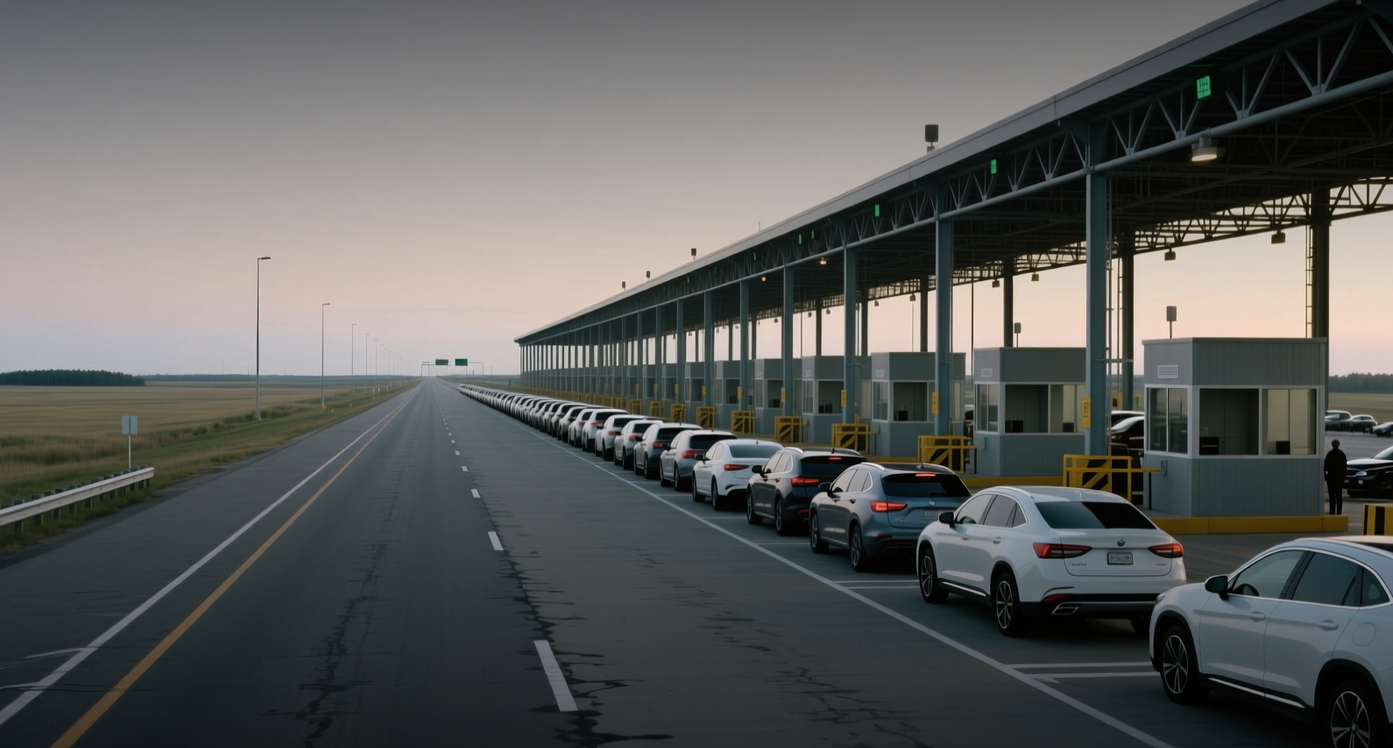
Washington's latest tariff move reaches into North America's most integrated supply chains, barring certain Canadian alcohol and halting specific Canadian automobiles at the border from Sept 29.
"What we are worried about is an escalatory spiral," said Michael Harvey, executive director of the Canadian Agri-Food Trade Alliance and a member of Prime Minister Mark Carney's advisory committee on bilateral US economic relations.
The amended scope cites Canadian discrimination against US alcohol beverages and lands on a sector where parts and finished vehicles cross the border repeatedly during assembly. Canada ships roughly 68 percent of its exports to the United States, and US auto exports to Canada have already fallen 22 percent since the dispute began. The White House's tariff list runs 18 pages, spanning toys, hockey equipment, honey and video game consoles, while oil, natural gas and critical minerals stay exempt.
The Sept 29 auto ban is the immediate flashpoint, but the larger threat lands in January, when President Donald Trump has threatened to raise duties on Canadian vehicles, auto parts and steel to 50 percent. Such a move would hammer Canadian plants and lift vehicle prices across North America. Canada's retaliation, effective after midnight Sept 8, covers about $20 billion of US goods at rates of 15 to 50 percent.
Canada matched Washington dollar for dollar and rate for rate, hitting American milk, perfume, smartphones and some furniture with 50 percent duties, cheese and toilet paper at 25 percent, and air conditioners and machinery parts at 15 percent. It also doubled counter-tariffs on US steel and aluminum to 50 percent. The measures target roughly 6 percent of the $333.6 billion the United States shipped to Canada last year.
The escalation follows the collapse of trade talks on Aug 21 and an 18-month dispute that has already reshaped cross-border flows. US spirits exports to Canada fell more than 70 percent year over year after eight of Canada's ten provinces restricted or banned American alcohol sales. Canada is the largest customer for 26 US states and a top-three buyer for 45.
The economic asymmetry is stark: the US economy is roughly 13 times larger than Canada's, and the United States absorbs about 72.5 percent of Canadian goods exports. Yet Canada holds leverage of its own. US refineries depend on about 4 million barrels of Canadian oil a day, and American farmers rely heavily on Canadian potash fertilizer, though Ottawa has so far ruled out taxing or restricting those critical exports.
Canada enters the fight with momentum. Its economy grew at a 3.2 percent annualized rate in the second quarter, more than twice the 1.5 percent pace in the United States. RBC Economics said the Canadian measures were unlikely to dent US growth overall but could hit some businesses hard.
The last time Washington escalated this sharply, US auto exports to Canada dropped 22 percent while Canadian consumers cut travel and boycotted American goods. Trump has also threatened to bar Bombardier aircraft from the US market unless the Canadian planemaker shifts manufacturing across the border, and he renamed Lake Ontario "Lake America" in an executive order.
For Carney, the fight has become a test of whether a smaller ally can withstand US economic pressure, with consequences that reach beyond the border. He is set to address the European Parliament next week, using the stage to argue that great powers are weaponizing economic integration against smaller countries. "I'm convinced that we will be able to show the world that Canada will win this trade war," Industry Minister Mélanie Joly said.
If the Sept 29 auto ban lands as written, expect higher prices on vehicles assembled with Canadian parts and fresh pressure on the Canadian dollar. If talks resume first, the $20 billion in mutual duties could unwind quickly — but no ministerial or official talks are currently scheduled between the two governments.
This article is for informational purposes only and does not constitute investment advice.
