
SK hynix and Sandisk published the first open standard for High Bandwidth Flash, a memory tier bridging HBM speed and SSD capacity for AI inference.
SK hynix and Sandisk published the first open standard for High Bandwidth Flash, a memory tier bridging HBM speed and SSD capacity for AI inference.
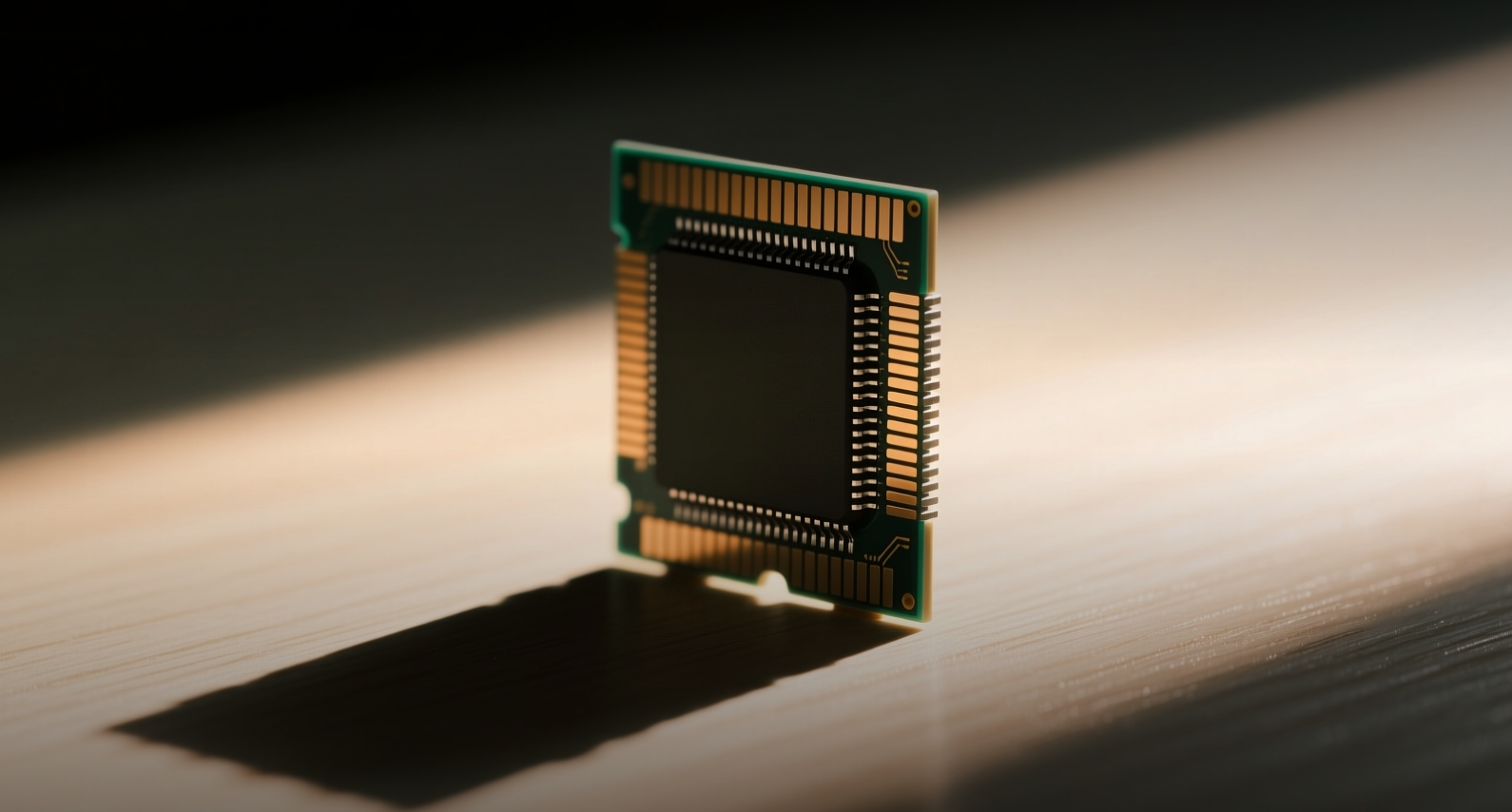
SK hynix and Sandisk published the first open standard for High Bandwidth Flash at FMS 2026, a memory tier between HBM and SSDs scaling to 512GB with up to 3.0TB/s bandwidth.
"Through HBF, SK hynix will expand the boundaries between memory and storage and contribute to building new architectures that enhance overall system efficiency," Kim Chun-sung, executive vice president and head of solution development at SK hynix, said.
The specification, released through the Open Compute Project, covers capacities up to 512GB based on 8-high and 16-high NAND die stacks, with bandwidth divided into three grades from approximately 0.4TB/s to 3.0TB/s. HBF adopts the UCIe chiplet interconnect standard, enabling integration across GPU and CPU architectures. The consortium, launched in February with Google and Tenstorrent as members, follows an initial standardization partnership with Sandisk in August 2025.
The standard arrives as AI inference workloads strain existing memory hierarchies. HBM3E delivers up to 1.2TB/s per stack but tops out around 48GB, while PCIe 5.0 enterprise SSDs offer tens of terabytes but only about 13GB/s sequential read. HBF fills that gap, and SK hynix plans to begin mass production of eSSDs based on its tenth-generation 375-layer 4D NAND early next year.
The new standard defines connection interfaces, electrical characteristics, reliability and packaging guidelines for HBF die stacks, plus software I/O guidelines. By publishing through OCP — the open data center technology initiative — SK hynix and Sandisk make HBF an industry-wide standard rather than a proprietary spec.
Google and Tenstorrent have joined the HBF consortium, with Google DeepMind senior staff engineer Xiaoyu Ma joining a panel discussion on August 6 alongside SK hynix vice president Lim Eui-cheol and Sandisk vice president Rajeev Nagabhirava. The session, titled "Breaking the Memory Wall with High Bandwidth Flash," brings together leaders across memory, storage and AI.
Citrini Research analyst Jukan noted on X in April that Google has been the most aggressive player pushing HBF adoption, while Nvidia's interest has been more limited, with the company viewing existing eSSDs as sufficient for current bandwidth needs. That divergence highlights a key strategic question: whether HBF becomes a mainstream memory tier or remains a niche solution for hyperscalers with specific inference workloads.
The open-standard approach mirrors how the CXL (Compute Express Link) specification gained traction as a memory expansion interface, with SK hynix and Samsung both backing CXL 3.2 memory expansion for AI data centers. Montage Technology brought CXL 3.2 memory expansion to AI data centers with support from Samsung and SK hynix, according to reports from early August.
SK hynix also publicly revealed its tenth-generation (V10) 375-layer 4D NAND wafer for the first time at FMS 2026. The technology improves performance per watt by 2.5 times compared to the previous generation, optimized for data centers that demand both power efficiency and performance. The company plans to begin mass production of high-performance, high-capacity eSSDs based on this NAND early next year.
The NAND announcement comes as SK hynix competes with Samsung, Micron and Kioxia in the AI storage market. SanDisk, according to TrendForce data, is tied with Micron for fourth place in global NAND flash with a 13.9 percent revenue share in the first quarter. SanDisk plans to begin HBF sample shipments in the second half of 2026, targeting AI inference device samples by early 2027.
SK hynix shares trade on the Korea Exchange, with American Depositary Shares on Nasdaq. The company's push into HBF and 375-layer NAND could help it capture a share of the AI storage market as inference workloads grow, though the technology remains in early stages with mass production not yet underway. At the TSMC Technology Symposium in April, SK hynix presented a roadmap to expand its AI memory product lineup beyond HBM to include HBF and 3D stacked DRAM, showing the company's broader strategy to dominate the memory hierarchy for AI infrastructure.
This article is for informational purposes only and does not constitute investment advice.
