
SK Hynix's chief executive expects the global memory shortage to persist through 2030, with AI-driven custom chips cushioning any eventual downturn.
SK Hynix's chief executive expects the global memory shortage to persist through 2030, with AI-driven custom chips cushioning any eventual downturn.
SK Hynix's chief executive expects the global memory shortage to persist through 2030, with AI-driven custom chips cushioning any eventual downturn.
SK Hynix's chief executive expects the global memory-chip shortage to run through the end of 2030, saying AI's shift toward custom-built high-bandwidth memory will soften any eventual downturn.
"Nobody can know exactly how long the shortage will last, but we see no clear sign of a downturn and expect the shortfall to continue through the end of 2030," Kwak Noh-Jung, chief executive of SK Hynix, said Thursday at the groundbreaking of the company's first U.S. facility in West Lafayette, Indiana.
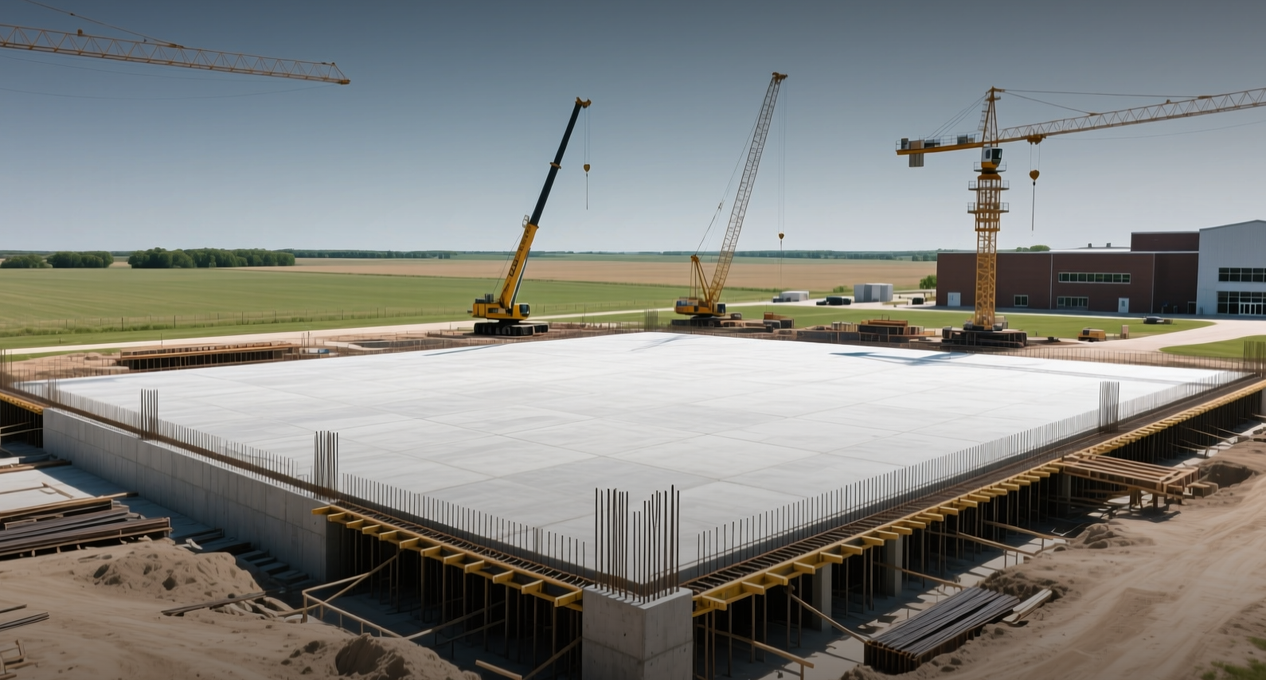
The $4 billion plant will package high-bandwidth memory rather than manufacture chips, with its first cleanroom scheduled to open in October 2028. Kwak said the site will make Indiana a "key HBM production base in America" by 2030, part of a $720 billion global buildout that is mostly concentrated in South Korea.
The forecast extends earnings visibility for the memory sector, where SK Hynix's market value has climbed about sevenfold in a year to top $1 trillion. Nvidia, the leading AI chipmaker, committed to co-develop memory with SK Hynix as part of a $500 billion deal with parent SK Group announced in July.
Kwak attributed his long-cycle optimism to a structural change in how AI buyers procure memory. AI business models are pushing products from 100 percent standardized parts toward partially or fully custom designs, he said, meaning supply will track specific demand more closely and leave less room for the oversupply that has historically punished the sector.
"Even if a downturn arrives, demand will not fall sharply — it is more likely to slow or hold at planned levels," Kwak said, adding that he is not worried about the market beyond 2030. The next downturn "will differ from what we have experienced over the past decades," he said.
The shift is visible in the packaging plant itself. Unlike front-end fabs that etch circuits onto wafers, the Indiana site will stack and connect memory chips — the step that turns standard DRAM into high-bandwidth memory feeding Nvidia's accelerators. Chips will be manufactured in South Korea and China, then shipped to Indiana for packaging, with research centers where top AI customers can co-develop memory alongside SK Hynix.
The Indiana campus, announced in 2024, spans 133 acres and is expected to create about 1,000 direct jobs plus 6,000 construction and partner roles. It is backed by up to $458 million in federal CHIPS Act funds and a state incentive package worth up to $712 million, the second largest in Indiana history, according to the Indiana Economic Development Corporation.
Kwak said SK Hynix's total U.S. investments and assets are expected to exceed $45 billion by 2030, including a $10 billion "AI Company" launched in January and Solidigm, the NAND business acquired from Intel for $9 billion in 2020. The company listed on the Nasdaq in July, raising $26.5 billion, the most for any foreign company on U.S. markets.
Yet the facility stops short of front-end manufacturing, despite pressure from Commerce Secretary Howard Lutnick, who in July called on SK Hynix and rival Samsung to build chip fabs in the U.S. Kwak said SK Hynix is open to "every site or every country" where power, capital, and subsidies are available, and will continue expanding investment in America.
For investors, the question is whether the buildout lands before the AI cycle cools. Nvidia reported fiscal second-quarter revenue of $96.2 billion, up 106 percent year over year, with data center revenue surging 117 percent to $89 billion, and guided to roughly $108 billion next quarter. SK Hynix, trading slightly below its first-day close since the Nasdaq listing, faces the risk that a slowdown in AI infrastructure spending before 2028, faster capacity additions from Samsung or Micron, or weaker HBM pricing could erode returns on the project. If demand holds, the Indiana hub strengthens both customer proximity and SK Hynix's grip on one of the tightest links in the AI supply chain.
This article is for informational purposes only and does not constitute investment advice.
