
RUM Group's Quake AI division is publicly challenging CoreWeave and Nebius for AI cloud dominance, backed by a $13.7 billion GPU contract.
RUM Group's Quake AI division is publicly challenging CoreWeave and Nebius for AI cloud dominance, backed by a $13.7 billion GPU contract.
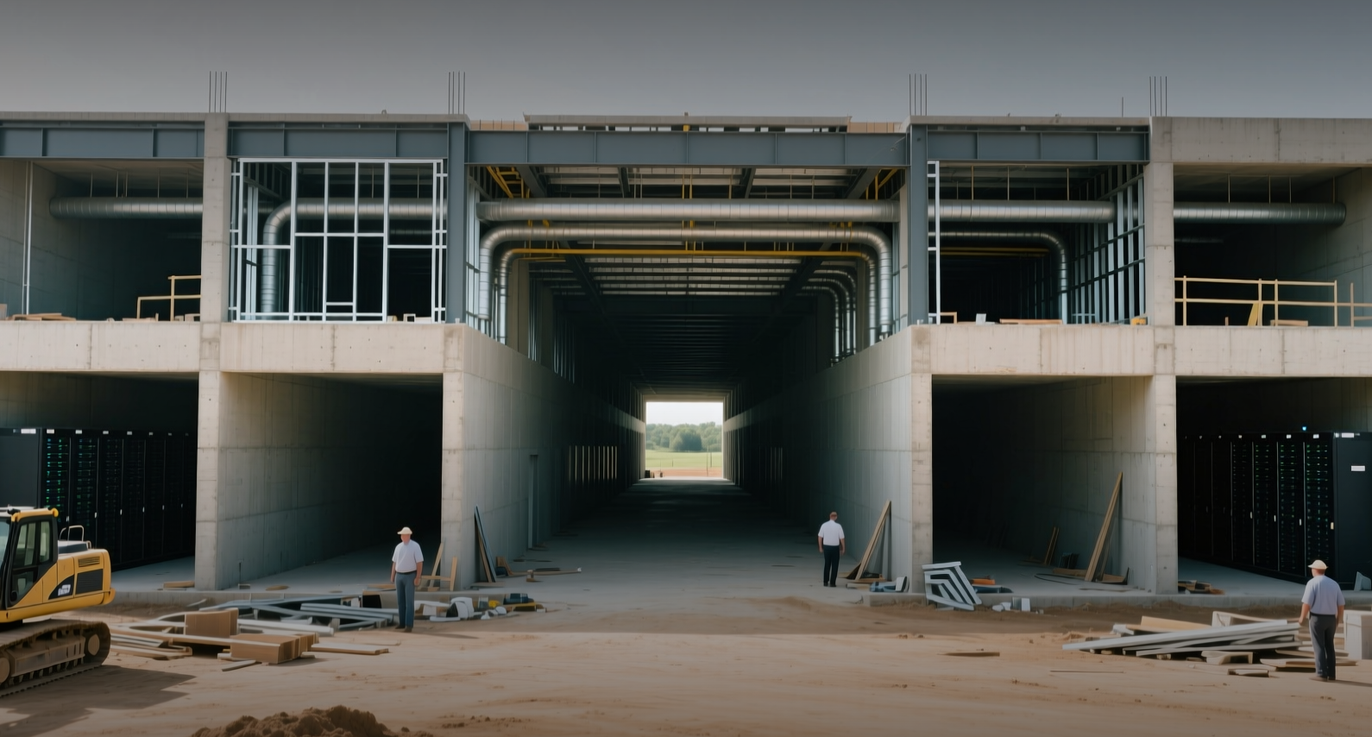
RUM Group's Quake AI division is entering the neocloud arena as a challenger to CoreWeave and Nebius, backed by a $13.7 billion GPU contract and 22,400 NVIDIA GPUs. RUM stock rose 11% to $10.44 Tuesday.
"Our Quake AI division is a real player, and we will fiercely compete with the likes of CoreWeave, Nebius and all neoclouds," Chris Pavlovski, CEO of RUM Group, said in a post on X.
The company closed its all-stock acquisition of German AI cloud firm Northern Data in June, a deal valued at roughly $767 million that added H100 and H200 GPUs to its installed base. Monday's trigger was a six-year GPU services agreement worth approximately $13.7 billion with an unidentified U.S.-based cloud provider, covering capacity from the Maysville, Georgia data center still under development.
The contract's third payment tranche is conditional on customer approval of the delivery schedule, and RUM Group disclosed in SEC filings that it currently lacks the financing required to fulfill the agreement. The company plans to raise capital through debt or equity, while a customer warrant for up to 50.81 million Class A shares at $0.01 per share adds dilution risk on top of any future raise.
RUM Group began operating under its current name after closing the Northern Data deal in June, pivoting from the video platform known as Rumble into an AI infrastructure play. The 22,400-GPU installed base, including NVIDIA H100s and H200s, forms the credibility foundation for Pavlovski's challenge to larger neocloud operators. CoreWeave and Nebius Group both sit at valuations well above RUM Group's current level, making the comparison a steep hill for the newcomer.
Financing Gap Widens Between Ambition and Balance Sheet
RUM Group's own SEC filing language exposes the gap between the CEO's public ambition and the balance sheet behind Quake AI. The company stated it currently lacks the financing required to fulfill the contract and plans to raise capital through debt or equity, while warning that its obligations to the customer aren't dependent on securing that financing.
"If we are unable to obtain sufficient financing on acceptable terms, we may be unable to complete the facility, acquire the necessary GPUs and related equipment, meet applicable delivery milestones or otherwise timely perform our obligations under the Commercial Agreement," the filing states.
The company also cited construction and permitting delays, higher costs, material shortages, labor constraints, power supply concerns, and regulatory uncertainty as risks to the Maysville buildout. The contract's payment structure — three phases with the final tranche gated on customer approval — adds another layer of execution uncertainty.
Warrant Terms Stack Dilution Risk on Future Raise
The customer's incentive is structured through a warrant granting up to 50.81 million Class A shares at $0.01 per share with a 10-year term. Half vests alongside the three GPU service tranches, while the remainder vests in five 10% increments as additional purchase agreements are signed. Full vesting occurs once cumulative purchases exceed 2.5 times the initial contract value, and any unvested portion expires if the agreements lapse or are breached.
The data center complex is joining RUM Group today, with the Global X Data Center & Digital Infrastructure ETF (DTCR) up 2% to $28.53 after fading in the prior session. The Global X Social Media ETF (SOCL) rose 0.8% to $45.26, a milder tailwind for the platform side of the RUM Group story. Trump Media & Technology Group (DJT) fell 0.7% to $9.23, down 30% year to date, a reminder that retail still conflates the two tickers despite very different businesses.
For investors, the financing plan is the next material event. Debt terms, equity dilution, and any Tether-related backstop will define execution risk. RUM Group stock was up 48% year to date through Monday's close, and whether it holds the double-digit handle into the close will signal whether this is a single-name story or a genuine sector bid. CoreWeave and Nebius remain the reference points investors will price Quake AI against, and both trade at valuations well above RUM Group's current level. Retail traders on Stocktwits have turned "extremely bullish" on RUM, with some speculating the mystery customer could be a hyperscaler given the penny-warrant structure resembles deals Google has struck with data center partners.
This article is for informational purposes only and does not constitute investment advice.
