Australian markets now price a September rate hike after July inflation held at 3.6 percent, forcing three of the four big banks to abandon their no-more-hikes calls.
The Reserve Bank of Australia is set to raise its cash rate from 4.35 percent as soon as September after July inflation came in hotter than expected, with three of the four big banks abandoning their forecasts that the tightening cycle had ended.
"RBA officials have been very clear in recent months that firstly, risks to their inflation forecast were tilted to the upside; and secondly, that if those risks were realized the board would respond with a rate hike," Sally Auld, chief economist at National Australia Bank, said in a research note. "We think it unlikely that activity data between now and the September board meeting will be weak enough to deter the board from hiking."
Trimmed mean inflation held at 3.6 percent in the 12 months to July, above consensus forecasts, while headline inflation slowed to 3.5 percent from 3.8 percent. Household spending rose 1.1 percent in July, pushing annual growth to 7 percent — well above the 5.7 percent market expectation. The spending uptick was broad-based, with particular strength in discretionary categories including recreation, hotels, cafes and restaurants, and clothing.
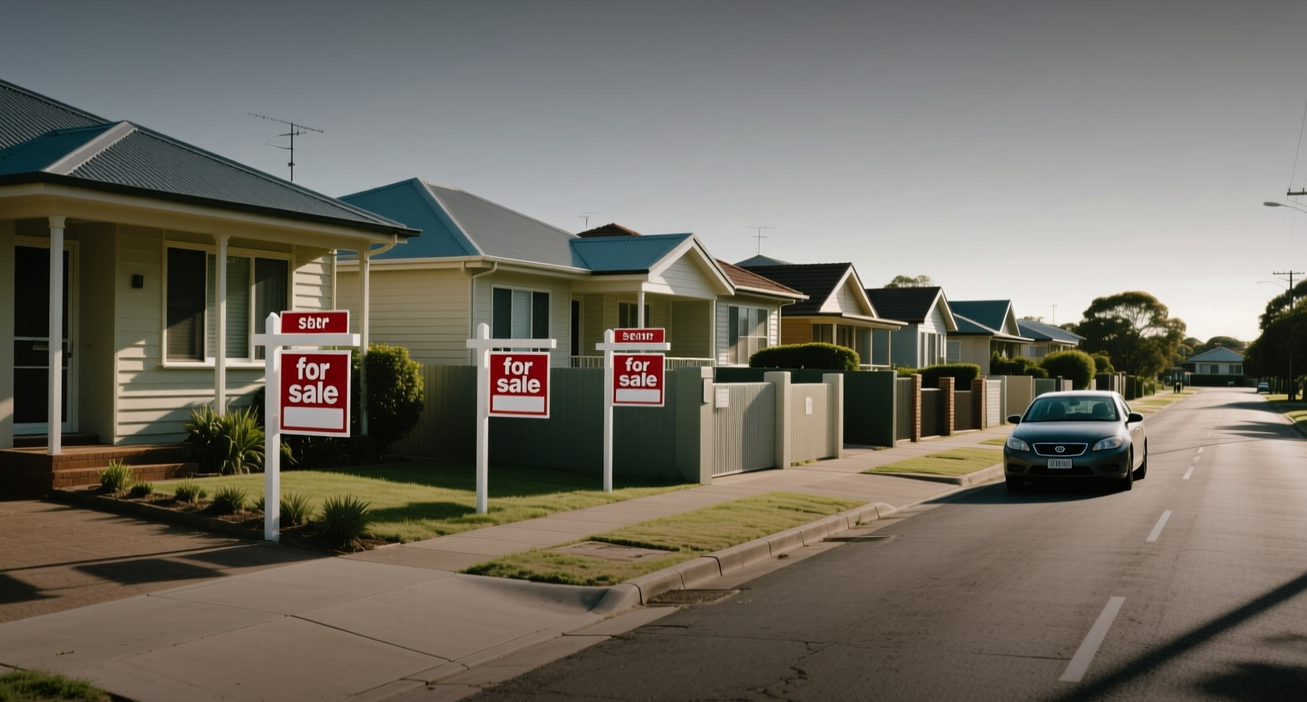
A September hike would push monetary policy into firmly restrictive territory and could accelerate a housing downturn already showing Sydney prices down 6.7 percent from their January peak, with some economists forecasting national declines exceeding 10 percent over the next year.
Banks Flip on Rate Path
ANZ Group was the first major lender to reinsert a rate increase into its forecasts, followed by NAB and Commonwealth Bank, making three of the four big banks tip another hike by Melbourne Cup day. ANZ and CBA predict a November move, while NAB's Auld and Gareth Spence see the increase coming at the central bank's next meeting in September.
NAB expects the RBA's preferred quarterly trimmed mean measure to come in above 1 percent in September, materially higher than the central bank's own forecast of 0.83 percent. That would confirm the upside risks repeatedly flagged by Governor Michele Bullock after the August meeting are crystallizing.
Deputy Governor Andrew Hauser has also said inflation remains "too high" and that the central bank would tap the policy brakes again if the data pointed to it staying elevated.
Citi's chief Australia economist Josh Williamson goes further, warning of a hike in September and another in November. "The household spending data, coupled with yesterday's inflation, and with still no expectation of a large increase in unemployment, suggest the RBA staff have little choice but to suggest a 25 basis point hike at the next meeting," Williamson said.
Housing Market Under Pressure
The risk is that consecutive hikes turn a sharp retreat in house prices into something far more alarming. Sydney prices have already shed 6.7 percent from their January peak — more than half of the last major correction from 2017 to 2019 — and Melbourne could be worse, according to Chris Joye, chief investment officer at Coolabah Capital.
"These aren't yet the biggest corrections in history, but on the current trajectory, both cities' losses will rank among their three worst within months," Joye said. "It's hard to imagine how the RBA hikes into this storm."
NAB notes the RBA board believes interest rates are already "somewhat restrictive," so another hike would tip policy into firmly restrictive territory. The board is also mindful of the effect more tightening could have on unemployment and that the deteriorating housing market will help slow the economy. However, NAB said risks are biased to a follow-up hike, especially if resilience in activity data emerges ahead of the November meeting.
The June GDP data, due Wednesday, could prove another crucial milestone on the RBA's rate path. The last time the RBA raised rates three times in quick succession at the start of the year, the cash rate went from 3.85 percent to 4.35 percent, and markets had assumed that was the peak. The July inflation print has upended that assumption, with futures now pricing a high probability of at least one more 25 basis point move before year-end.
This article is for informational purposes only and does not constitute investment advice.