

Nvidia's $10.4 million stake in Generate Biomedicines and $1 billion Eli Lilly partnership signal the chipmaker's push to make healthcare AI's defining use case.
Nvidia's $10.4 million stake in Generate Biomedicines and $1 billion Eli Lilly partnership signal the chipmaker's push to make healthcare AI's defining use case.
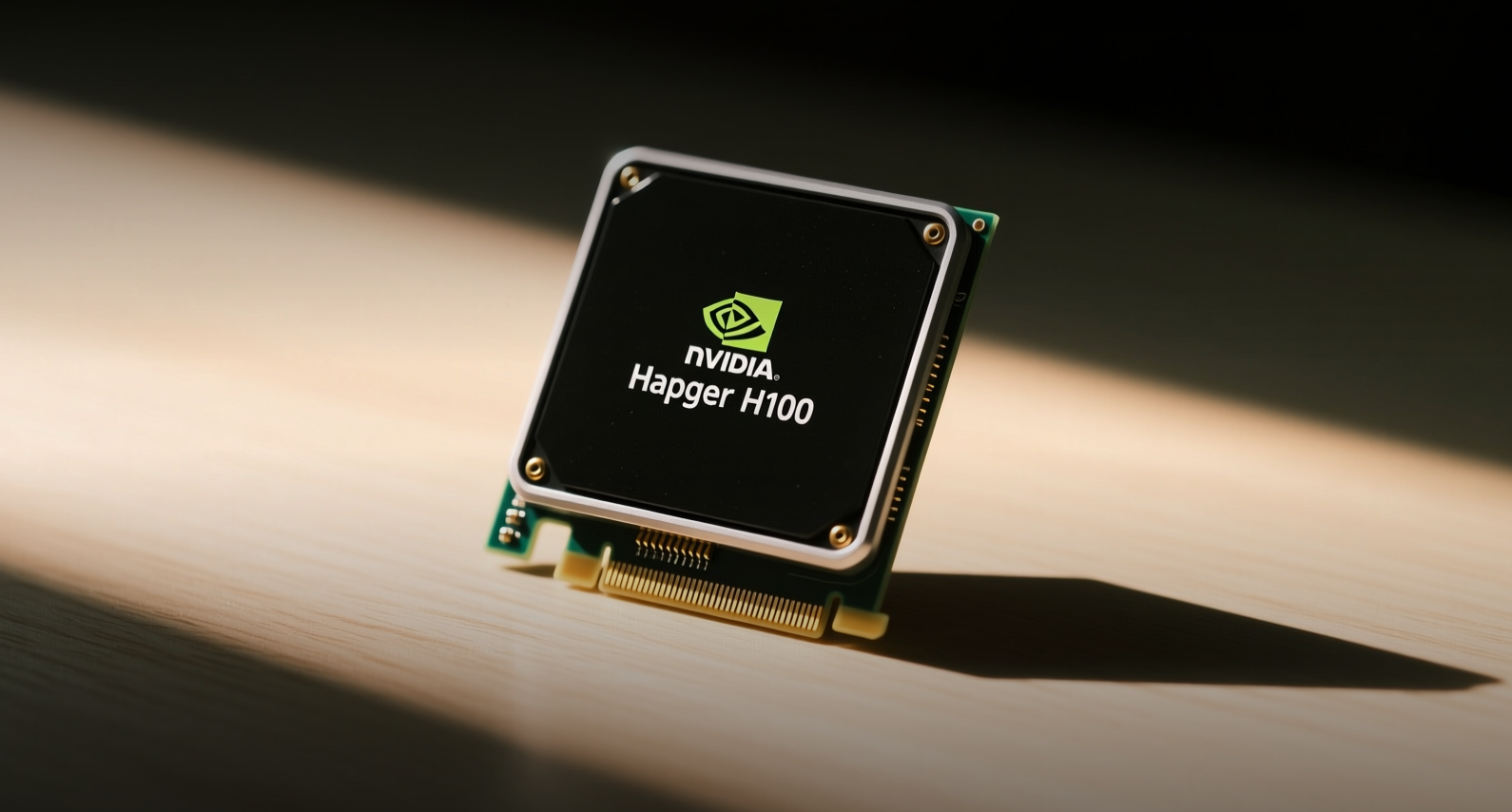
Nvidia's $10.4 million stake in Generate Biomedicines and $1 billion Eli Lilly partnership signal the chipmaker's push to make healthcare AI's defining use case.
Nvidia Chief Executive Officer Jensen Huang said artificial intelligence's most profound impact will be in life sciences, backing the prediction with a $10.4 million investment in biotech Generate Biomedicines and a $1 billion partnership with Eli Lilly.
"AI is transforming every industry, and its most profound impact will be in life sciences," Huang said in a statement announcing the Eli Lilly collaboration at a January conference.
Nvidia's May 13F filing showed it owned 833,000 shares of Generate Biomedicines as of the first quarter, a stake valued at $10.4 million. The Cambridge, Massachusetts-based biotech uses Nvidia's AI platforms to accelerate drug development, with its lead candidate GB-0895 — an asthma treatment designed to reduce injection frequency from once a month to twice a year — now in Phase 3 trials.
For a company with a $4.9 trillion market cap, the investment is a fraction of Nvidia's cash reserves. But the strategic bet carries outsized significance: if Generate Biomedicines commercializes its pipeline, it would serve as a proof point that Nvidia's chips can power drug discovery — opening a healthcare market that could generate billions in GPU procurement revenue.
Why AI in drug discovery is different
Drug development has historically been a high-cost, low-probability endeavor. The average drug takes more than a decade and $2.6 billion to bring to market, with a 90 percent failure rate from Phase 1 to approval. AI models trained on protein structures, genomic data, and clinical trial records can compress that timeline by identifying viable candidates earlier and predicting toxicity before human testing begins.
Generate Biomedicines' platform uses generative AI to design proteins with specific therapeutic functions, a method that Nvidia's GPUs are uniquely suited to accelerate. The company's pipeline includes programs in oncology, immunology, and infectious diseases beyond the lead asthma candidate. Nvidia's hardware could be involved in processing clinical trial data, drug discovery simulations, and even robotic-assisted surgery systems.
The competitive landscape takes shape
Nvidia is not alone in targeting the intersection of AI and life sciences. Advanced Micro Devices has been positioning its Instinct GPUs for healthcare workloads, while cloud providers including Amazon Web Services and Microsoft Azure offer specialized AI services for drug discovery. Alphabet's DeepMind subsidiary, through its AlphaFold protein structure prediction model, has already demonstrated how AI can transform biological research.
But Nvidia's approach differs in two ways. First, its CUDA software ecosystem is deeply embedded in the research workflows of major pharmaceutical companies, creating switching costs for competitors. Second, the company is placing direct financial bets — through both the Eli Lilly co-innovation lab and the Generate Biomedicines stake — rather than simply selling hardware.
The Eli Lilly partnership, structured as a five-year joint investment of up to $1 billion in infrastructure and research, pairs Lilly's medical expertise with Nvidia's AI know-how. It represents one of the largest pharma-tech collaborations focused specifically on AI-driven drug development.
What this means for investors
Nvidia shares rose 3.9 percent on the day of the report, while Generate Biomedicines gained 8.9 percent. Nvidia trades at roughly 35 times forward earnings, a premium that reflects expectations for continued data center growth but may not fully price in healthcare as a new revenue vertical.
The healthcare AI market is projected to reach $188 billion by 2030, according to industry estimates, up from roughly $20 billion in 2025. Even capturing a fraction of that spending through GPU sales and software licensing would add a meaningful growth layer to Nvidia's data center segment, which generated $62 billion in revenue over the past four quarters.
The risk is that AI-driven drug discovery remains unproven at scale. Generate Biomedicines' GB-0895 has yet to complete Phase 3 trials, and the broader field has seen high-profile failures. But for Nvidia, the downside is limited: a $10.4 million investment is less than 0.1 percent of its market cap, while the upside — validating AI's role in a $2 trillion global pharmaceutical market — is substantial.
This article is for informational purposes only and does not constitute investment advice.
