Kioxia is wagering ¥1 trillion that AI's storage demand will outlast the memory cycle.
Kioxia is wagering ¥1 trillion that AI's storage demand will outlast the memory cycle.
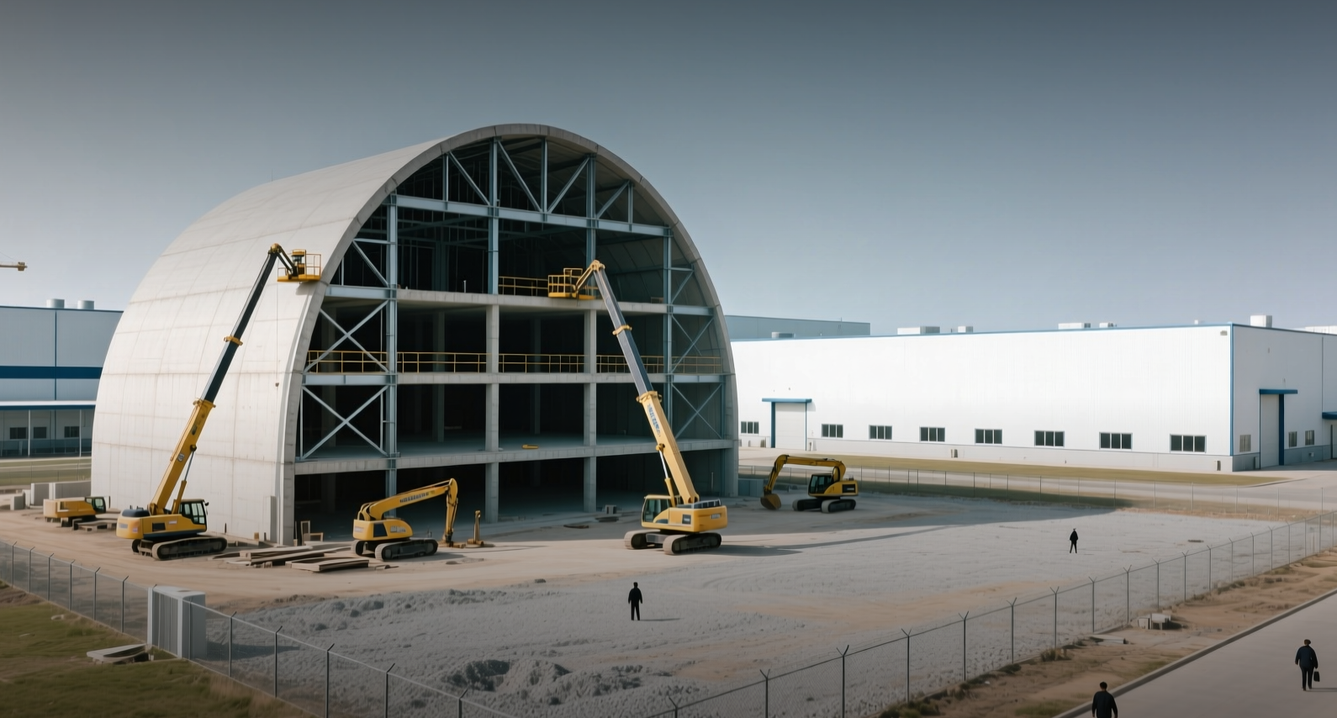
Kioxia Holdings will invest more than ¥1 trillion ($6.7 billion) in a third NAND flash fab at its Kitakami site in Iwate Prefecture, betting AI data center demand sustains the memory upcycle through 2029. The new building will mass-produce 10th-generation BiCS 10 NAND with 332 stacked layers, prioritizing power efficiency for AI workloads over the 400-plus-layer designs rivals are chasing.
"Kioxia's decision to expand capacity likely reflects long-term contracts already secured with customers, covering demand through at least 2028," Takero Fujiwara, an analyst at Citigroup, said in a report. Kazuyoshi Saito, senior analyst at Iwai Cosmo Securities, called the move "an extremely positive signal" that the company has locked in favorable customer agreements.
The fab is the third at the Kitakami site, joining fabs that opened in 2020 and 2025. Operations could begin as early as 2029. Kioxia began shipping its 10th-generation BiCS flash chips last month. The company's annual capex plan for the fiscal year ending March 2027 stands at about ¥450 billion, up roughly 60 percent from the prior year, with a three-year average through 2028 of about ¥470 billion.
The expansion comes as Kioxia's global NAND position slips. The company ranked fourth in both NAND revenue and shipments in the second quarter, with China's Yangtze Memory Technologies (YMTC) overtaking it for third place by shipments for the first time. Samsung Electronics and SK hynix hold the top two spots. Kioxia shares rose as much as 6.9 percent intraday on the announcement, though the stock remains about 50 percent below its June high on oversupply fears.
The 332-layer design is a deliberate trade-off. While rivals race toward 400-plus-layer stacks to maximize density, Kioxia chose fewer layers to reduce power consumption per bit — a critical factor for data centers where electricity costs rival hardware costs. The company's BiCS (Bit Cost Scalable) architecture stacks memory cells vertically, with each additional layer boosting capacity but also increasing power draw and manufacturing complexity.
SK hynix decided this month to invest 35.2 trillion won in a Y2 DRAM fab at its Yongin cluster and 19.1 trillion won in an M17 NAND fab in Cheongju. YMTC plans to raise 33 billion yuan through an initial public offering to upgrade production lines, telling investors it aims to become the world's largest NAND supplier by the end of next year.
Kioxia's response is to lean on its partnership with SanDisk, which has co-produced NAND with the company for more than 25 years. The two firms extended their joint venture through 2034, and SanDisk plays a central role in developing 10th-generation NAND. Kioxia CEO Hiroo Ota and SanDisk CEO David Goeckeler planned to meet Japanese Prime Minister Sanae Takaichi on the day of the announcement, with the companies expected to seek government subsidies for the project.
Japan's cabinet announced in June a plan to attract up to 68 trillion yen in combined public and private semiconductor investment by 2040. The government has already provided financial support to TSMC, Sony Group, and Micron Technology for domestic fabs.
The investment hinges on whether AI's shift from training to inference creates durable storage demand. Nvidia is pursuing a method of transferring data directly to GPUs without routing through CPUs, using enterprise SSDs as expanded memory to compensate for high-bandwidth memory capacity shortfalls. Kioxia forecasts the data center NAND market will grow at an average annual rate of 46 percent.
Kioxia's exposure to the memory cycle remains its structural weakness. Unlike Samsung and SK hynix, which diversify across DRAM and NAND, Kioxia relies on NAND as its sole main business, making it more vulnerable to market downturns. The company's stock has fallen roughly 50 percent from its June high as investors weighed the risk of capacity expansion at the peak of the demand cycle.
Whether the ¥1 trillion bet pays off depends on the durability of AI storage demand and Kioxia's ability to convert long-term contracts into stable revenue. Citigroup's Fujiwara noted the company has sufficient cash to fund the investment, and its willingness to commit capital suggests management sees demand visibility extending well beyond the current cycle.
This article is for informational purposes only and does not constitute investment advice.
