

Nvidia's CEO told investors to buy chip stocks on every dip, betting the AI boom has years of runway left.
Nvidia's CEO told investors to buy chip stocks on every dip, betting the AI boom has years of runway left.
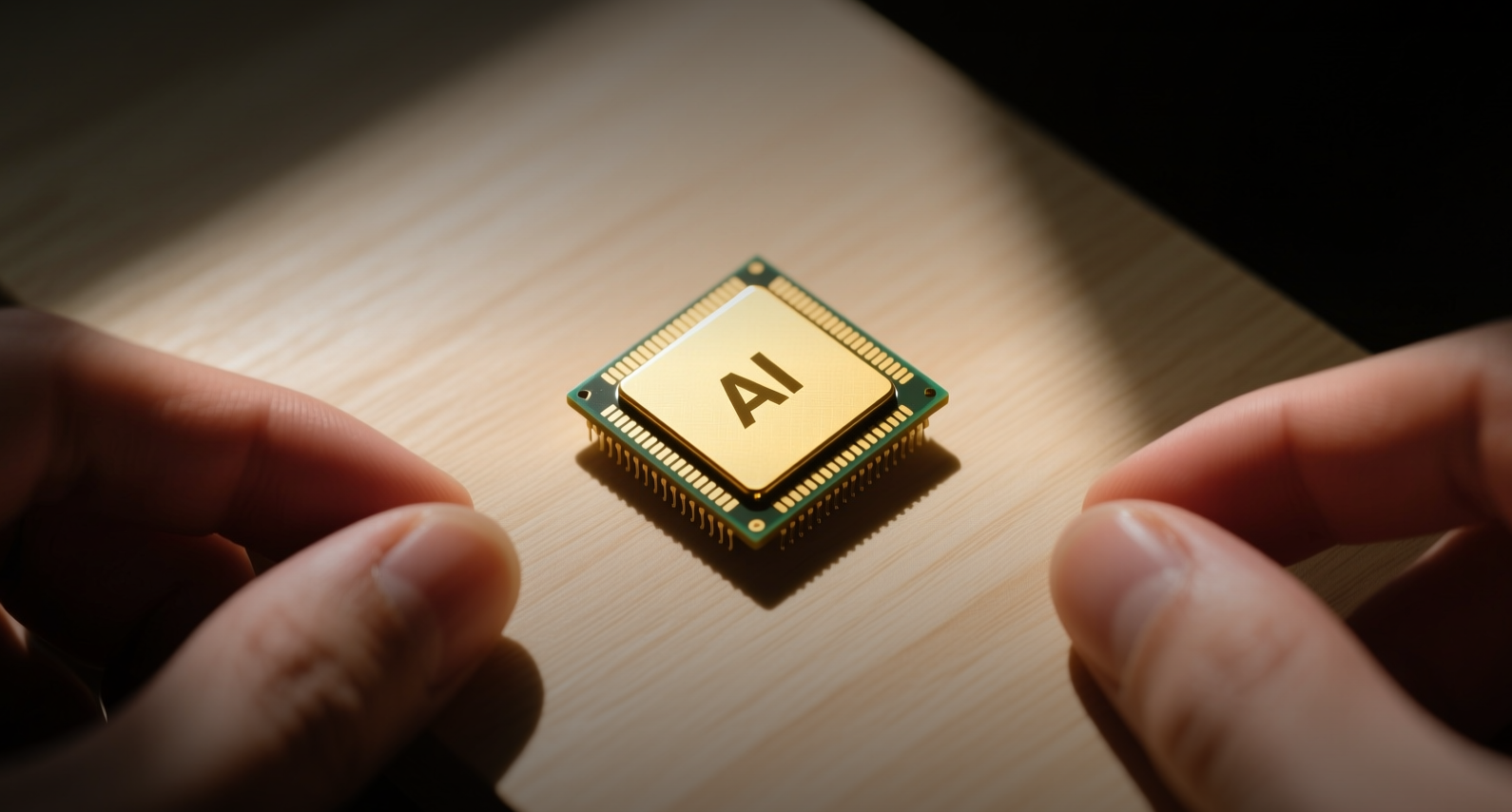
Nvidia Corp. Chief Executive Officer Jensen Huang issued a bullish call on the AI market, urging investors to buy semiconductor stocks during pullbacks and expressing confidence that the chipmaker can reclaim a $5 trillion valuation.
"AI is not a one-year phenomenon — it's a multi-decade infrastructure build that's still in its early innings," Huang said in a statement accompanying the company's latest earnings release. "Every dip in this cycle has been a buying opportunity."
Nvidia shares have already rallied following the company's quarterly earnings report, calming earlier concerns about valuation excess in the AI trade. Wall Street analysts have been rushing to raise price targets, with several firms citing sustained demand for Nvidia's data center GPUs and the broadening of AI adoption beyond cloud hyperscalers into enterprise and sovereign customers. The company's data center segment, which now accounts for the vast majority of revenue, continues to benefit from hyperscaler CapEx budgets that show no signs of contraction. Amazon, Microsoft and Google together are spending more than $200 billion annually on AI infrastructure, much of it flowing to Nvidia's Hopper and Blackwell architecture lines.
A return to $5 trillion in market capitalization would represent a recovery of roughly $1.5 trillion from recent lows and would cement Nvidia's position as the world's most valuable publicly traded company. The call comes as Huang also pressed Washington to preserve open-weight AI models, arguing in a policy letter that drew 11 million views and signatures from more than 50 companies — including OpenAI, Google and Microsoft — that restrictive regulation risks ceding America's AI leadership to China.
Huang has also warned that China is outpacing the US in data center growth, adding a geopolitical dimension to the investment thesis. If Washington restricts chip exports too aggressively, US companies could lose access to one of the fastest-growing AI markets. That tension explains why Huang's open-weight advocacy matters: models that run on interchangeable hardware reduce the risk that any single government's export controls can cripple an AI supply chain. The letter, which Sam Altman called "glad to see" and Elon Musk supported, has become a rare point of consensus among the industry's most competitive players. Even Anthropic, the one notable holdout, softened its position shortly after, with CEO Dario Amodei clarifying that the company "has never advocated for a ban on open weights models."
What the Bull Case Hinges On
For investors, the calculus is straightforward but not without risk. Nvidia trades at a premium multiple that already prices in years of compounding growth. A miss on data center revenue growth or a shift in hyperscaler CapEx priorities could trigger the very dip Huang is telling investors to buy. But with Wall Street still raising targets and the AI infrastructure cycle showing no signs of peaking, the bull case rests on a simple premise: the buildout has barely started. Morgan Stanley and Goldman Sachs have both raised their price targets following the earnings report, with analysts pointing to Nvidia's unmatched exposure to every layer of the AI stack, from training chips to inference infrastructure.
Nvidia's dominance in AI accelerators faces challenges from a growing field of competitors. AMD has been gaining traction with its MI300 series, while custom chips from Amazon's Trainium and Google's TPU are capturing an increasing share of inference workloads inside their respective clouds. But Huang's argument that no single vendor should control the AI stack cuts both ways: it reinforces the case for open-weight models while also positioning Nvidia's CUDA software platform as the neutral layer that runs everything. With TSMC manufacturing Nvidia's chips on advanced nodes and CoWoS packaging capacity remaining constrained, the supply chain itself acts as a natural barrier. Any competitor that wants to challenge Nvidia must first secure the same foundry capacity that TSMC allocates years in advance.
This article is for informational purposes only and does not constitute investment advice.
