

IBM's completed purchase of HRL Laboratories pairs silicon-spin qubit research with its superconducting roadmap, targeting 100 million quantum operations by 2029.
IBM's completed purchase of HRL Laboratories pairs silicon-spin qubit research with its superconducting roadmap, targeting 100 million quantum operations by 2029.
IBM completed its acquisition of HRL Laboratories on Wednesday, folding silicon-spin qubit research into a quantum roadmap that targets 100 million operations on its Starling system by 2029.
The deal, announced by IBM on Aug. 26, brings together two research organizations with complementary expertise spanning quantum computing, quantum sensing, advanced communications, electronics, manufacturing, and materials science, the company said.
HRL's silicon-spin qubits complement IBM's leadership in superconducting quantum computing. The lab also brings capabilities in quantum sensing, quantum materials, cryogenics, control electronics, packaging, and interconnect technologies expected to strengthen IBM's quantum hardware roadmap and support innovation across the quantum technology stack.
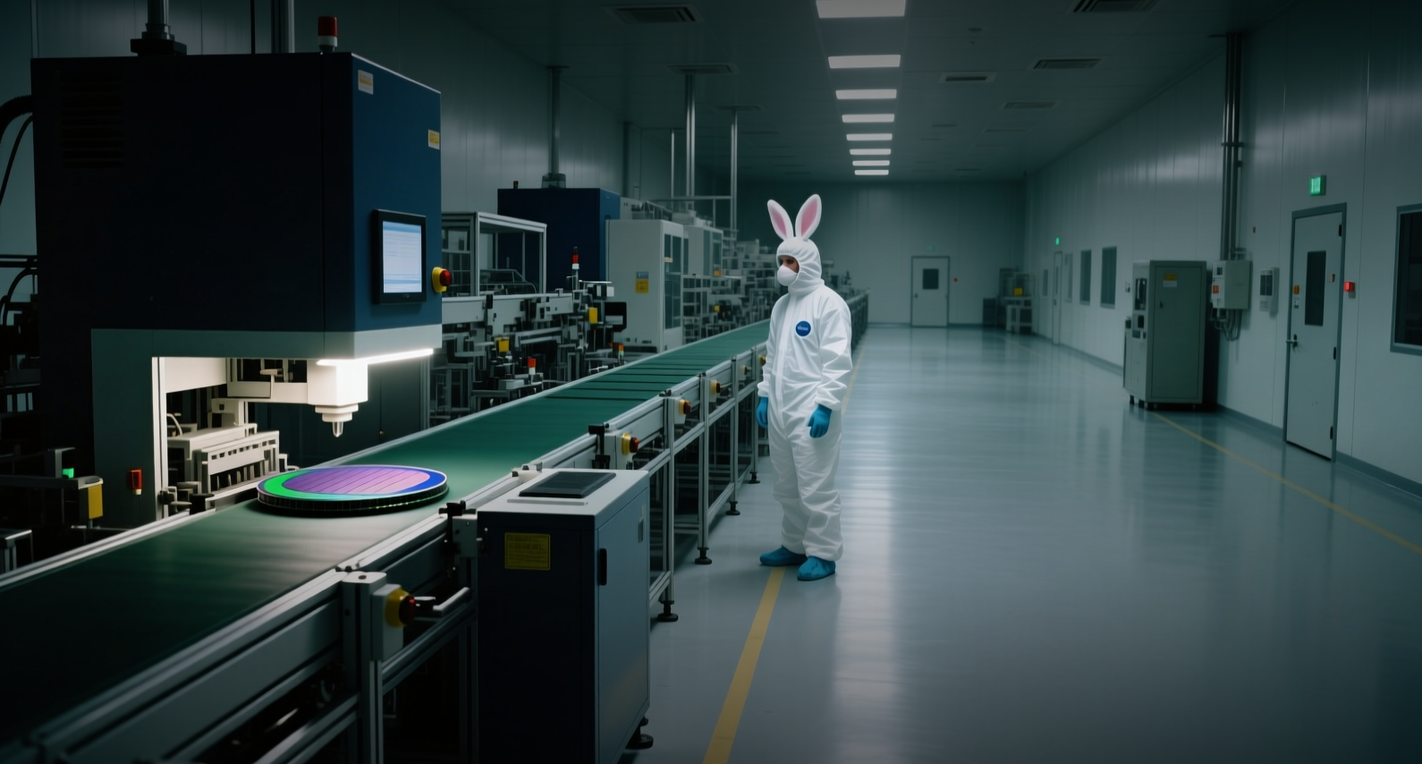
The acquisition extends IBM's manufacturing ambitions. HRL's silicon-based quantum expertise creates opportunities for collaboration with Anderon, IBM's pure-play quantum wafer foundry, supporting scalable manufacturing approaches and accelerating learning cycles across multiple quantum computing modalities. Boeing and General Motors, HRL's former owners, will continue to partner with IBM and HRL on quantum applications and advanced technology development. Financial terms were not disclosed.
IBM continues to advance superconducting-qubit architectures through breakthroughs in hardware, error correction, software, and algorithms designed to enable increasingly capable quantum systems. Its fault-tolerant IBM Quantum Starling computer is expected by 2029 to perform 100 million quantum operations and deliver significantly greater computational capability than today's quantum computers. Starling is expected to be followed by Blue Jay, IBM's next-generation fault-tolerant quantum computer, targeted for the mid-2030s.
The HRL purchase gives IBM a second qubit modality in-house. Silicon-spin qubits, which encode information in the spin of electrons within silicon, are seen as a path toward more scalable manufacturing because they can draw on established semiconductor fabrication processes. That dovetails with Anderon, IBM's pure-play quantum wafer foundry, which supports scalable manufacturing across multiple quantum computing modalities.
The dual-track approach hedges IBM's bet on any single qubit technology. Superconducting qubits, IBM's primary architecture, require extreme cooling and precise fabrication, while silicon-spin qubits promise smaller footprints and compatibility with conventional chipmaking. Holding both in-house lets IBM shift resources as error-correction and manufacturing economics evolve.
The acquisition lands as IBM, Google, Microsoft, and a field of startups including IonQ and Rigetti Computing race to build fault-tolerant machines capable of outperforming classical computers on practical problems. IBM's roadmap positions Starling as a fault-tolerant system by 2029, with Blue Jay following in the mid-2030s.
Boeing and General Motors, which jointly owned HRL, will continue to work with IBM and HRL on quantum applications and advanced technology development, preserving the lab's role as a collaborative research institution. Financial terms of the transaction were not disclosed.
This article is for informational purposes only and does not constitute investment advice.
