
Political backlash against AI data centers is reshaping the buildout, and the biggest hyperscalers may be the only ones left standing.
Political backlash against AI data centers is reshaping the buildout, and the biggest hyperscalers may be the only ones left standing.
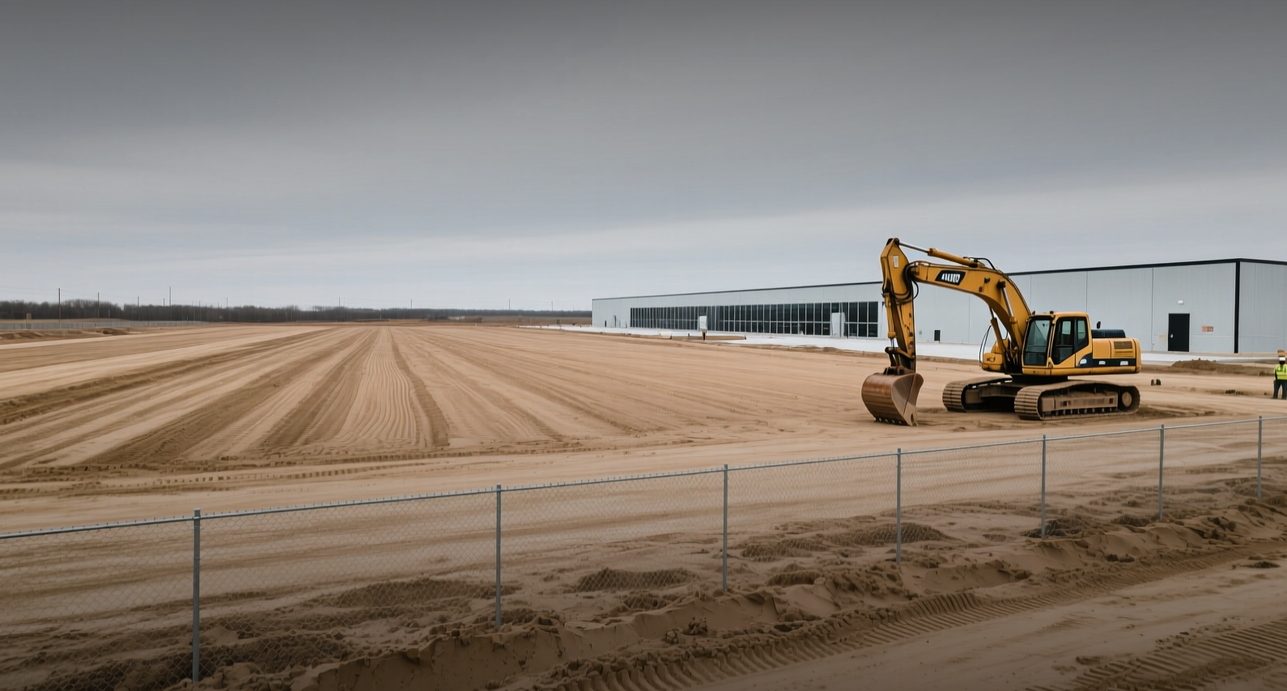
Growing political opposition to AI data center construction is pressuring valuations across the infrastructure trade, while potentially handing Amazon, Alphabet, Microsoft and Meta a competitive edge over smaller developers.
"The data center thesis, perhaps the greatest investment theme in a generation, is now under attack and it may never be the same," CNBC's Jim Cramer said Monday on "Mad Money."
Data center stocks have come under pressure as politicians and local communities push back against projects over electricity costs, water use and other concerns. Cramer pointed to Pennsylvania and Texas, where governors who previously supported data center development have recently called for stricter requirements. Roughly three-quarters of Americans oppose construction of AI data centers, according to recent polling.
"We know that rules can be crafted and communities can be appeased, but the unbridled buildout is most likely over," Cramer said.
With the pace of development now less certain, investors may be unwilling to pay premium valuations for data center beneficiaries such as gas turbine maker GE Vernova and memory companies Micron, Sandisk, Western Digital and Seagate, even if underlying demand remains strong. Micron tumbled more than 5.5 percent Monday on social media speculation that President Donald Trump may let Apple buy memory chips from Chinese suppliers for use in China-sold devices.
Cramer argued the changing environment could benefit Amazon, Alphabet, Microsoft and Meta, which have the financial resources to meet tougher regulatory and community requirements that smaller, speculative data-center developers may struggle to afford.
"They're the biggest beneficiaries, because they can afford to compensate local communities and get their warehouses full of servers built," Cramer said.
Fewer speculative developers could also reduce competition for land, labor and electricity, potentially lowering costs for hyperscalers as they continue building AI infrastructure. The political pushback comes as a report by Sam Lyman at the Bitcoin Policy Institute attributed 10 data center moratoria, one permanent data center ban and four rejected or abandoned AI projects to coordinated activist campaigns, blocking or delaying $23.6 billion in US AI investment.
The opposition has also taken legislative form. The Sanders-Ocasio-Cortez Artificial Intelligence Data Center Moratorium Act would halt construction or expansion of qualifying AI data centers until Congress enacts a broad set of federal safety, labor, environmental, consumer-cost and community-approval mandates. A Food & Water Watch-led letter signed by more than 230 groups in late 2025 demanded a national pause on new AI data centers.
For Cramer, the political backlash doesn't mean abandoning the data center trade. Instead, it could shift the advantage toward the largest technology companies capable of continuing to build despite tougher restrictions.
"They're the winners," Cramer said. "I think they'll keep winning, as they've been the losers when people extrapolate the costs of building these data centers. This political pushback is a godsend for the hyperscalers."
The broader market reflected the uncertainty Monday, with the S&P 500 and Nasdaq slipping slightly as memory names dragged. Cramer described the tape as "a Coca-Cola, J&J market," noting how investors have turned against some of the hottest AI and tech stocks. He said he has already begun trimming AI exposure, cutting Broadcom significantly, with GE Vernova potentially next.
Cramer's Charitable Trust, the portfolio run by CNBC's Investing Club, owns shares of Amazon, GE Vernova, Alphabet, Meta, Microsoft and Micron.
This article is for informational purposes only and does not constitute investment advice.
