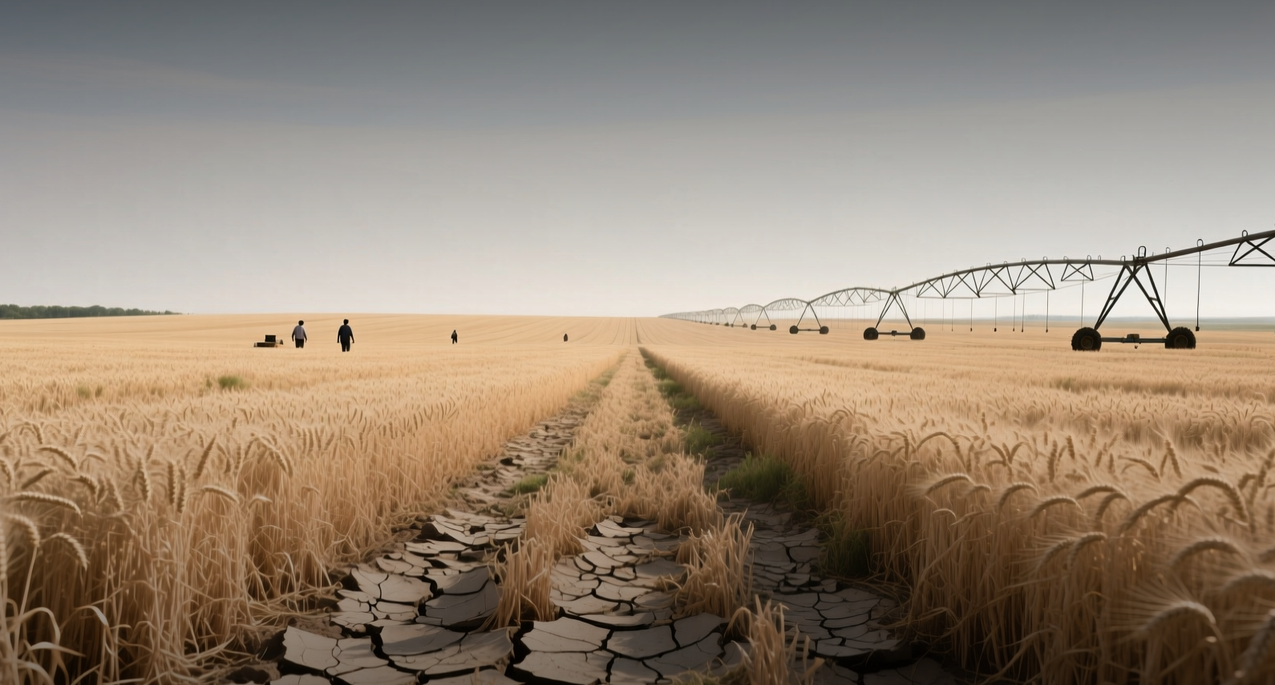
Citi raised its three-month corn target to $5.40 a bushel and lifted soybean and wheat forecasts, calling a strengthening Super El Niño its highest-conviction agricultural supply risk heading into late 2026 and early 2027.
"Current market prices appear to reflect only part of the potential downside to global agricultural production," Arkady Gevorkyan, chief analyst at Citi, said in the Aug. 25 report.
The bank's new Production-at-Risk framework, which weighs country output shares, yield sensitivity to ENSO and crop-calendar severity, estimates potential losses that exceed what futures currently price. Since El Niño began developing in March, production estimates for robusta coffee have been cut 4.0 percent, palm oil 2.5 percent, sugar 2.0 percent and rice 1.5 percent, Citi said.
The most weather-exposed commodities are palm oil, robusta coffee, rice, sugar, cocoa and Australian wheat, with risks concentrated in Australia, India, Southeast Asia and parts of Brazil. Argentina is the clearest potential beneficiary, as El Niño historically improves soil moisture across its main growing regions.
Black Sea Disruption Threatens Wheat and Corn Flows
Russia is expected to export about 46 million tons of wheat, roughly 20 percent of global trade, while Ukraine ships about 22 million tons of corn, or 11 percent of the global total. Citi estimates current disruptions could delay or replace 10 million to 20 million tons of wheat exports, or 5 percent to 9 percent of global trade, and 3 million to 8 million tons of corn, or 2 percent to 4 percent. The bank expects Turkey to again broker a deal that partially restores Black Sea flows.
Biofuel Demand and Input Costs Add Upward Pressure
Global biofuel policy is adding structural demand for corn and soybeans. The United States is weighing year-round E15 gasoline blending, Indonesia has raised palm-oil blending to 50 percent, and Brazil lifted ethanol blending to E32. Energy and fertilizer account for 60 percent of U.S. farmers' variable costs, and Brazil's soybean fertilizer imports are down 11 percent ahead of the September planting season, Citi said.
A strong El Niño also threatens palm oil output in Indonesia and Malaysia, which together account for about 85 percent of global exports. Lower palm oil supply would push consumers toward soybean oil, improving crush margins and supporting soybean prices, Citi said.
This article is for informational purposes only and does not constitute investment advice.