China's Commerce Ministry on Thursday rejected Washington's proposed 7.5% tariff on Chinese goods as "unilateralism and protectionism," warning Beijing will take all necessary measures as the Sept. 24 Trump-Xi summit approaches.
"The US has politicized trade issues by launching a Section 301 investigation against 16 economies on 'overcapacity' grounds," said Huang Ling, spokesperson for China's Ministry of Commerce, at a regular press briefing. "We firmly oppose this. We will continue to closely monitor and comprehensively assess US follow-up actions."
The proposed tariff would bring Trump's second-term duties on Chinese goods to roughly 20%, the ceiling Beijing says Washington agreed to under the trade truce. The US already imposed a 12.5% tariff on Chinese goods in July over forced labor concerns. The Supreme Court's February ruling striking down IEEPA tariffs forced refunds of $81 billion to $100 billion, pushing the administration to rebuild its tariff wall through Section 301 of the Trade Act of 1974.
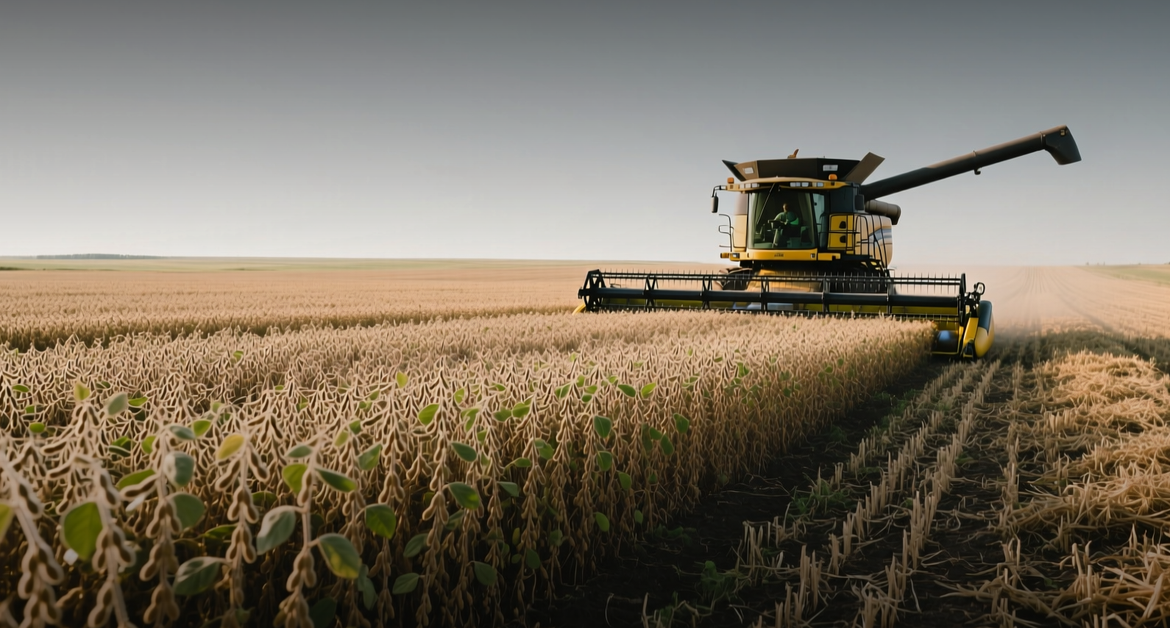
The stakes extend beyond manufactured goods. Any Chinese retaliation could redirect soybean, corn and other agricultural trade flows toward Brazil and Argentina, while US farmers face renewed export uncertainty. The trade truce expires Nov. 10, making the Sept. 24 summit a critical test of whether both sides can keep tariffs away from food and farm trade.
Tariff Architecture Under Legal Scrutiny
The 7.5% figure traces back to a legal detour. After the Supreme Court invalidated executive tariffs imposed under the International Emergency Economic Powers Act, the administration pivoted to Section 301 for its overcapacity probe. US trade officials are also considering an alternative structure that would announce a higher headline duty rate while suspending part of it to yield the same effective 7.5% rate, according to Bloomberg.
The overcapacity tariff would stack alongside other Section 301 actions. The Office of the US Trade Representative implemented standalone Section 301 tariffs of 10% to 12.5% on 60 trading partners on July 24, following an inquiry into forced labor enforcement, according to logistics firm Dimerco. A coalition of 25 states including New York, California and Illinois filed a lawsuit at the US Court of International Trade earlier this month, alleging the administration unlawfully invoked Section 301 to replace tariffs struck down by the Supreme Court.
Agricultural Exposure and Latin America's Opening
For US agriculture, the central question is whether Beijing responds by targeting American agricultural products. Previous US-China trade disputes demonstrated how quickly tariffs can redirect soybean flows. China remains a crucial buyer in global agricultural markets, meaning changes in purchasing patterns can influence export premiums, futures, basis levels and farm income across the Midwest.
Brazil would be positioned to capture additional Chinese soybean demand if Beijing reduced purchases from the United States. During previous periods of US-China trade friction, Brazilian agriculture benefited from changes in Chinese sourcing. Argentina could also benefit through grains, oilseed products and livestock exports, though trade wars can increase volatility across commodity prices, freight and currencies.
The broader context includes California's agricultural sector, which lost roughly $1 billion in trade with China during 2025 tariff disputes, with top commodities dropping 64% from an annual average of $1.55 billion to $554.2 million, according to a University of California analysis. China's share of containerized import cargo at the Port of Los Angeles fell from 61% in 2020 to roughly 40% this year as importers rerouted supply chains toward Southeast Asian nations.
The next major signal for farmers may come not from the tariff announcement itself but from China's response. A decision by Beijing to alter purchases of US agricultural commodities could quickly reshape trade flows across the Americas. For now, the proposed 7.5% tariff remains under consideration rather than official US policy, and the final structure could still change. But the Sept. 24 Trump-Xi meeting gives agricultural markets a clear date to watch.
This article is for informational purposes only and does not constitute investment advice.