


China's top economic planner released two AI policy documents at the 2026 WAIC as Beijing pushes to shape global AI governance.
China's top economic planner released two AI policy documents at the 2026 WAIC as Beijing pushes to shape global AI governance.
China's top economic planner released two AI policy documents at the 2026 WAIC as Beijing pushes to shape global AI governance.
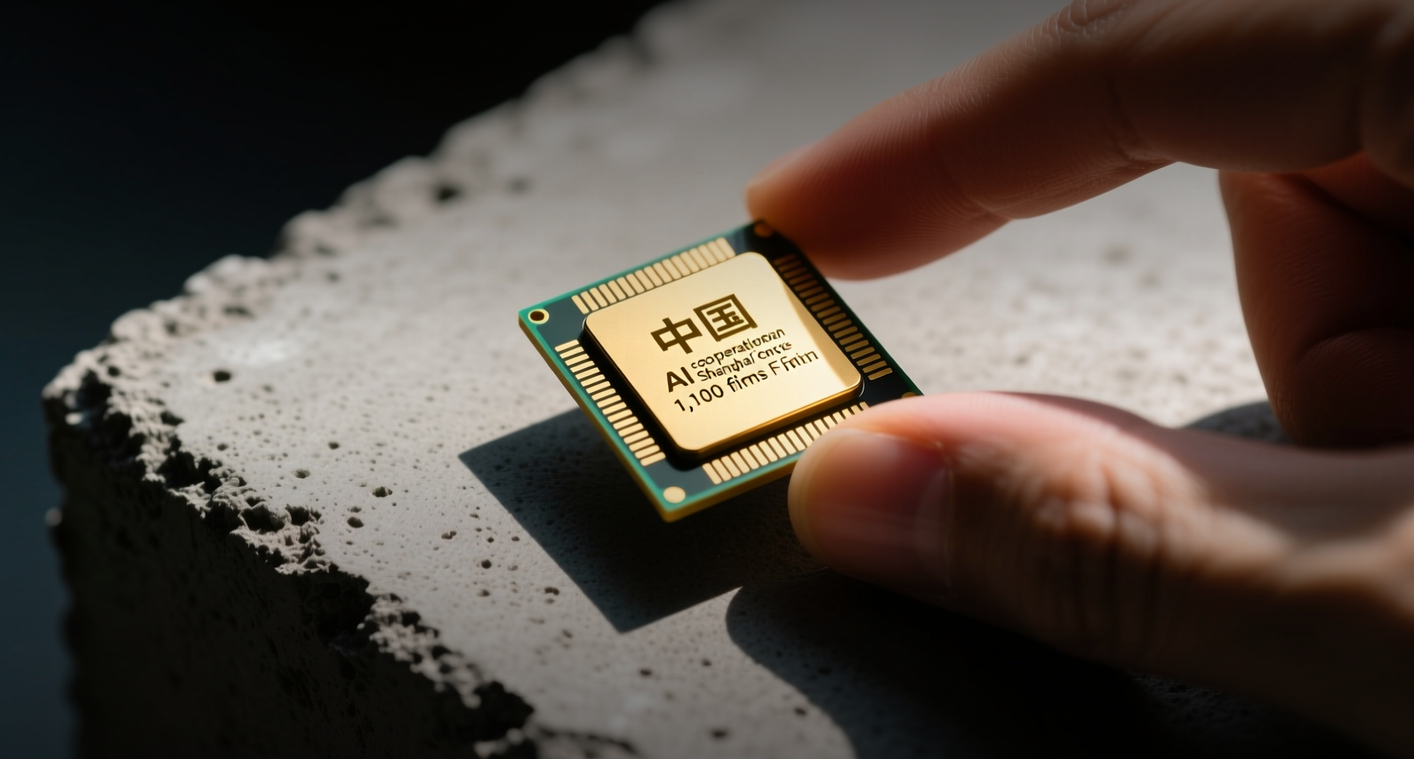
China's National Development and Reform Commission on Friday released an AI Cooperation Development Action Plan and a case collection at the 2026 World Artificial Intelligence Conference, as Beijing accelerates efforts to set global AI governance standards.
"China is committed to promoting AI access and ensuring the benefits of artificial intelligence are shared by all countries," President Xi Jinping said in a speech at the Shanghai conference, according to state media reports.
The action plan outlines Beijing's framework for international collaboration on AI research, standards and ethics. The companion "China Smart · Benefits the World (2026)" case collection highlights more than 50 Chinese AI projects deployed across healthcare, education and smart-city systems globally. The four-day event, running through July 20, features over 1,100 domestic and international companies unveiling more than 300 products making their global debut.
The policy push comes as China and the US compete for dominance in a global AI market projected to exceed $2 trillion by 2030. Beijing's ability to set governance norms could determine which technologies and standards prevail in emerging markets across Southeast Asia, Africa and Latin America — regions where Chinese tech giants including Huawei, Alibaba Group Holding Ltd. and Baidu Inc. already have deep commercial ties.
The action plan represents China's most detailed public framework for AI cooperation since Xi's Global AI Governance Initiative proposed in 2023. Unlike the European Union's AI Act, which emphasizes risk-based regulation, Beijing's approach focuses on development access and technology sharing among developing nations — a deliberate counterpoint to US-led export controls that restrict Chinese access to advanced semiconductors from Nvidia Corp. and Advanced Micro Devices Inc.
For Chinese AI companies, the policy provides continued central government backing at a time when US sanctions have limited access to Nvidia's H100 and B200 graphics processing units. Domestic chip makers including Huawei Technologies Co.'s Ascend division and Shanghai-based Enflame Technology Co. stand to benefit from the push for self-reliance, while Alibaba's Tongyi Qianwen and Baidu's Ernie Bot large-language models compete for market share in China's rapidly expanding AI sector.
The policy clarity could boost sentiment for Chinese AI and tech stocks listed in Hong Kong and Shanghai. The Hang Seng Tech Index has gained 18% year-to-date through Thursday, partly on expectations of government AI support. Alibaba trades at 11 times forward earnings, a discount to US peers, while Baidu's AI cloud revenue grew 12% in the most recent quarter. Investors will watch for implementation details and specific funding commitments in the months ahead.
This article is for informational purposes only and does not constitute investment advice.
