
Key Takeaways: Canada walked away from a U.S. trade deal rather than accept terms Carney called "uneconomic, unfair, and unreliable," setting up a dollar-for-dollar tariff war.
Key Takeaways: Canada walked away from a U.S. trade deal rather than accept terms Carney called "uneconomic, unfair, and unreliable," setting up a dollar-for-dollar tariff war.
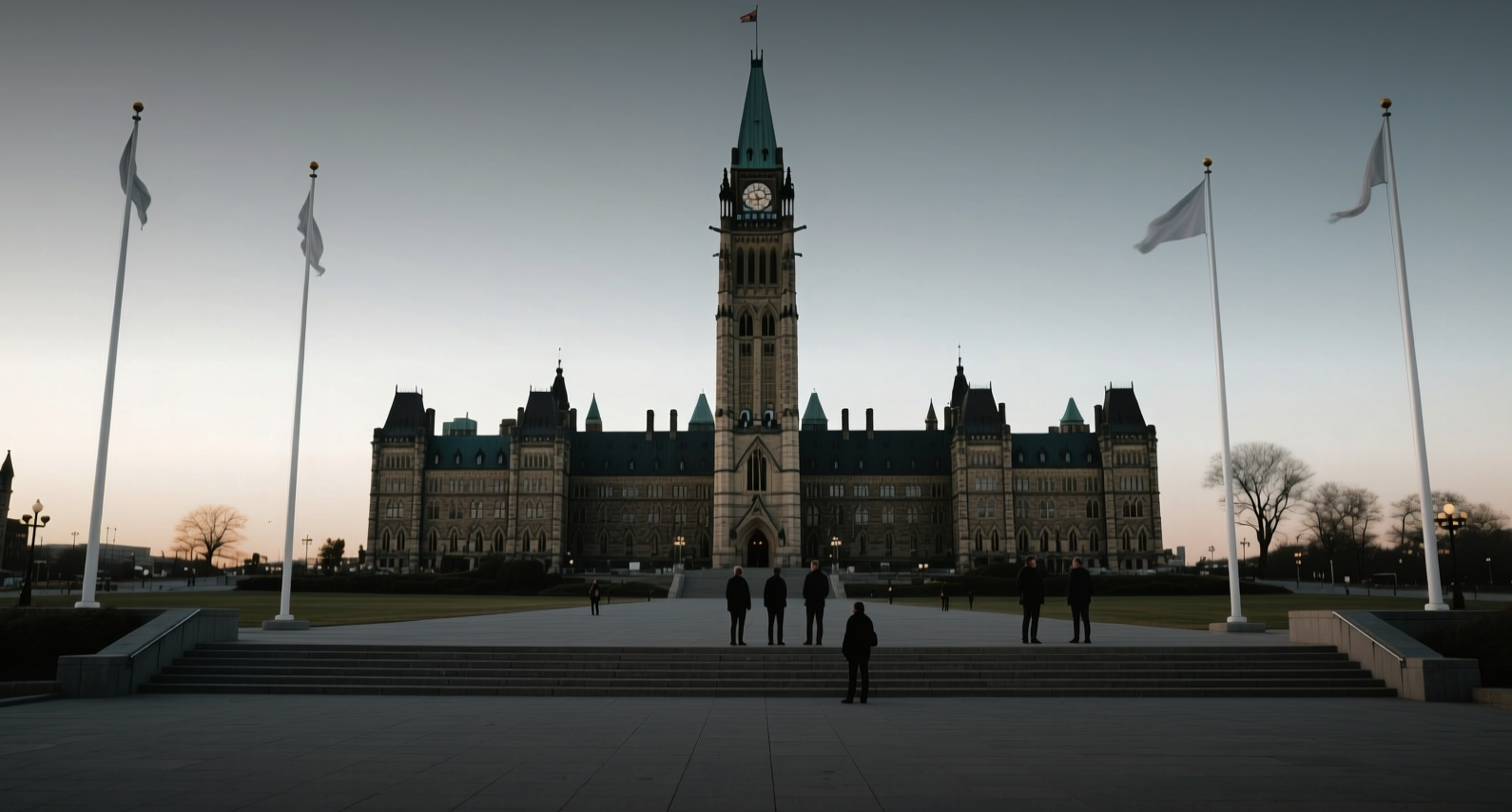
Canadian Prime Minister Mark Carney suspended trade negotiations with the United States late Friday, hours before Washington's 50 percent tariffs on roughly $28 billion of Canadian goods took effect at midnight.
"We cannot accept what they have offered, and we will not give what they have asked," Carney said in remarks at Parliament Hill in Ottawa, adding that last-minute changes in U.S. proposed terms were "uneconomic, unfair, and called into question the reliability of any deal."
Canada will match the new duties dollar for dollar, with retaliatory tariffs concentrated in steel, dairy, appliances, agricultural equipment, pulp and paper, and electronics, effective the Tuesday after Labor Day. The measures build on nearly $25 billion in support provided over the past 18 months. The U.S. Trade Representative's office valued the affected imports at about $20 billion, while Carney's office cited $28 billion.
The collapse ends weeks of talks that had appeared close to a deal — Bloomberg reported Wednesday that U.S. negotiators had agreed to lower tariffs on cars and metals from 25 percent to 15 percent. Carney said Canada would return to the table "when the United States adopts a proper attitude," rejecting any treatment of Canada as a vassal state.
Last-Minute Demands Sink a Deal in Reach
Carney said negotiators had made "important progress" toward an agreement that would have secured the best terms in each of Canada's strategic sectors, but the U.S. introduced new demands in the final hours. These included restricting the scope of auto tariff relief to exclude medium- and heavy-duty trucks — a move that would have left Ford's Oakville F-350, F-450 and F-550 production and GM's Silverado line outside the deal — and language limiting Canada's ability to pursue other trade agreements.
The U.S. also pressed, unsuccessfully, on protections for the French language and Canadian culture. "For my government and for Canada, these issues were never on the table," Carney said. The duties were imposed under Section 338 of the Tariff Act of 1930, a provision never before deployed, and are all but certain to face legal challenge.
The U.S. Chamber of Commerce warned the tariffs would "damage both economies, drive up costs for U.S. families, further disrupt critical supply chains, and risk the 13 million American jobs" tied to the North American trade pact. Canada supplies 99 percent of U.S. natural gas imports, 85 percent of electricity imports and 60 percent of crude oil imports, while Americans sold almost $600 billion in goods and services to Canadians last year.
Canada's Plan B Was Always Plan A
Carney framed the walkaway as consistent with a strategy of building at home and diversifying abroad. Canada has signed more than 20 trade and security deals across five continents in the past year, including a pact with the United Arab Emirates completed in a record 47 days, and now has tariff-free access to 1.5 billion consumers — a figure the government expects to double within six months through new agreements from ASEAN to India.
The government has referred 27 nation-building initiatives worth $500 billion in private investment to its new Major Projects Office, cut the tax rate on new business investment to 13 percent — 4.5 percentage points below the U.S. — and reduced the rate on business investment to roughly half the G7 average. Foreign direct investment is at its highest level in two decades, running at twice the rate of Canada's nearest G7 competitor, and the country ranks as the most attractive destination for infrastructure investment globally.
The last time the U.S. escalated tariffs on Canada, in 2018 under Section 232 on steel and aluminum, Ottawa retaliated with duties on American goods and the dispute dragged on for over a year before a side agreement was reached. This time, Carney said the stakes are higher: "America is trying to break us so they can own us," he said, repeating a warning from last spring. "That will never, ever happen."
The new tariffs take effect as Canada projects the second-fastest growth in the G7 this year and next, with job creation running at four times the U.S. rate. Carney said the government will release details of additional support for affected businesses early next week, alongside the retaliatory measures. "We will support these businesses for as long as it takes — beyond the life of this U.S. administration," he said.
This article is for informational purposes only and does not constitute investment advice.
