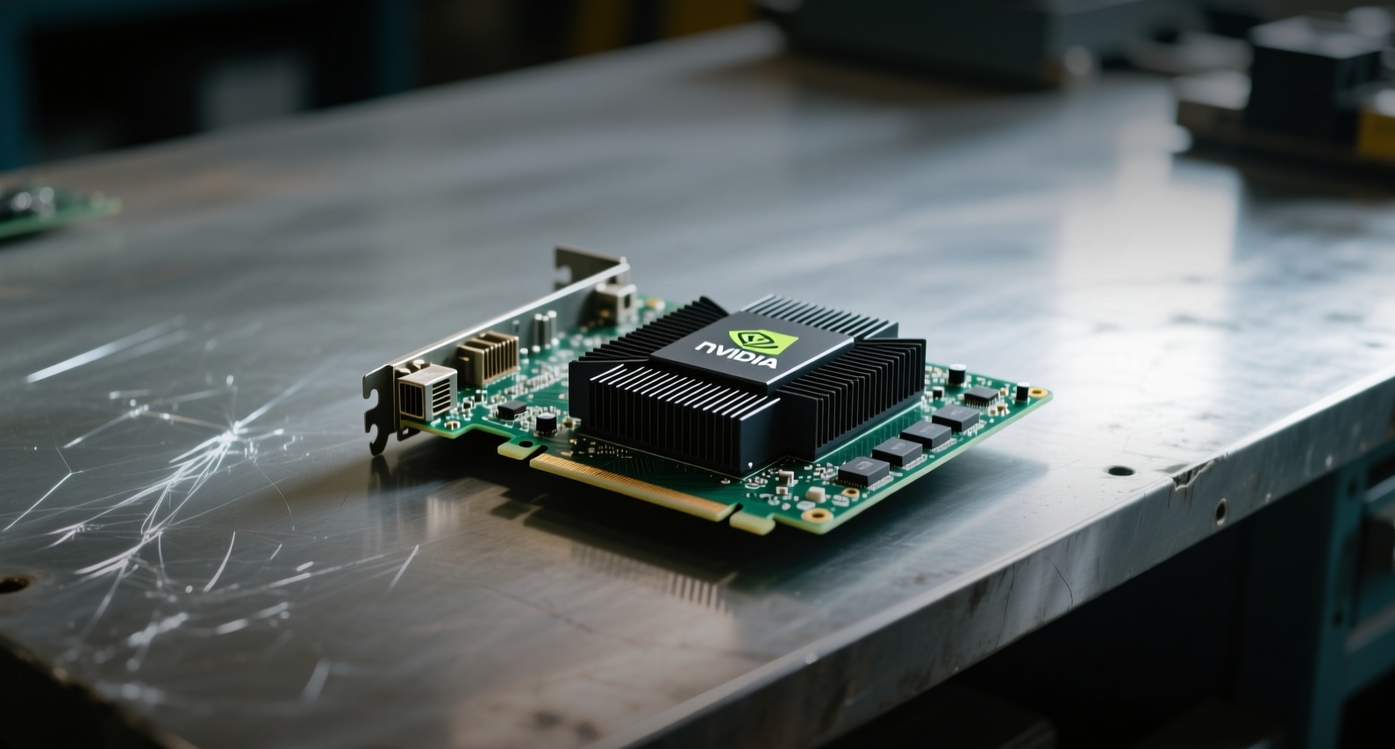
Bank of America sees the PHLX Semiconductor Index falling another 10 percent as crowded AI bets collide with rising rates and data-center backlash.
"Headwinds could cap chip stocks near-term," Vivek Arya, semiconductor analyst at Bank of America, said in a Monday note to clients, citing "rising rates, data-center backlash [and] circular financing" alongside the fact that "chips are heavily owned, 13% overweight vs. SPX."
A drop of that size would extend a two-month slide and pull the index's valuation multiple back to levels last seen before ChatGPT's 2022 launch. Chip stocks sit 13 percent overweight relative to the S&P 500, leaving the group exposed to forced selling if sentiment turns. Both the SOX and the S&P 500 now trade near 20 times forward earnings, erasing years of whiplash: chip multiples swung from a 9 percent discount to the S&P before ChatGPT's debut to a 15 percent premium at the height of the AI trade.
Despite the near-term caution, Arya recommends treating any further decline as an entry point. Companies in the index are expanding forward earnings per share at a compound annual growth rate of roughly 70 percent, making the current 20 times forward multiple "cheap," he wrote, adding that seasonal patterns have historically turned bullish into year-end. The firm assigned "enhanced buy" ratings to eight names: Nvidia, Marvell Technology, Micron, Lam Research, Advanced Micro Devices, Intel, Analog Devices and ON Semiconductor.
Developments are already in motion. Marvell is accelerating its custom AI chip rollout, while Nvidia reports quarterly results after Wednesday's close. Arya flagged risks for Nvidia including "potential for decelerating capital returns" and "lumpy and unpredictable sales" in new enterprise markets. Nvidia shares fell about 7 percent in the week through Aug. 24 as investors questioned the durability of the AI infrastructure boom.
The tension between crowded short-term positioning and durable secular earnings growth sets up the next test at Nvidia's report. A pullback tied to softer capital-return guidance could trigger further momentum selling, yet the return of chip valuations to historical parity has already wrung out much of the speculative excess. From here, execution on custom silicon programs is likely to separate winners from laggards, with specialized suppliers such as Marvell likely to gain share even as enterprise spending stays uneven.
Rather than a structural break in AI capital expenditure, a further 10 percent reset would realign stock multiples with underlying earnings growth, clearing the runway for a rebound into year-end. Investors will watch Nvidia's earnings call Wednesday for updated data-center demand and capital-return plans.
This article is for informational purposes only and does not constitute investment advice.