

Key Takeaways:
- Alibaba released Qwen-Audio-3.0-Realtime, a voice AI model with two tiers
- The Plus variant targets complex reasoning; Flash prioritizes low-latency response
- Alibaba competes with Baidu, ByteDance, and OpenAI in the voice AI market
Key Takeaways:
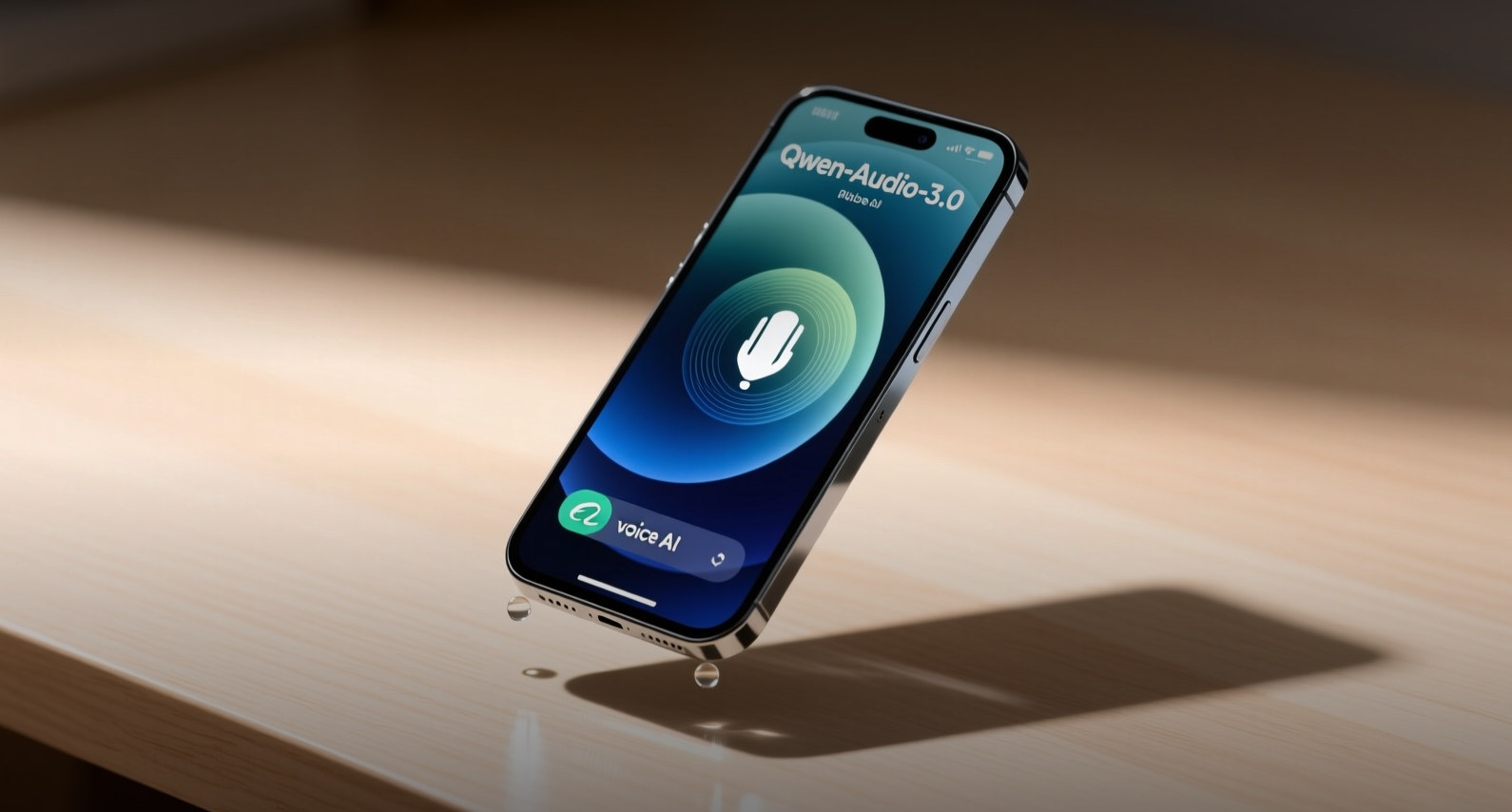
Alibaba's new voice AI model takes on OpenAI and Baidu in the race for real-time conversational AI.
Alibaba Group released Qwen-Audio-3.0-Realtime on Wednesday, a voice dialogue model that upgrades agent tool calling and empathetic conversation, intensifying competition in China's voice AI market.
"We designed this model to be both fast and intelligent, closing the gap between voice assistants and genuine conversation," an Alibaba Cloud spokesperson said.
The model ships in two variants: the Plus edition for complex reasoning tasks and the Flash edition optimized for low-latency responses. Alibaba said the model improves across four dimensions — reasoning capability, agent tool integration, empathetic dialogue, and full-duplex conversational fluency — though it did not disclose specific benchmark scores or the test conditions for its claimed improvements. Full-duplex capability, which allows both parties to speak and interrupt naturally without waiting for turns, is a key differentiator in voice AI that OpenAI introduced with GPT-4o in 2024.
The Qwen model family underpins Alibaba's AI strategy as it competes with Baidu's ERNIE Bot and ByteDance's Doubao for enterprise and consumer voice AI adoption across smart customer service, education, entertainment, and emotional companionship.
The Plus variant targets enterprise use cases requiring complex multi-step reasoning, such as customer service escalation and educational tutoring, where the model must understand context, retrieve information from databases, and execute actions through tool calls. The Flash variant prioritizes speed for real-time applications like interactive entertainment and emotional companionship, where low latency is critical for natural conversation flow. Alibaba did not disclose pricing per token or inference cost for either version, metrics that determine whether enterprises can deploy the model at scale.
The launch comes as Chinese AI companies accelerate product releases in the agentic web era, where AI systems execute tasks autonomously rather than merely generating responses. Baidu has integrated voice capabilities into its ERNIE Bot, while ByteDance's Doubao has gained traction in consumer-facing voice applications. OpenAI's GPT-4o voice mode, which supports real-time emotional tone detection and interruption handling, set a global benchmark that Chinese developers are racing to match.
Alibaba's Qwen model family has become a central pillar of the company's cloud business. The cloud unit competes with Huawei Cloud and Tencent Cloud for enterprise AI workloads, and voice AI represents a fast-growing segment as companies automate customer service and develop virtual assistants. Alibaba recently invested in PixVerse, an AI video generation platform, as part of a broader push into AI applications beyond its core e-commerce business.
For investors, the Qwen-Audio-3.0 launch shows Alibaba's commitment to maintaining its position in China's AI race, though the lack of disclosed benchmark data makes it difficult to assess whether the model genuinely closes the gap with competitors. Alibaba is expected to report its June quarter earnings in August, where cloud revenue growth and AI-related spending will be key metrics. The company's ability to monetize its AI investments through cloud services and enterprise deployments will determine whether the Qwen family translates into sustainable revenue growth.
This article is for informational purposes only and does not constitute investment advice.
