
Key Takeaways:
- Xi Jinping targets at least 7% annual R&D spending growth through 2030
- China's 2025 R&D investment hit 3.92 trillion yuan, or 2.8% of GDP
- Policy roadmap sets 2035 deadline for building a global sci-tech powerhouse
Key Takeaways:
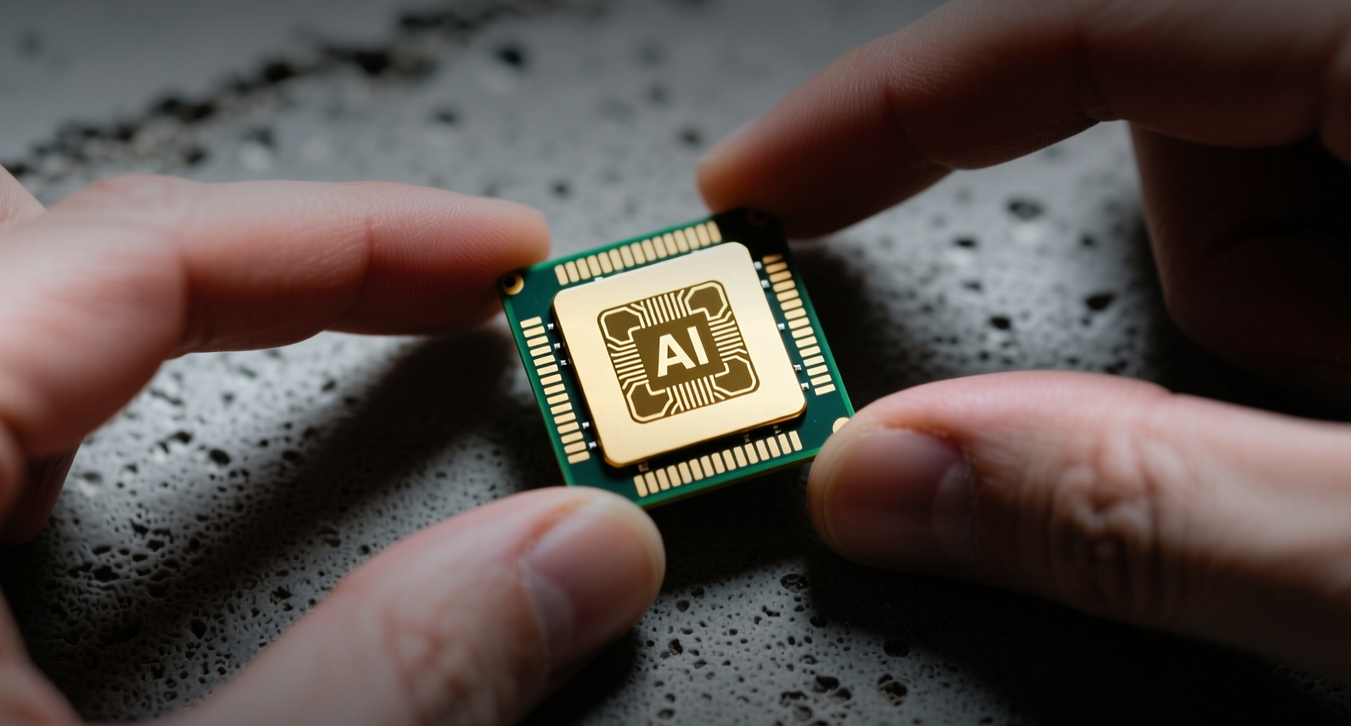
China will boost annual research spending by at least 7% through 2030 as President Xi Jinping declared the next five years critical for building a global science and technology powerhouse by 2035.
President Xi Jinping called for a 7% annual increase in nationwide R&D spending through 2030, setting a 2035 deadline for China to become a global science and technology powerhouse at a major policy address in Beijing on Wednesday.
"The 15th Five-Year Plan period is a critical period for building a strong science and technology country," Xi said at the joint National Science and Technology Awards Conference, Chinese Academy of Sciences and Chinese Academy of Engineering academician conferences, and the China Association for Science and Technology congress. "We must seize the historical opportunity and accelerate high-level technological self-reliance."
China's total R&D investment exceeded 3.92 trillion yuan ($576 billion) in 2025, accounting for 2.8% of gross domestic product, according to the Ministry of Science and Technology. Basic research funding reached nearly 280 billion yuan, or 7.08% of total R&D spending — the first time it has surpassed the 7% threshold. The 2025 National Science and Technology Awards recognized 258 projects and 11 experts, with the top prize going to physicist Chen Li-quan of the Chinese Academy of Sciences and radar specialist Ben De of China Electronics Technology Group Corp.
The speech signals a strategic shift in how China allocates its science budget, with explicit directives to integrate technology with industry, strengthen intellectual property protection and build a science-finance system. The 2035 timeline gives investors a decade-long policy horizon for Chinese technology equities, semiconductor supply chains and AI-related sectors, though execution risks remain around the "break the four onlys" campaign to reform how researchers are evaluated.
Xi outlined six priority areas: strengthening systematic innovation capabilities, integrating technology with industrial production, improving R&D spending efficiency, reforming science evaluation systems, cultivating young talent and strengthening ethical governance. The address came as China faces intensifying technology competition with the United States over semiconductor access, AI development and advanced manufacturing.
R&D Spending Hits Record as Policy Levers Shift
The 3.92 trillion yuan in R&D spending for 2025 represents a significant acceleration from prior years. The government work report adopted in March signaled a strategic reallocation toward basic research, which has historically been underfunded relative to applied science. The 7.08% share for basic research, while still below the 15% to 20% typical of leading OECD economies, marks a milestone in China's transition from technology imitator to innovator, according to Liu Chunsheng, an associate professor at the Central University of Finance and Economics in Beijing.
"China has established collaborative innovation networks that bring together state-owned enterprises, private firms, foreign investors, universities and research institutes, creating a dynamic environment where ideas can swiftly transition from the lab to the market," Liu said.
The government plans to establish three international science and technology innovation centers — in the Beijing-Tianjin-Hebei region, the Yangtze River Delta and the Guangdong-Hong Kong-Macao Greater Bay Area — as world-class innovation engines, according to the work report.
Market Implications for Global Investors
For global investors, Xi's speech provides the clearest policy roadmap yet for China's technology sector through 2035. The emphasis on integrating technology with industry — Xi specifically called for technology to be application-oriented and industry to propose scientific questions — suggests increased government procurement of domestic chips, AI software and industrial robotics. The directive to build a science-finance system implies new policy banks or credit facilities for technology companies, potentially expanding beyond the existing 500 billion yuan in relending facilities for tech innovation.
Elijah Mwangi, a Nairobi-based scholar, said in a commentary published by China Global Television Network that "the perception of China trailing Western innovation is outdated, as Chinese firms are now leaders in areas such as 5G telecommunications, drone technology, fintech and artificial intelligence applications."
The CSI 300 index and Hang Seng Index will be watched for sector rotation toward technology names as investors price in the policy tailwinds. The onshore yuan traded near 7.25 per dollar on Wednesday, with traders assessing whether the R&D push will widen China's current account surplus through higher-value exports or increase import demand for advanced chip-making equipment. The last time Xi delivered a major science policy address in 2021, the CSI 300 tech sector gained 12% over the following three months as state-directed funds flowed into semiconductor and AI companies.
This article is for informational purposes only and does not constitute investment advice.
