
President Trump's dismissal of the Iran agreement as "worthless" threatens to unwind weeks of diplomatic progress that had pulled crude off its highs.
President Trump's dismissal of the Iran agreement as "worthless" threatens to unwind weeks of diplomatic progress that had pulled crude off its highs.
President Trump's dismissal of the Iran nuclear agreement as "worthless" reopens the risk premium that had drained from crude, threatening to push Brent back above $90 a barrel after a 6 percent slide in WTI.
"Recent developments in the Middle East may be reducing part of the uncertainty that had dominated energy markets," Julian Pineda, a market analyst at StoneX's FOREX.com, said in a note, cautioning that the calm could prove temporary.
The comment lands after a volatile fortnight. WTI crude fell nearly 6 percent over two sessions in late August as diplomatic signals eased tensions, with the US announcing sanctions on nearly 60 Iran-linked entities and Pakistan reporting progress in high-level talks. Iran has begun direct negotiations over management of the Strait of Hormuz, including a possible temporary shipping corridor, and the OVX volatility gauge held below 50 points.
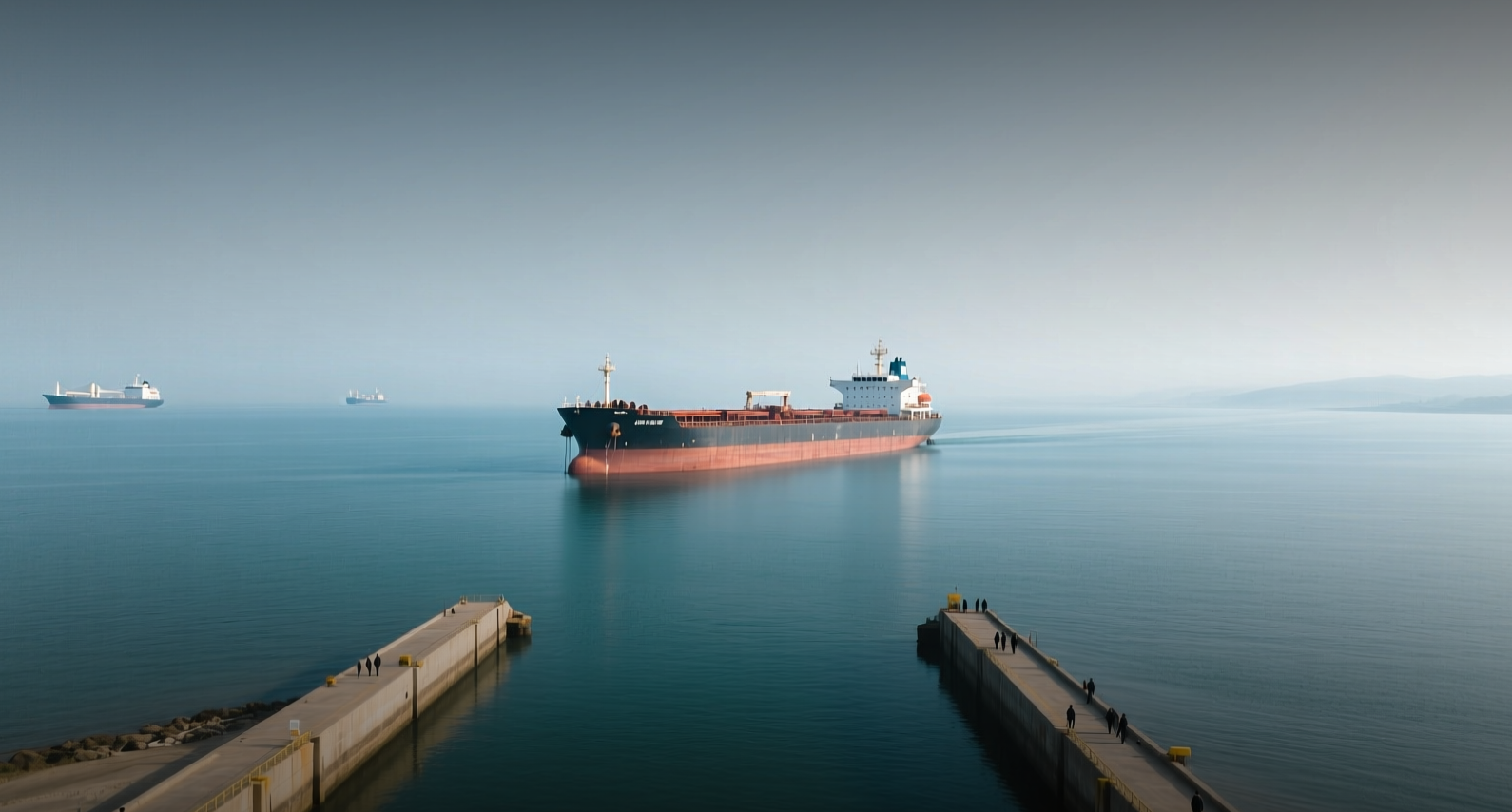
The stakes are outsized because the Strait of Hormuz carries about 21 percent of global oil trade. If Trump's rebuke hardens into fresh sanctions or military moves, crude could spike; if diplomacy holds, the risk premium stays compressed. Traders are watching for the next concrete US action.
The statement marks a sharp rhetorical turn from the easing that had dominated the past week. When US-Iran tensions last flared, American crude jumped nearly 5 percent to top $83 a barrel, and Brent pushed toward $90, feeding inflation concerns across import-dependent economies. The retreat that followed — WTI sliding toward the $77 equilibrium zone where its 200- and 50-period moving averages converge — reflected bets that economic pressure rather than military escalation would define the standoff.
That calculus now looks shakier. Trump's characterization of the agreement as worthless, and his insistence that he has "given Iran many opportunities," echoes the language that preceded earlier rounds of maximum-pressure sanctions. The rupee, a sensitive gauge of India's oil import bill, has traded in a narrow range as traders await clarity on whether Washington will impose fresh measures, with the dollar index firming against most Asian currencies.
Gold, the traditional haven, fell about 1.2 percent to roughly $2,340 an ounce even as tensions simmered, a sign that interest-rate expectations and a stronger dollar are dominating safe-haven flows. That divergence shows how much of the oil risk premium now hinges on the specific shape of any US response rather than on generalized geopolitical anxiety.
For energy markets, the key technical levels frame the two-way risk. A renewed move toward $86 — the 38.2 percent Fibonacci retracement of the recent decline — would begin to challenge the bearish trendline that has capped WTI since May. A break below $73, by contrast, would confirm the downtrend and keep the risk premium suppressed. The OVX's position just under 50 suggests options traders are not yet pricing a sustained spike, leaving room for a sharp repricing if the rhetoric turns to action.
The transmission to broader markets is direct. India's benchmark indices have swung with each twist in the US-Iran saga, adding nearly Rs 5 lakh crore in market value on a single day when talks revived, then giving it back as tensions flared. With Brent holding above $90 in the most recent flare-up, the inflation channel — higher fuel costs feeding into consumer prices — remains the clearest risk to the rate outlook across Asia.
What happens next depends on whether Trump's words translate into deeds. If the administration follows the rebuke with a new sanctions tranche or a military posture shift, crude's risk premium could reassert itself quickly, pushing Brent back above $90 and pressuring import-heavy equities. If the diplomatic track on the Strait of Hormuz holds, the market may treat the statement as rhetoric, keeping WTI range-bound between $73 and $86.
This article is for informational purposes only and does not constitute investment advice.
