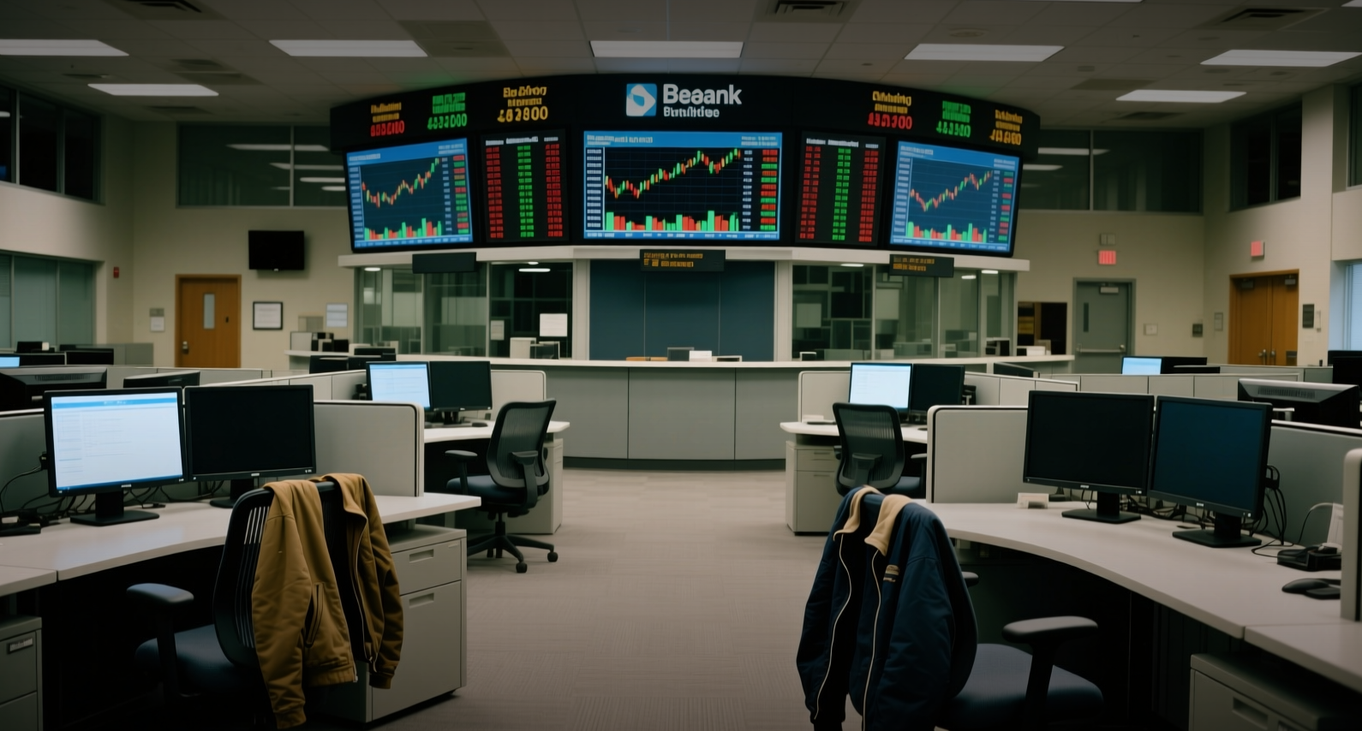
Two of Wall Street's biggest market makers turned temporarily cautious on equities after the S&P 500's weakest three-month stretch of the year.
The S&P 500 rose just over 1% over the past three months, a dud of a summer that has now pushed strategists at Citadel Securities and JPMorgan to adopt a temporarily cautious stance on stocks. Neither firm is calling an end to the bull market, but the synchronized shift marks a notable change in institutional positioning as the season winds down.
Strategists at both firms said they have turned cautious on equities for now, according to a report published Tuesday. The calls come after the benchmark index meandered through a three-month period that delivered little more than a 1% gain, leaving portfolio managers to weigh whether the stall is a pause before a fresh leg higher or the early sign of a deeper pullback.
The two firms were explicit that the caution is temporary rather than a structural call against the bull market. That framing matters for positioning: a temporary stance leaves room for a quick reversal if market conditions stabilize, while a deeper bearish call would force institutional investors to cut equity exposure and rotate into defensive assets. For now, the market is treating the shift as a hedge rather than a conviction trade.
The timing is telling. With the S&P 500 having delivered its weakest three-month stretch of the year, the cautious calls arrive just as investors begin positioning for the final quarter. The question now is whether the two firms' temporary caution hardens into a more bearish view or reverts as the index finds its footing. A reversal would likely require a catalyst — stronger earnings, a clearer path on rates, or a pickup in breadth — while a deepening of the stance would put pressure on the broader market to follow.
For investors, the takeaway is that two of the most influential institutions on Wall Street are now hedging their equity exposure, even as they stop short of calling a top. The next few weeks will show whether that caution was a well-timed defensive move or an overreaction to a slow summer.
This article is for informational purposes only and does not constitute investment advice.