

Replimune's first approved product arrives after two regulatory rejections, a 10-3 advisory committee vote, and a 223 percent stock surge.
Replimune's first approved product arrives after two regulatory rejections, a 10-3 advisory committee vote, and a 223 percent stock surge.
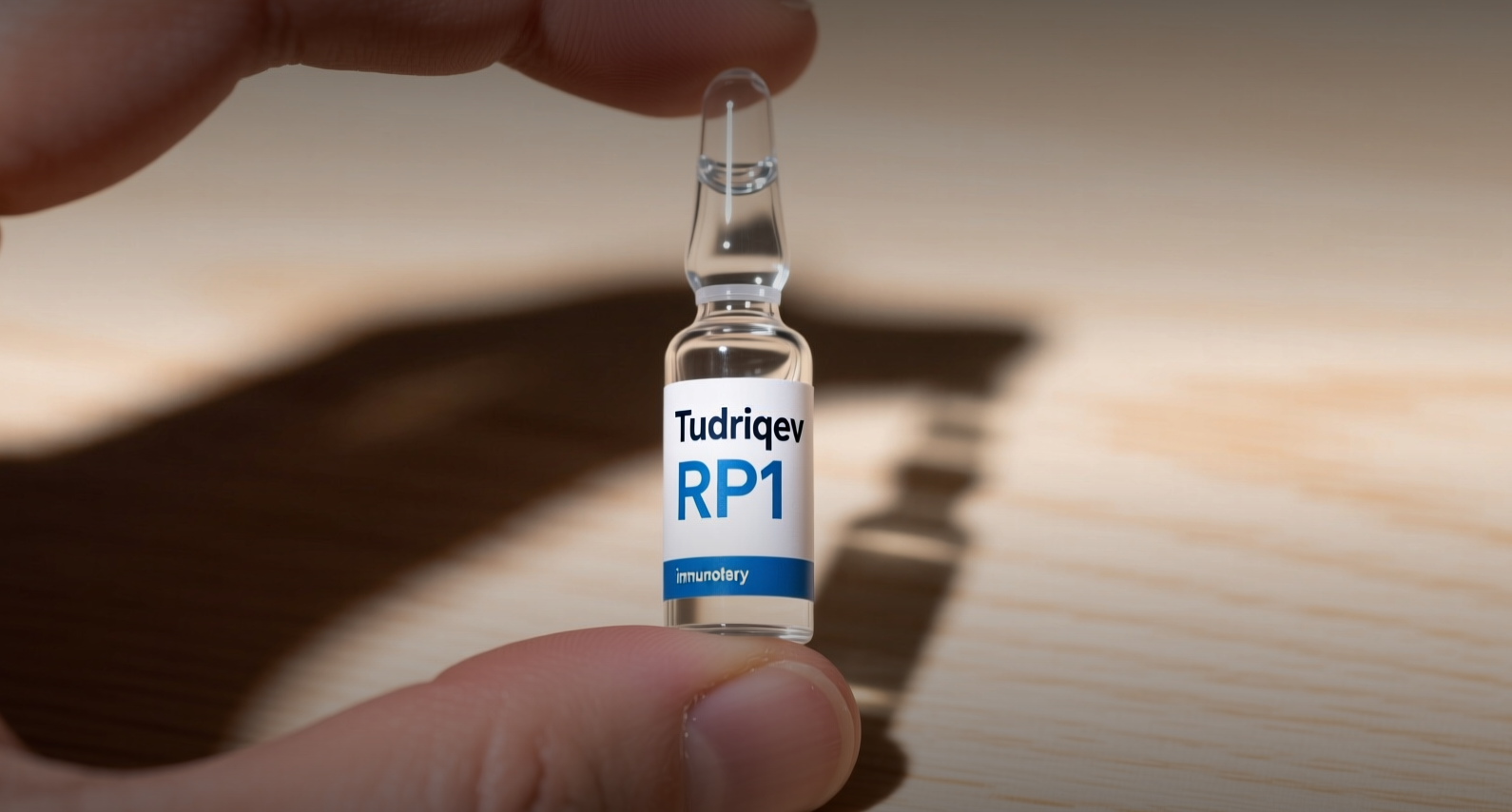
Replimune's shares have climbed 223% in three months after the FDA granted accelerated approval to RP1, its oncolytic immunotherapy for advanced melanoma, clearing a regulatory path that had stalled twice through complete response letters.
The approval follows a July advisory committee vote of 10-3 that the IGNYTE trial's efficacy data were evaluable and clinically meaningful, according to the FDA's cellular, tissue and gene therapies advisory committee. Replimune said some patients achieved complete disappearance of their tumors.
The FDA approved RP1, marketed as Tudriqev, in combination with Bristol Myers Squibb's Opdivo for adults with unresectable advanced cutaneous melanoma who progressed on anti-PD-1 therapy. The IGNYTE study showed a 24 percent objective response rate with a median duration of response of 14 months. Continued approval depends on the confirmatory Phase 3 IGNYTE-3 trial.
The approval marks Replimune's first commercial product and removes the regulatory uncertainty that had weighed on the stock since the FDA issued complete response letters in July 2025 and April 2026. The company priced a $150 million offering at $12.06 per share on Aug. 10 to fund commercialization and pipeline expansion.
Two CRLs and a Resubmission
Replimune's path to approval was anything but smooth. The FDA issued its first complete response letter in July 2025, followed by a second in April 2026, concluding the available data were insufficient to establish substantial evidence of effectiveness. The company disagreed and maintained the IGNYTE dataset was adequate to support accelerated approval.
In June, the FDA accepted Replimune's resubmitted biologics license application for priority review with a target action date of Aug. 2, 2026. The advisory committee vote in July provided external support that strengthened expectations for a favorable outcome.
The regulatory history highlights the challenges of single-arm oncology trials. FDA reviewers had previously raised concerns that tumor responses measured using RECIST v1.1 criteria could be inflated because RP1 is injected directly into tumors, making it difficult to distinguish a local injection effect from systemic anti-tumor activity. The absence of an Opdivo-only control arm also limited the ability to attribute incremental benefit to RP1. These concerns were central to the advisory committee's deliberations, and the 10-3 vote reflected a narrow but decisive margin in favor of the data.
RP1 is an oncolytic immunotherapy built on a modified herpes simplex virus type 1 backbone. When injected directly into tumors, it causes selective virus-mediated killing of cancer cells, releasing tumor-derived antigens and altering the tumor microenvironment. Combined with an immune checkpoint inhibitor like Opdivo, it aims to trigger a systemic anti-tumor immune response. The approach differs from standard checkpoint inhibitor therapy alone — in the IGNYTE trial, patients who had already progressed on anti-PD-1 therapy achieved a 24 percent response rate with durable responses lasting a median of 14 months.
Replimune's RPx platform, based on the same HSV-1 backbone, is designed to work across multiple cancer types and combination strategies. The company's pipeline extends beyond melanoma, with programs targeting other solid tumors.
Commercial and Financial Implications
Replimune is now a commercial-stage company, but the transition comes with costs. The company priced an underwritten offering of 9.7 million shares and 2.7 million pre-funded warrants at $12.06 per share, raising approximately $150 million in gross proceeds. Leerink Partners, J.P. Morgan, and Cantor served as bookrunning managers.
Year to date, shares are up 24.1 percent compared with the industry's 6.3 percent growth. The approval also has implications for the broader oncolytic virotherapy sector. Iovance Biotherapeutics, which markets the TIL therapy Amtagvi for similar patient populations, saw its stock surge 43 percent on strong second-quarter results as investor interest in cell-based cancer treatments grows. Both companies target the same patient population — those who have progressed on checkpoint inhibitors — but through fundamentally different mechanisms: Iovance uses tumor-infiltrating lymphocytes harvested from the patient, while Replimune uses an engineered virus injected directly into tumors.
With the regulatory overhang lifted, the question for investors is whether the 223 percent run has already priced in the commercial opportunity. The $150 million raise gives Replimune runway to build out its commercial infrastructure and advance the confirmatory IGNYTE-3 trial, but the stock's valuation now reflects a commercial-stage company with a single approved product and a pipeline still in early stages. The company's ability to expand Tudriqev's label beyond melanoma and demonstrate durable responses in the confirmatory trial will determine whether the current valuation is justified.
This article is for informational purposes only and does not constitute investment advice.
