


Key Takeaways:
- Pi Network and Worldcoin each verified roughly 18 million humans
- Pi uses social trust graphs; Worldcoin uses iris biometrics
- Both compete to become the identity layer for an AI-driven internet
Key Takeaways:
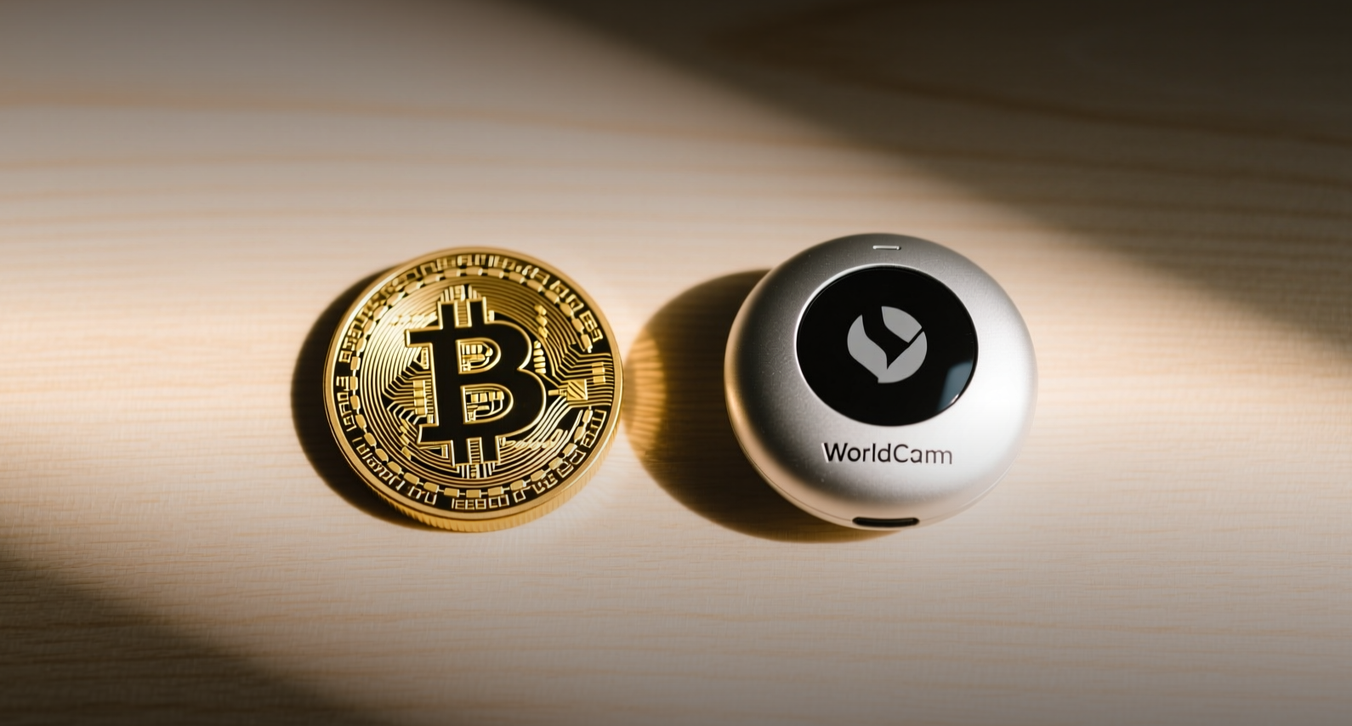
Pi Network and Worldcoin have each verified roughly 18 million humans using fundamentally different methods, competing to become the identity layer of an internet increasingly dominated by AI.
"Two projects have verified roughly 18 million humans each, by completely different methods, for the same prize: becoming the identity layer of an internet overrun by AI," according to a July 8 analysis from crypto.news.
Pi Network relies on a social trust graph where users vouch for one another within a mobile mining network that has amassed tens of millions of active participants on its own Pi Blockchain. Worldcoin, co-founded by OpenAI's Sam Altman, uses iris-scanning Orbs to generate unique biometric identifiers on Ethereum via Optimism, a method that has drawn privacy scrutiny from regulators in Kenya, Germany, and South Korea. Both projects reached approximately 18 million verified humans through entirely divergent technical and philosophical approaches, with neither yet establishing a clear lead in the race for decentralized identity.
The race to establish proof-of-human identity carries billions of dollars in potential value as AI-generated content, bots, and synthetic identities flood the internet. The project that wins this layer could capture a foundational position in Web3 infrastructure, powering everything from universal basic income distribution to sybil-resistant governance. Neither project has achieved full mainnet maturity — Pi Network remains in its enclosed mainnet phase, while Worldcoin continues to expand its Orb deployment network globally.
Two Paths to Proof-of-Human
Pi Network's model treats identity as a social construct. Users build security circles of trusted contacts, creating a web of vouching relationships that the network uses to verify humanness without collecting biometric data. The approach has allowed Pi to scale rapidly in developing markets where smartphone penetration is high but access to biometric hardware is limited. The project's token, PI, trades on limited exchanges as the network has not yet opened its mainnet to external connectivity.
Worldcoin's model treats identity as a biological fact. Its Orb devices scan irises to generate a cryptographic hash that cannot be reverse-engineered into the original image. The company says this provides higher assurance than social verification but has faced regulatory pushback in multiple jurisdictions over data collection practices. Worldcoin's WLD token trades actively on major exchanges including Binance and Coinbase, giving it a liquidity advantage over Pi Network.
The Prize at Stake
The winner of this race could become the default identity provider for an internet where distinguishing humans from AI agents becomes economically critical. Applications include airdrop qualification, decentralized voting, universal basic income distribution, and access to AI services. The market for decentralized identity solutions is projected to grow as AI-generated content makes existing CAPTCHA and KYC systems increasingly obsolete. Both projects face the same fundamental challenge: converting millions of verified users into an active, valuable network before a competitor or a centralized alternative captures the market.
This article is for informational purposes only and does not constitute investment advice.
