

AeroVironment secured a $464.8 million U.S. Army contract for its LOCUST X3 counter-drone laser, the first directed energy production award in American military history, positioning the company as the sole producer in this emerging defense segment.
AeroVironment secured a $464.8 million U.S. Army contract for its LOCUST X3 counter-drone laser, the first directed energy production award in American military history, positioning the company as the sole producer in this emerging defense segment.
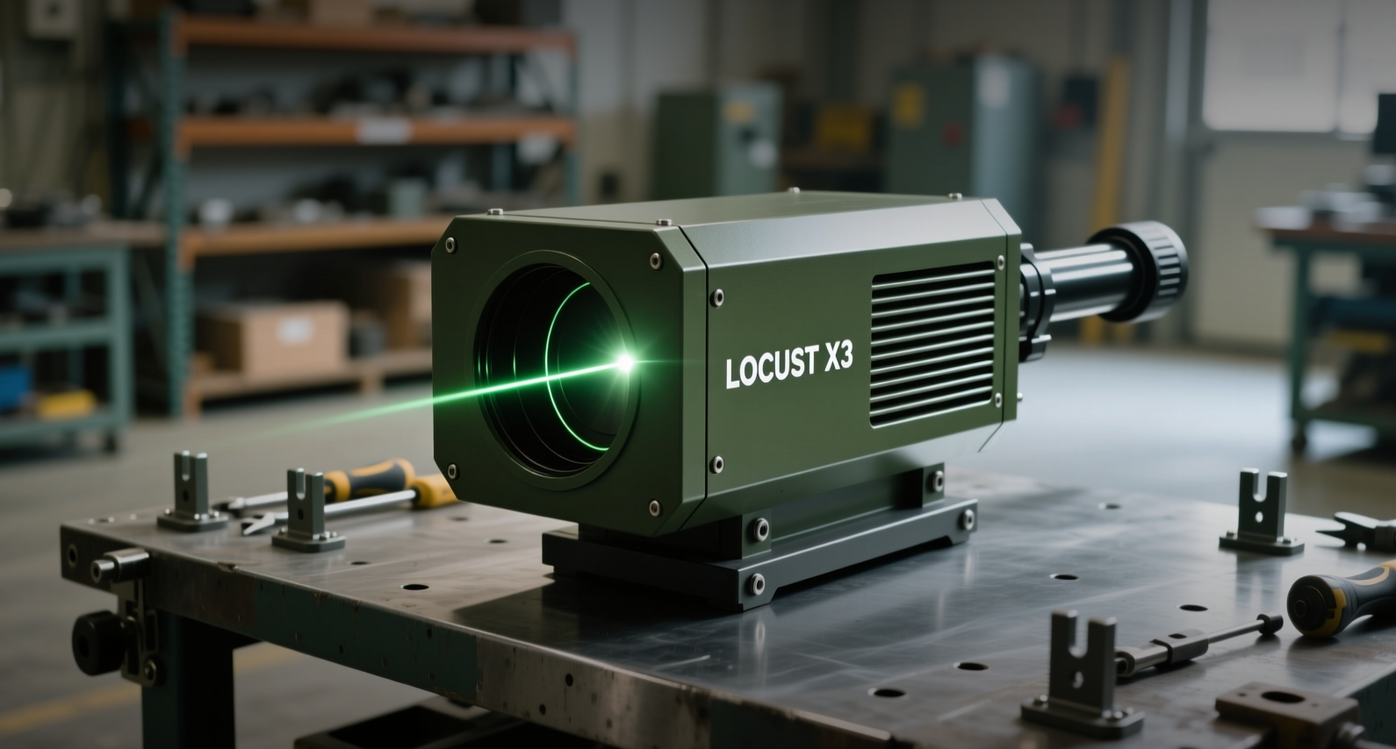
The U.S. Army has selected AeroVironment's LOCUST X3 laser for its Enduring-High Energy Laser program, a $464.8 million award that marks the first production contract for directed energy weapons in the nation's history. The deal, issued through the service's Portfolio Acquisition Executive for Fires program office, shifts the counter-drone technology from prototype demonstrations into full-rate manufacturing.
"LOCUST X3 is intended to be the Group 3 killer," John Garrity, vice president of directed energy systems at AeroVironment, said. "When we talk about Group 3, that's just one of the more prevalent threats that you see in warfare today, seen in conflicts in Iran and in Ukraine with Shahed drones."
The 30-kilowatt laser is engineered to destroy mid-sized unmanned aerial systems — the military's Group 3 category — including Iran's Shahed-136 one-way attack drones that have been launched against U.S. troops and partner forces in the Middle East. The system also engages smaller Group 1 and 2 drones, covering three threat classes. AeroVironment will deliver dozens of units over the next several years, with the laser designed for vehicle mounting on platforms including the Joint Light Tactical Vehicle. The Army is evaluating whether the system can also be fitted to the Infantry Squad Vehicle.
The contract's significance extends beyond AeroVironment's order book. Directed energy weapons have spent decades in research and field trials across the defense industry, but no U.S. military service had awarded a production contract for such a system until now. The Army has said that if the E-HEL program is approved and fielded as planned, it would become the service's first directed-energy program of record — a formal designation that locks in multi-year funding and procurement commitments.
The timing reflects a pressing operational need. U.S. ground-based air defense missile inventories have been depleted during the Iran conflict, and experts estimate it will take years to replenish the interceptors fired in combat. Lasers change the cost calculus: a missile interceptor can miss its target, but as Aaron Westman, senior director for business development at AeroVironment, put it, "as long as you can see something, you can hit it" with a laser.
The LOCUST X3 can bring down targets in single-digit seconds depending on range and material, Garrity said, allowing operators to rapidly engage drone swarms. That speed matters because the system is designed to "thin the herd" of incoming threats, Westman said, preserving more expensive interceptors for high-value targets so the layered defense "doesn't run out of bullets."
Earlier LOCUST variants have already been fielded, with some systems deployed within the continental United States. The company expects to field higher-power versions of the laser over time. One notable design choice: the system uses an Xbox controller interface, a feature Garrity said makes the weapon intuitive for younger service members already familiar with video game controllers.
For AeroVironment, the award adds $464.8 million to its defense backlog and establishes the company as the first mover in directed energy production. The contract win comes as the Army and other services increase spending on counter-drone capabilities, a market that has expanded rapidly as one-way attack drones have become a defining weapon of modern conflict. The company's position as the only directed energy producer with a production contract gives it a structural advantage as the Army evaluates follow-on orders and higher-power variants.
This article is for informational purposes only and does not constitute investment advice.
