
Kalshi's weather prediction markets are on pace to reach $1.1 billion in annual trading volume, and the platform is now tapping The Weather Company's meteorological data to settle those bets.
Kalshi's weather prediction markets are on pace to reach $1.1 billion in annual trading volume, and the platform is now tapping The Weather Company's meteorological data to settle those bets.
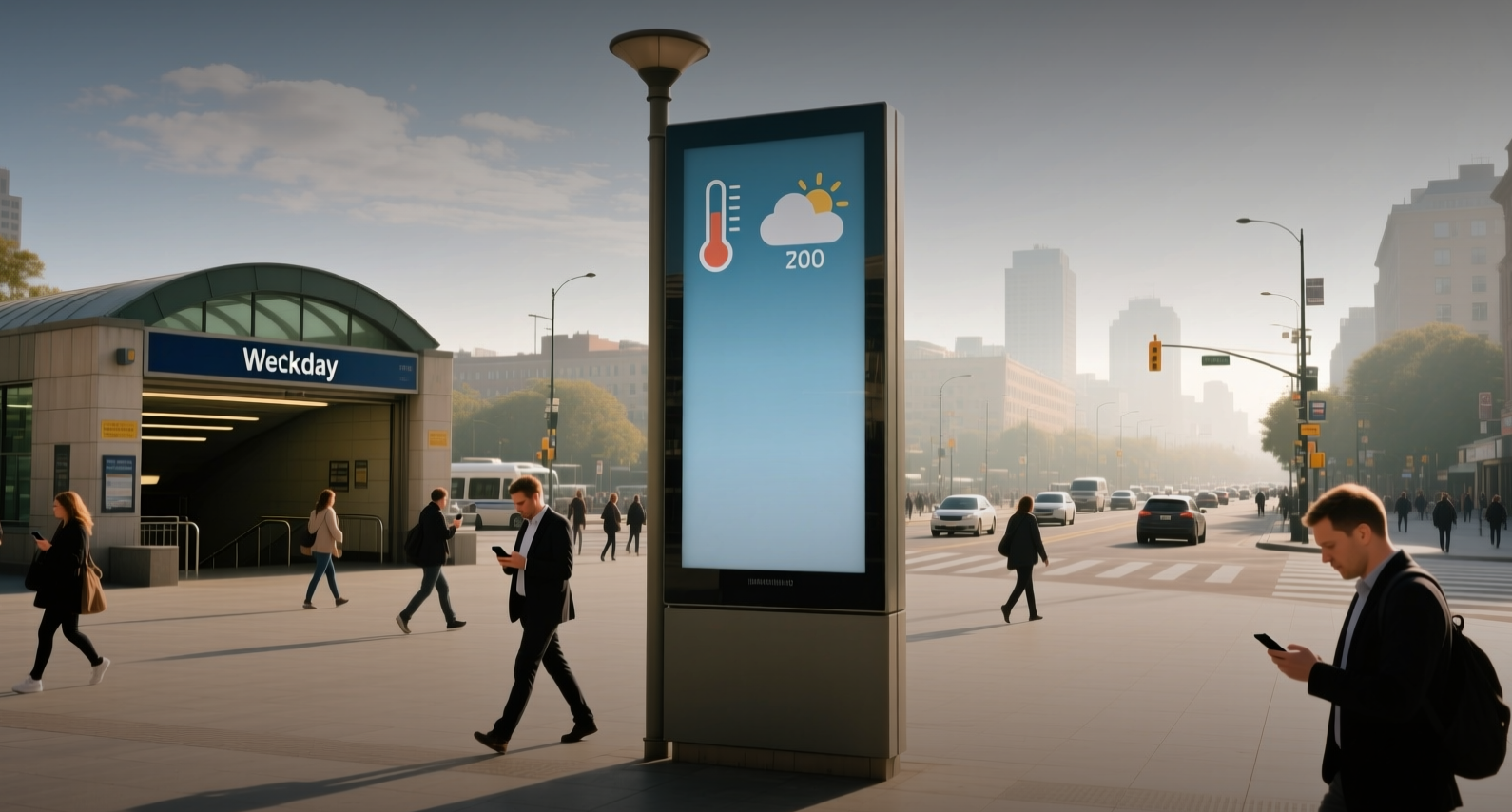
Kalshi's weather prediction markets are projected to hit $1.1 billion in trading volume this year, a 500 percent year-over-year jump, as the platform partners with The Weather Company to verify outcomes using meteorological data.
"Weather is a quintessential prediction-market category," Will Brackett, head of partnerships at Kalshi, said. "It affects people every day, from the decisions you make about your commute to work to businesses and policymakers."
Kalshi's weather and climate markets generated $564 million in volume through July, surpassing the platform's full-year 2025 total by March. The Weather Company, which operates weather.com and The Weather Channel app, will now supply the data used to settle weather contracts, replacing the National Weather Service as the verification source for certain markets. In turn, Kalshi's real-time probability data will appear across Weather Company platforms.
The partnership gives Kalshi a trusted meteorological brand for settlement verification, addressing one of the biggest concerns hanging over prediction markets — data integrity. It also opens the door to new weather markets tied to sporting events, including local ski conditions and marathon race-day forecasts, as the platform competes with Polymarket for share of a rapidly expanding prediction market.
The Weather Company's vice president of meteorology, James Belanger, said the arrangement ensures settlements rest on "objective, scientifically validated atmospheric data." The two companies are exploring markets tied to specific sporting events, including local ski conditions and weather on marathon race days.
Institutional plumbing takes shape
The partnership arrives as Kalshi builds out institutional infrastructure. Cantor Fitzgerald launched block trading on the platform on Aug. 19, with Susquehanna Predictions supplying institutional-scale pricing and liquidity. Houston risk-management startup Discrete recently executed what the Houston Chronicle reported was Kalshi's first privately negotiated weather-based block trade, buying a position that pays $25,000 if Houston reaches 103 degrees Fahrenheit in August.
Discrete founder Harp Singh told the Chronicle that traditional insurance structures can take weeks to arrange, while the Kalshi trade was put together in a matter of days. The contract is designed to pay when extreme heat pushes electricity demand and wholesale power prices sharply higher, offsetting costs for energy retailers. In Texas, a heatwave can push electricity demand and wholesale power prices sharply higher, squeezing companies that still have to supply customers.
Weather derivatives have traded for decades at venues such as CME Group, and insurers aren't going anywhere. But prediction markets offer a faster, more accessible route for businesses to hedge weather risk — from ice cream shops managing unseasonably cool summers to logistics firms managing precipitation impact. Kalshi has pitched these markets as a way for businesses to hedge against weather-related risks, pointing to examples ranging from ice cream shops managing unseasonably cool summers to logistics firms managing precipitation impact.
Insider trading concerns persist
Weather markets are far less vulnerable to insider trading than other prediction market categories, since no one can manipulate atmospheric conditions. But the broader industry faces scrutiny. U.S. lawmakers have introduced a bill that would ban trades tied to outcomes that can be manipulated, following high-profile cases of users profiting on suspiciously timed trades tied to global conflicts.
Newer markets on drug trials and flight cancellations have drawn concerns over insider trading and potential interference. FlightAware is suing Kalshi over flight cancellation bets, and the New York City Council has opened an investigation into prediction markets over predatory marketing practices. A Washington state judge recently ruled Kalshi's sports betting is "obviously illegal" under state law.
Patrick Brown, head of climate analytics at Interactive Brokers, said in a report that prediction markets might actually be the best source to gauge forecasts. Meanwhile, Polymarket, Kalshi's main rival, faces scrutiny for offering bets on disasters such as wildfires.
The Weather Company could earn a fee if readers use its links to open a Kalshi account and trade on the platform, according to disclosures on weather.com articles. The company also said it provides certain data Kalshi uses to resolve markets, and Kalshi provides market data featured in content on Weather Company platforms.
Kalshi's weather volume growth — from $564 million through July to a projected $1.1 billion annualized — reflects demand that traditional weather derivatives at CME Group have not fully captured. The partnership with The Weather Company, combined with Cantor Fitzgerald's block trading infrastructure, positions Kalshi to attract institutional hedging flows that could further accelerate volume growth and pressure Polymarket's market share.
This article is for informational purposes only and does not constitute investment advice.
