

Beijing will allow Alibaba, ByteDance and DeepSeek to purchase limited quantities of Nvidia's H200 chips, ending a months-long approval freeze that had cut Nvidia's China market share to near zero.
Beijing will allow Alibaba, ByteDance and DeepSeek to purchase limited quantities of Nvidia's H200 chips, ending a months-long approval freeze that had cut Nvidia's China market share to near zero.
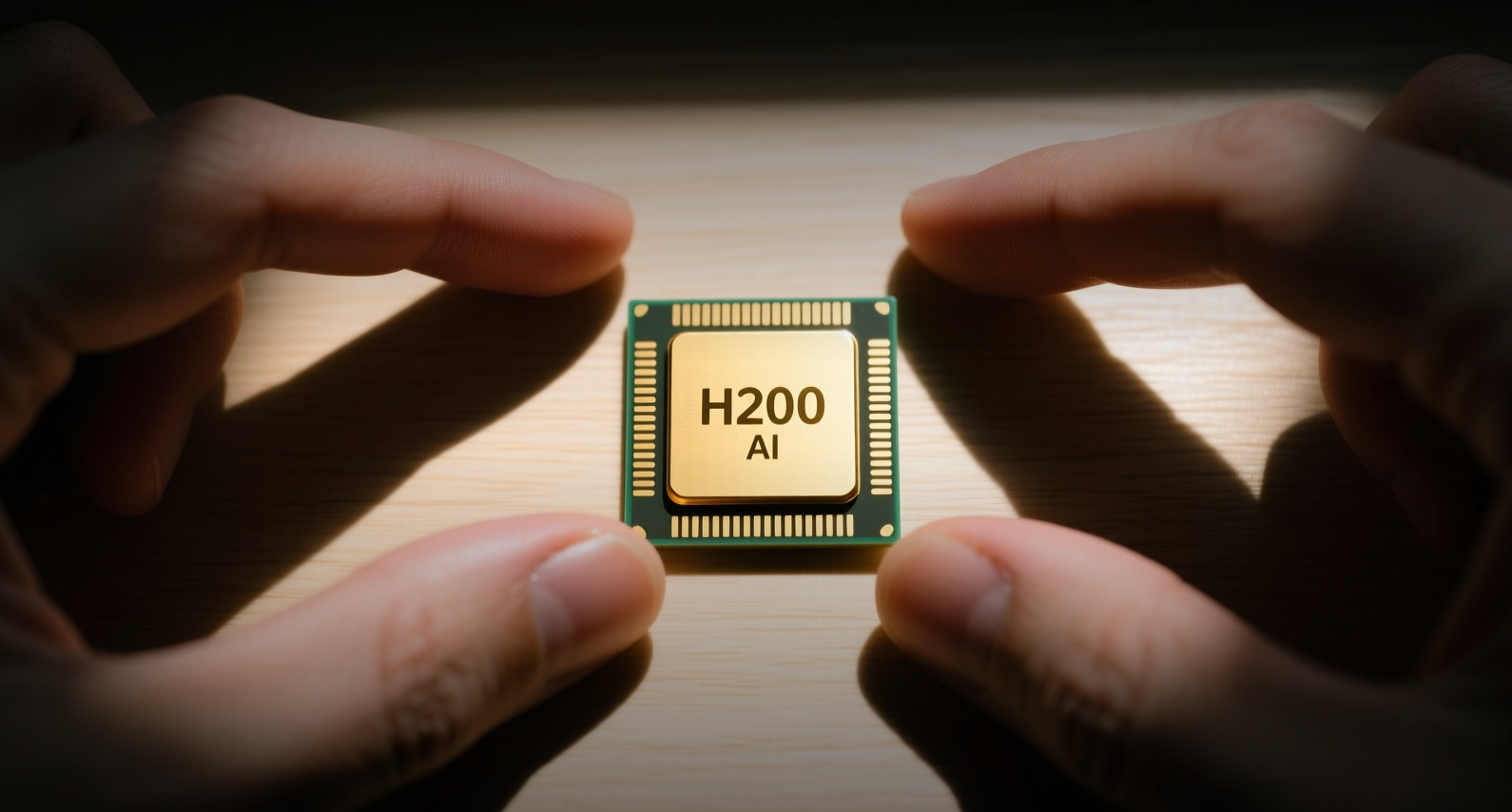
Beijing will allow Alibaba, ByteDance and DeepSeek to purchase limited quantities of Nvidia's H200 chips, ending a months-long approval freeze that had cut Nvidia's China market share to near zero.
China is preparing to authorize Alibaba Group Holding Ltd., ByteDance Ltd. and DeepSeek to buy limited quantities of Nvidia Corp.'s H200 chips, according to a report by The Information, in a potential thaw of the country's unofficial ban on advanced US chip imports.
"Chinese officials have told the companies in recent weeks that they may soon receive permission to buy some H200 chips," The Information reported Wednesday, citing two people with direct knowledge of the matter.
Beijing is still determining the exact number of chips to approve, with the total potentially falling below 200,000 units — less than half of what the companies requested earlier this year, the report said. The US government had already licensed about 10 Chinese firms to purchase the H200 chips, but Chinese authorities had withheld final approval, concerned that a large influx of US-designed AI chips could undermine the government's push for domestic semiconductor self-sufficiency.
Nvidia shares rose 1% on the news. The potential shift highlights the computing capacity crunch facing China's tech giants as they race to train increasingly powerful AI models. Nvidia's market share in China has effectively fallen to zero, Chief Executive Officer Jensen Huang said in October, hurt by US export controls and Beijing's push for self-reliance.
The H200, Nvidia's most advanced chip approved for sale to China, offers 990 TFLOPS of FP16 performance — roughly 2x the throughput of the prior-generation H100, according to Nvidia's published specifications. The chip uses HBM3e memory with 4.8 TB/s of bandwidth, making it critical for training large language models.
Beijing's conditions require the companies to explain the quantity and intended use of the chips to obtain approval, the report said. The restrictions reflect a dual concern: that US-designed chips could crowd out domestic alternatives from companies like Huawei Technologies Co. and Cambricon Technologies Corp., and that allowing US-made hardware into critical AI infrastructure could pose cybersecurity risks.
The approval would mark a reversal from recent months, during which Chinese authorities withheld sign-offs even after the US Commerce Department cleared the sales. In March, Nvidia won Beijing's approval to sell the H200 to China, and Huang told CNBC the company had clearance. But actual purchases never materialized as Chinese regulators delayed final permits.
Nvidia has been preparing for a deeper push into China's data center market with its upcoming Vera central processors, which the company told Chinese clients could be available as soon as August, Reuters reported last month. The Vera chips are designed for AI data center workloads and could begin accepting orders shortly.
For investors, the limited approval signals a managed easing rather than a full reopening of China's chip market. Nvidia trades at roughly 35x forward earnings, reflecting the market's expectation that China revenue will remain constrained. If the cap holds below 200,000 units, the revenue impact for Nvidia — which generated $130.5 billion in data center revenue in its fiscal 2026 — would be marginal. For Alibaba and ByteDance, however, even limited access to H200 chips could accelerate their AI model development timelines, narrowing the gap with US rivals.
This article is for informational purposes only and does not constitute investment advice.
