


ZTE partnered with Tencent to launch an AI-powered cloud PC, sending its shares up 6.6% to HKD28.74.
ZTE partnered with Tencent to launch an AI-powered cloud PC, sending its shares up 6.6% to HKD28.74.
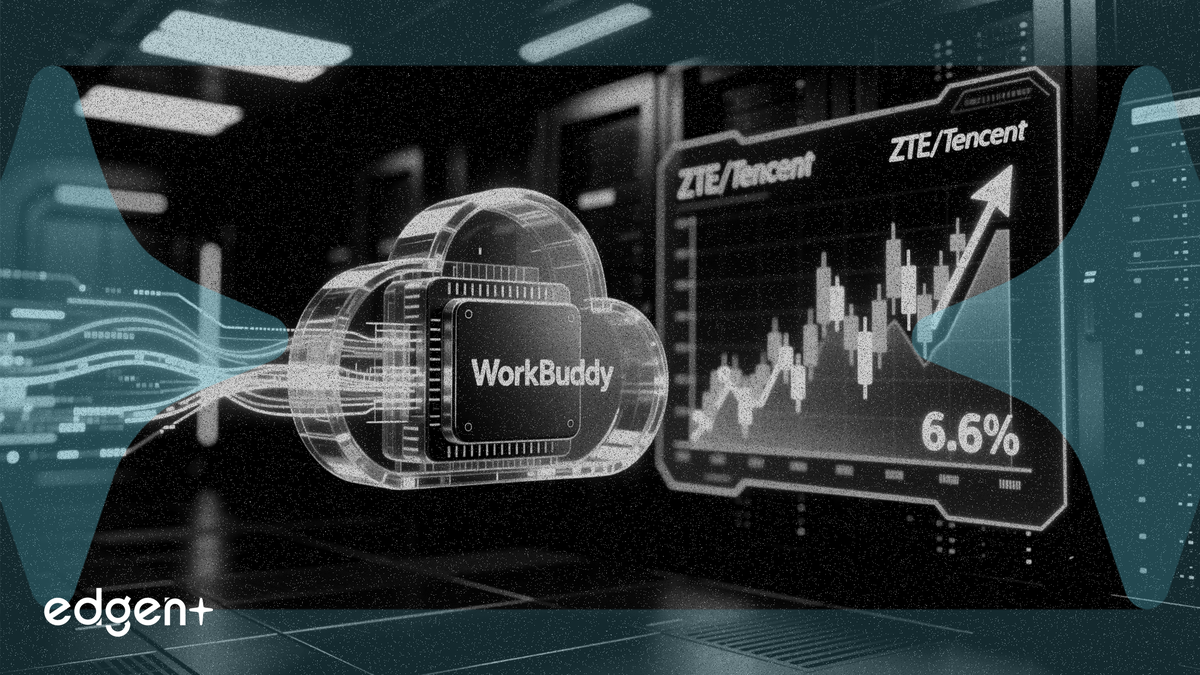
ZTE partnered with Tencent to launch an AI-powered cloud PC, sending its shares up 6.6% to HKD28.74.
ZTE's partnership with Tencent to launch an AI cloud PC powered by the Hunyuan large model threatens to reshape China's cloud terminal market, where the telecom equipment maker already holds the No. 1 spot. The WorkBuddy device integrates Tencent Cloud's computing power with the Hunyuan model's capabilities, targeting students, professionals and small teams as a productivity tool.
"WorkBuddy integrates Tencent Cloud's computing power with the capabilities of the Hunyuan large model as a productivity tool for students, professionals and small teams," the companies said, according to IT Home.
ZTE sold more than 2 million cloud PC terminals last year, ranking first in China's cloud terminal market for two consecutive years. The new WorkBuddy device adds AI inference capabilities directly to the terminal, reducing reliance on remote server processing for common tasks such as document summarization, code generation and data analysis.
ZTE shares rose as much as 6.6% to an intraday high of HKD29.12, with HKD634 million in shares traded. The rally suggests investors see the partnership as expanding ZTE's addressable market beyond traditional cloud terminals into AI-augmented productivity hardware, a segment where Tencent's Hunyuan model provides a differentiated software layer.
Partnership Economics
The deal pairs ZTE's hardware distribution strength — 2 million units sold last year — with Tencent's AI ecosystem. Tencent's Hunyuan model, one of China's leading foundation models, competes with Baidu's Ernie and Alibaba's Tongyi Qianwen in the enterprise AI market. By embedding Hunyuan directly into a cloud PC, Tencent gains a captive deployment channel for its AI services, while ZTE differentiates its hardware lineup in a market where margins on traditional thin clients have compressed.
For Tencent, the deal extends its AI monetization strategy beyond cloud API calls into device-level integration. Tencent shares fell 1.7% to HKD458.2 on Tuesday, tracking the broader market, with HKD3.77 billion in shares traded. The stock has gained about 12% year to date, partly driven by optimism around its WeChat AI agent, which Bank of America said may enter full public beta as early as the fourth quarter of 2026.
Market Context
The WorkBuddy launch comes as China's cloud PC market accelerates, driven by enterprise digitalization mandates and the government's push for secure, centralized computing. ZTE's two-year streak as the top cloud terminal vendor gives it an installed base to cross-sell the AI upgrade, though the company has not disclosed pricing or a specific availability date for WorkBuddy.
Competitors including Huawei and Lenovo have also introduced AI-powered PCs, but ZTE's focus on the cloud terminal form factor — where the device acts as a thin client connecting to remote servers — differentiates it from traditional AI laptops that run models locally. The cloud PC approach shifts the computational burden to Tencent's data centers, potentially offering lower per-user costs for enterprises deploying AI at scale.
ZTE trades on the Hong Kong Stock Exchange at roughly 12 times trailing earnings, a discount to Tencent's 22 times, reflecting its hardware-heavy revenue mix. The WorkBuddy partnership could support a valuation re-rating if the AI cloud PC gains traction, though the company has not provided revenue guidance for the product line.
This article is for informational purposes only and does not constitute investment advice.
