
The Zcash network halted block production for more than four hours on June 3, 2026. ZEC fell from its 24-hour high of $624.90 as traders assessed the outage's impact on the privacy-focused blockchain's reliability.
The Zcash network halted block production for more than four hours on June 3, 2026. ZEC fell from its 24-hour high of $624.90 as traders assessed the outage's impact on the privacy-focused blockchain's reliability.
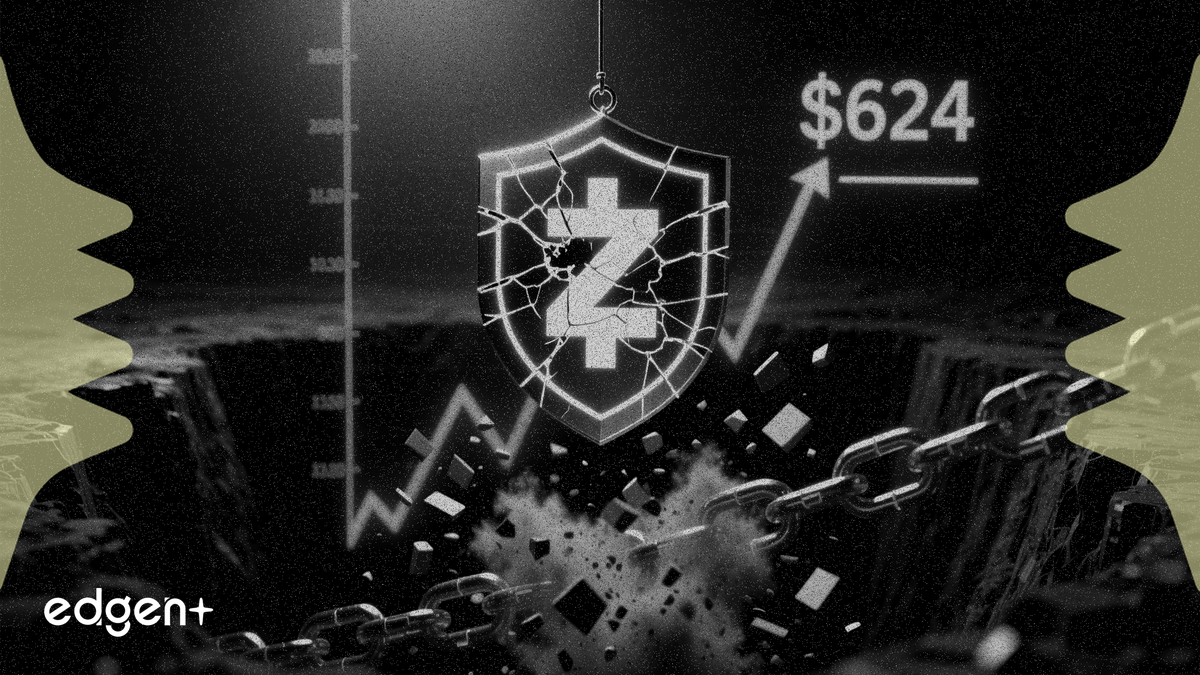
The Zcash network stopped producing blocks for more than four hours on June 3, the longest outage in the privacy-focused blockchain's history.
On-chain data confirmed the halt at block height 2,721,400, with the last block produced at approximately 02:00 UTC, according to Zcash blockchain explorers. The cause was not immediately disclosed by the Zcash Foundation or Electric Coin Co., the development team behind the protocol.
The outage comes after ZEC had rallied more than 14% to $624.90, making it one of the few gainers in a broader market rout that pushed Bitcoin below $67,000 and Ethereum under $2,400. The network's shielded supply had reached a record 5.1 million ZEC, and hashrate hit an all-time high of 16.3 GH/s in late May, according to on-chain data.
A prolonged halt risks reversing those gains by eroding user confidence in the network's reliability. Privacy-focused token holders may face a bank-run-like dynamic if the outage extends, with ZEC's funding rate on Hyperliquid sitting near 40.77% annualized before the halt — a level that typically indicates crowded long positioning that can unwind quickly.
ZEC traded near $580 by mid-session, down from its 24-hour high of $624.90, as traders assessed whether the outage reflected a deeper infrastructure issue. The Zcash network, which launched in 2016, uses zero-knowledge proofs to shield transaction details, a feature that has drawn both privacy advocates and regulatory scrutiny. The SEC closed its investigation into the Zcash Foundation in January, and Grayscale has moved to convert its Zcash trust into a spot ETF.
The halt also raises questions about the network's resilience relative to larger blockchains like Bitcoin and Ethereum, which have maintained near-perfect uptime over comparable periods. For ZEC holders, the next key level to watch is $550, a support zone that held during the broader market selloff in early 2026.
This article is for informational purposes only and does not constitute investment advice.
