
Goldman Sachs expects Chinese AI developers to begin charging cloud platforms commercial licensing fees for their open-weight models, a shift that could reshape the economics of the global AI industry.
Goldman Sachs expects Chinese AI developers to begin charging cloud platforms commercial licensing fees for their open-weight models, a shift that could reshape the economics of the global AI industry.
Goldman Sachs expects Chinese AI developers to begin charging cloud platforms commercial licensing fees for their open-weight models, a shift that could reshape the economics of the global AI industry.
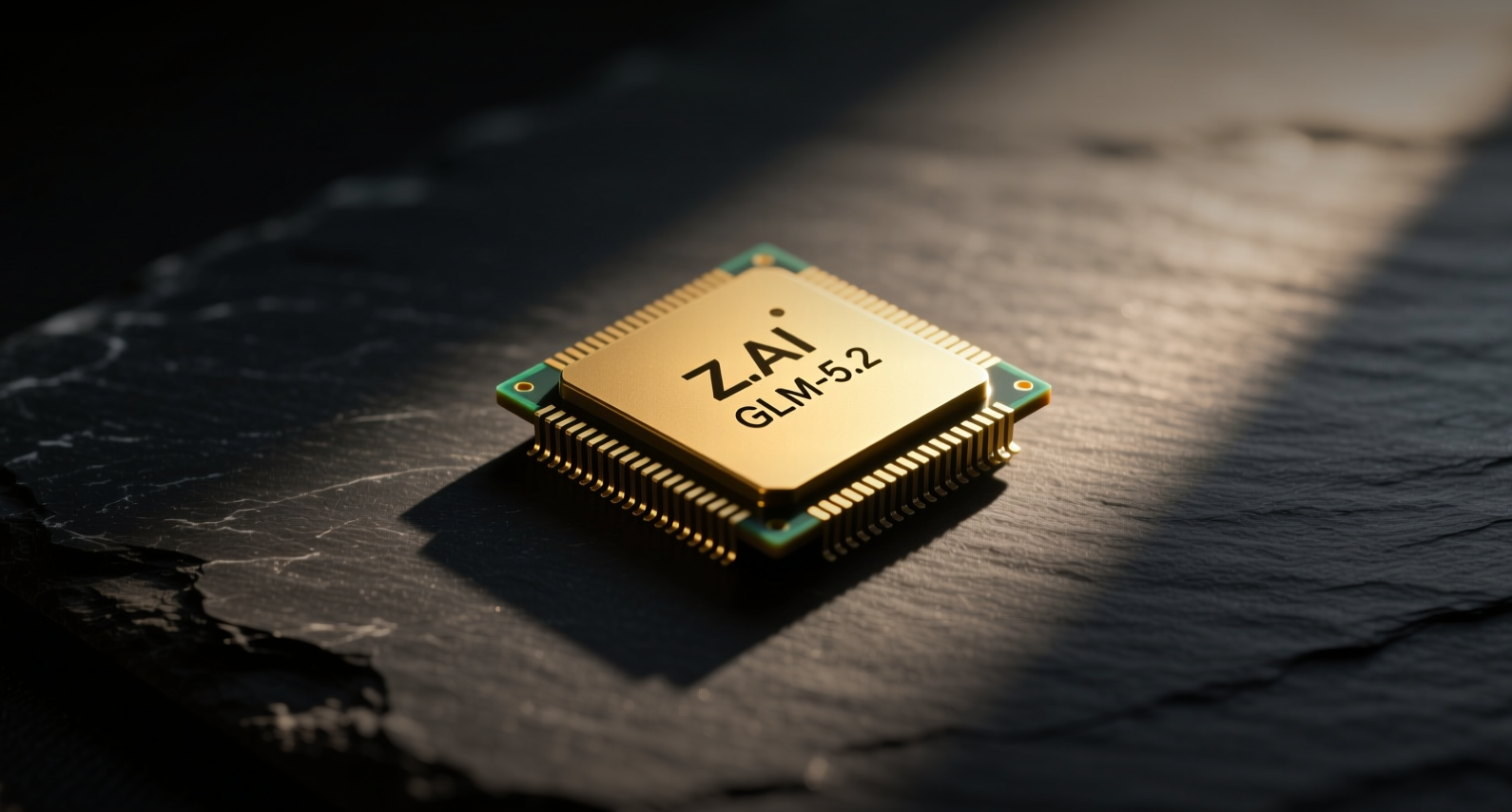
Goldman Sachs expects Chinese AI developers to charge cloud platforms licensing fees for hosting open-weight models, a shift that could upend the free-distribution model driving global adoption of systems like Moonshot's Kimi K3 and Z.AI's GLM-5.2.
"Chinese model makers could generate more revenue by requiring third-party vendors to purchase commercial licenses to provide inference services for these models on their own infrastructure," Ronald Keung, Goldman Sachs Asia internet research head, said in an interview with the South China Morning Post.
Chinese AI models have reached performance levels only slightly behind leading US competitors, according to Goldman Sachs. Moonshot's Kimi K3, released in July, generated more than 930,000 downloads in its first week, a 200% increase from the prior week, with US downloads surging 387% to about 86,000. Z.AI's GLM-5.2, launched in June, and Alibaba's Qwen3.8 Max, previewed in July, have narrowed the capability gap with frontier US models from OpenAI and Anthropic while costing a fraction of the price — as little as cents per million output tokens versus $30 to $50 for comparable US systems.
The licensing shift could alter the valuation profiles of Chinese AI companies while potentially slowing adoption if costs rise for cloud platforms and end-users. Z.AI shares fell 17.174% on the day of the announcement, signaling market uncertainty about how the transition will affect growth. The move also pressures US AI giants and cloud providers, who may face a similar licensing trend globally as Chinese models gain traction among cost-conscious enterprises.
The Open-Weight Economics
Chinese AI labs have traditionally released model weights for free — the numerical parameters encoding a model's intelligence — while keeping training data, code, and architecture private. This open-weight approach has fueled rapid adoption: developers can inspect, customize, and run models locally without depending on a single provider. But it has also left Chinese developers capturing limited direct revenue from surging global usage.
"A free set of weights is not a free AI service," said Chinmayi Sharma, a professor at Fordham Law School. Companies can give away model weights while making money elsewhere in the stack — through computing infrastructure, engineering support, or hosted access. Keung's comments suggest Chinese developers are now exploring whether to capture that downstream value directly through licensing fees.
The economics are shifting as agentic AI usage — where models autonomously conduct multistep tasks — drives higher demand for cost-effective inference. Chinese models, which cost a handful of cents per million output tokens versus $30 to $50 for Anthropic's Fable or Mythos, become dramatically more attractive as usage scales, according to Alex Colville of the Australian Strategic Policy Institute.
US Tech Giants Face an Open-Source Dilemma
The rise of capable Chinese open-weight models is intensifying pressure on US AI leaders like OpenAI, Anthropic, and Google, which have kept their frontier models closed-source. A coalition of 25 US tech companies — including Microsoft, Meta, Nvidia, and IBM — signed an open letter urging policymakers to avoid restricting open-weight AI, arguing it is essential to maintaining American leadership.
"Restricting an American model can immediately create an opening for a Chinese competitor," said Anastasios Angelopoulos, co-founder and CEO of Arena, an AI evaluation platform. Mozilla Chief Technology Officer Raffi Krikorian, who switched to Kimi K3 for daily tasks within days of its launch, said "the open frontier is becoming increasingly Chinese-built."
For investors, the licensing shift introduces a new variable into AI valuation models. Chinese AI startups like Z.AI — which reported revenue of 724 million yuan ($107 million) in 2024, up 132%, but a net loss of 4.7 billion yuan ($694 million) — are under pressure to monetize their technology. If successful, the licensing model could narrow losses and justify higher valuations. But it also risks slowing the adoption momentum that has made Chinese models a serious competitive threat to US incumbents. The question facing the industry is no longer just whether Chinese AI can match US performance, but whether the economics of open-weight distribution can survive commercialization.
This article is for informational purposes only and does not constitute investment advice.
