

XRP traders who sold into the year's largest exchange inflow on May 28 missed a swift reversal, as 25.24 million tokens moved back off exchanges within 48 hours.
XRP traders who sold into the year's largest exchange inflow on May 28 missed a swift reversal, as 25.24 million tokens moved back off exchanges within 48 hours.
XRP traders who sold into the year's largest exchange inflow on May 28 missed a swift reversal, as 25.24 million tokens moved back off exchanges within 48 hours.
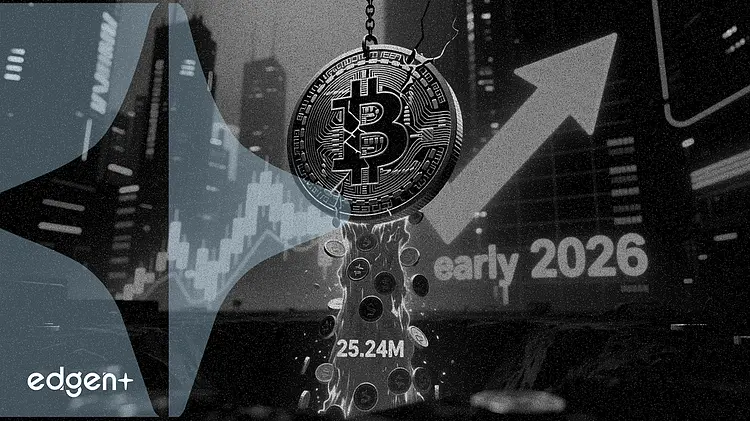
More than 25.24 million XRP left exchanges between May 29 and 30, reversing the largest single-day exchange inflow of 2026, Santiment data show.
"The largest XRP exchange inflow of the year occurred on Thursday, with 22.80 million XRP added, but even more coins have moved back off exchanges since," Santiment said in a post on X.
The initial inflow of 22.8 million XRP on May 28 coincided with XRP's local price bottom near $1.30, a 15-week low. Retail traders who sold into that move are now down about 47% over the past 30 days, according to Santiment's MVRV metric, which fell to its lowest since December 2020. XRP has since recovered about 5% from that capitulation point, trading at $1.33 as of 14:00 UTC.
The outflow reduces the supply of XRP available for immediate sale on exchanges, a dynamic that historically precedes price rebounds when paired with sustained demand. XRP's exchange supply ratio has held near 0.03, while the network's NVT ratio moderated toward 396, suggesting on-chain transaction activity is increasingly supporting the token's valuation.
Crypto analyst Ali Martinez identified the bottom of XRP's rising channel at $1.34 as a potential buying zone, with $1.37 and $1.40 as the next recovery targets if buyers hold that level. XRP's relative strength index has recovered to 54.5, moving out of bearish territory, while the Awesome Oscillator near -0.06 reflects neutral momentum.
XRPFi narrative adds another layer
Beyond exchange flows, XRP's market story is expanding beyond payments. RippleX recently outlined how XRP can be used as collateral for yield strategies on Flare, including wrapping XRP as FXRP, borrowing stablecoins against it and deploying those assets into DeFi protocols. These vault-based strategies across XRPL and Flare aim to turn idle XRP into productive capital, broadening the token's use case beyond simple transfers.
ETF demand has also provided a counterweight to XRP's spot price weakness. XRP-focused exchange-traded funds recorded $131.94 million in net inflows this month, according to data cited by crypto.news. Morgan Stanley disclosed holdings in two XRP ETFs — the Volatility Shares XRP ETF and the Grayscale XRP ETF — in a first-quarter filing, placing the bank among institutions gaining XRP exposure through regulated products.
The $1.34 support zone remains the key level for short-term traders. A clean break below it could weaken the rebound case, while a close above $1.40 would signal that buyers are regaining control.
This article is for informational purposes only and does not constitute investment advice.
