

J.P. Morgan holds a Neutral rating on Xiaomi as the company navigates a planned decline in its core smartphone business while accelerating its ambitious push into electric vehicles.
J.P. Morgan holds a Neutral rating on Xiaomi as the company navigates a planned decline in its core smartphone business while accelerating its ambitious push into electric vehicles.
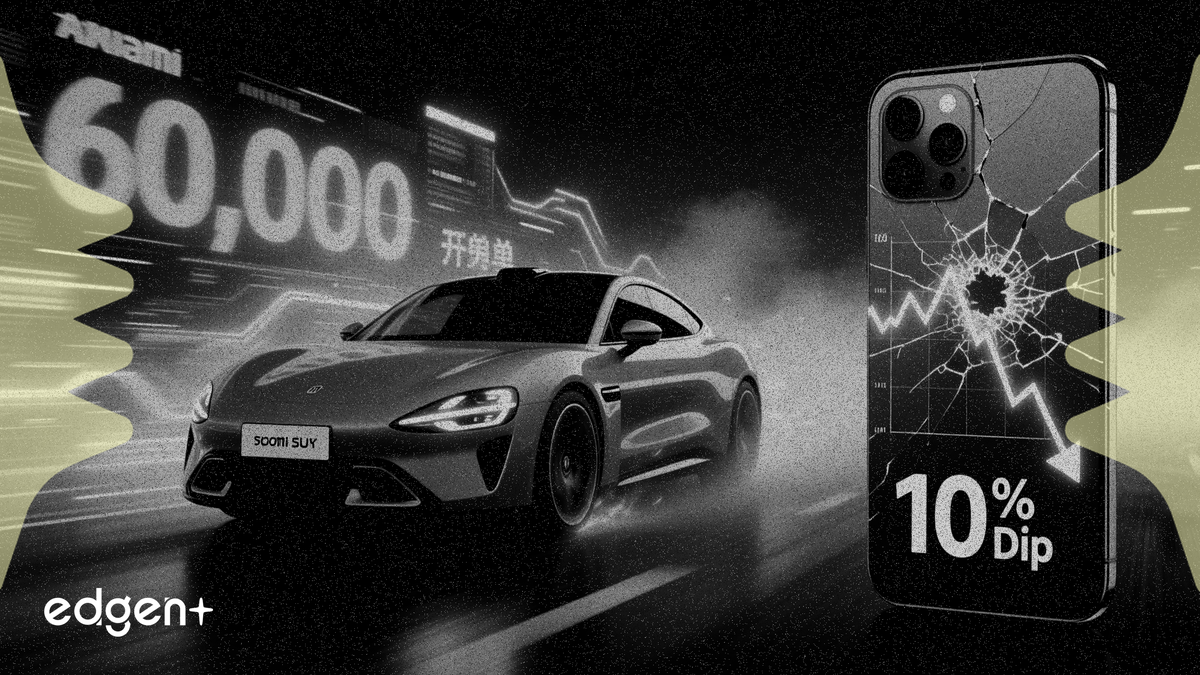
Xiaomi expects its smartphone shipments to fall by at least 10 percent in 2026, grappling with rising costs while its new electric vehicle division has already secured over 60,000 locked-in orders for its SU7 sedan.
"Although AI models and robotics businesses have long-term potential, meaningful commercialization of these new businesses will take considerable time," J.P. Morgan said in a research report, maintaining a HKD35 price target.
Management cited rising memory and logistics costs for the expected smartphone decline, with memory now accounting for 50 to 60 percent of the bill of materials on entry-level devices. In contrast, the company is targeting 550,000 EV deliveries in 2026 and plans to begin overseas expansion to the European Union in the second half of 2027.
The forecast presents a clear strategic pivot for the world's third-largest smartphone maker, shifting investor focus from its slowing, lower-margin hardware business to the high-growth, capital-intensive EV market, a move that has seen the stock underperform the HSTECH by 9 percent in the last month.
The pressure on Xiaomi's smartphone division reflects a broader market trend, though major competitors like Apple have managed to defy the slump. For Xiaomi, the issue is compounded by component costs, which are projected to squeeze gross margins from the low double-digits of the past three years down to a high single-digit level. This makes the segment's profitability a key concern for investors, even as the company continues to innovate on features like battery technology.
The SU7's strong early order book provides a powerful counter-narrative to the smartphone slowdown. With over 60,000 orders locked in by late April, the challenge shifts from demand generation to production and execution. The company's aggressive 2026 delivery target of 550,000 units and a planned 2027 EU launch signal a rapid scaling plan, pitting it against established players like Tesla and BYD in hyper-competitive markets.
Underpinning these efforts is a massive commitment to research and development. Xiaomi plans to invest RMB200 billion from 2026 to 2030, with at least RMB60 billion earmarked for AI in the next three years. While its MiMo V2.5 large language model has achieved high benchmark scores and its robots are already in its factories, J.P. Morgan notes that commercial maturity for these ventures is likely three to five years away, positioning them as long-term potential rather than near-term profit drivers.
This article is for informational purposes only and does not constitute investment advice.

