

Xiaomi Auto will enter the European market in 2027, hiring a former Tesla logistics executive to lead the expansion as the Chinese EV maker targets 550,000 deliveries this year.
Xiaomi Auto will enter the European market in 2027, hiring a former Tesla logistics executive to lead the expansion as the Chinese EV maker targets 550,000 deliveries this year.
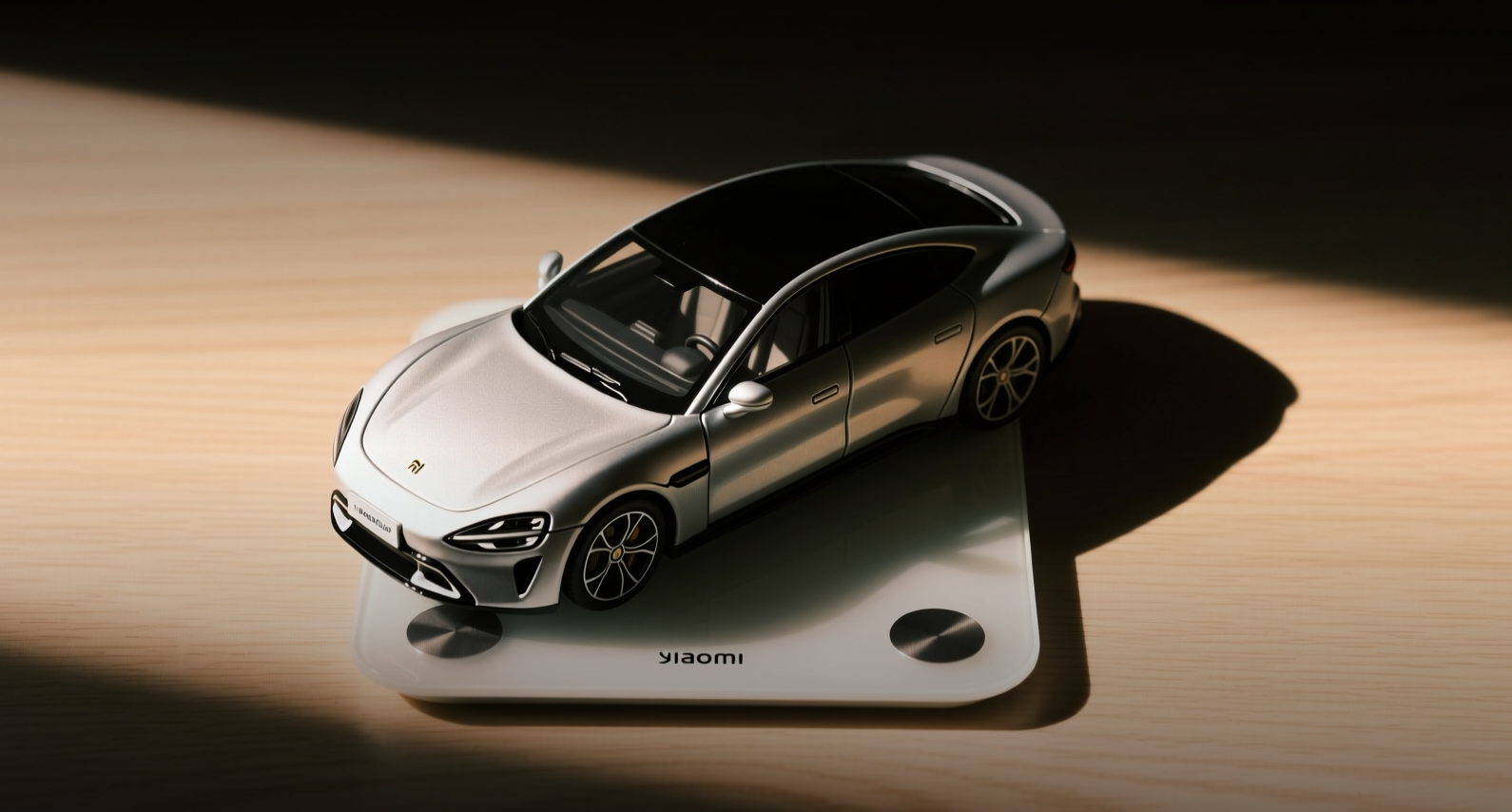
Xiaomi Auto plans to enter the European market in 2027, hiring a former Tesla executive to lead logistics as the Chinese EV maker races toward a 550,000-unit delivery target. The expansion pits Xiaomi against Tesla and European legacy automakers in a region where plug-in hybrid sales are rising 33 percent.
Lei Jun, founder and chief executive of Xiaomi, confirmed the European expansion timeline, according to a company statement. The automaker in April hired Dieter Lorenz, former senior manager of delivery operations for Central Europe at Tesla, as its head of European delivery and logistics, a move that suggests the company is studying Tesla's logistics model for its entry.
Xiaomi delivered 185,055 vehicles in the first half of 2026, a 17 percent increase from a year earlier, leaving about 365,000 units needed in the second half to meet its full-year target. The new SU7 became the best-selling sedan priced above 200,000 yuan ($27,600) in June, while the company prepares to launch the SkyNomad N90 extended-range SUV in the second half.
Europe offers a tariff advantage for Xiaomi: the European Union's countervailing duties on Chinese imports target battery-electric vehicles specifically, leaving extended-range and plug-in hybrid models outside their scope. European PHEV sales rose 33 percent year-on-year in the first quarter, and hybrids grew 10.4 percent, showing demand for partially electrified vehicles that Xiaomi's SkyNomad lineup could capture.
Why Europe Now and What It Means for Competitors
Xiaomi's European push comes as the company's delivery trajectory requires a second-half acceleration. The automaker's current monthly pace of about 34,000 to 35,000 units must roughly double to meet the 550,000 annual target, making the SkyNomad N90 launch — expected in August or later in the third quarter — critical to closing the gap.
The timing also coincides with a narrowing window for Chinese EV exports to the US. A bipartisan Senate bill, the Connected Vehicle Security Act of 2026, proposes banning Chinese vehicles from the US market beginning Jan. 1, 2027. Europe, by contrast, has not imposed comparable restrictions on Chinese EVs beyond the BEV-specific tariff structure, leaving a viable path for Xiaomi's entry.
For Tesla, which dominates European EV sales, Xiaomi's arrival adds competitive pressure in the mass-market segment. The SU7, priced from about 215,900 yuan ($29,800), competes directly with the Tesla Model 3 in China and would likely target a similar price point in Europe.
The SkyNomad Factor and Product Portfolio
Xiaomi's product strategy for Europe may hinge on the SkyNomad N90, an extended-range electric vehicle that pairs a 70-plus kilowatt-hour battery with a gasoline generator for a claimed 1,500 kilometers (932 miles) of combined range on China's CLTC test cycle. The vehicle starts at about 200,000 yuan ($29,000) in China, undercutting rivals such as the Li Auto L9 and AITO M9 by more than $7,000.
The series hybrid architecture — where the gasoline engine acts solely as a generator with no mechanical connection to the wheels — allows the N90 to function as a battery-electric vehicle for most urban driving. That format avoids the EU's BEV-specific tariffs, potentially giving Xiaomi a pricing advantage over pure-electric Chinese imports.
Xiaomi's broader lineup includes the SU7 sedan and YU7 SUV, which has become the company's current sales pillar. The company has not disclosed which models it will sell in Europe or whether it will adapt vehicles for local regulations and charging standards.
Investment Implications
Xiaomi-W (01810.HK) shares traded at HKD25.92 on July 13, up 0.31 percent, with the stock reflecting cautious optimism about the company's automotive ambitions. At least one major investment bank recently cut its Xiaomi price target, citing rising semiconductor costs and short-term margin pressure in the auto division.
The European expansion represents a long-term growth driver but carries execution risk. Xiaomi must build a European sales network, service infrastructure, and regulatory compliance framework from scratch while simultaneously ramping production to meet its 2026 delivery target. The company's track record of rapid scaling — it delivered its first car in 2024 and reached 185,000 units in the first half of 2026 — suggests operational capability, but Europe's fragmented market and established competition present a different challenge.
This article is for informational purposes only and does not constitute investment advice.
