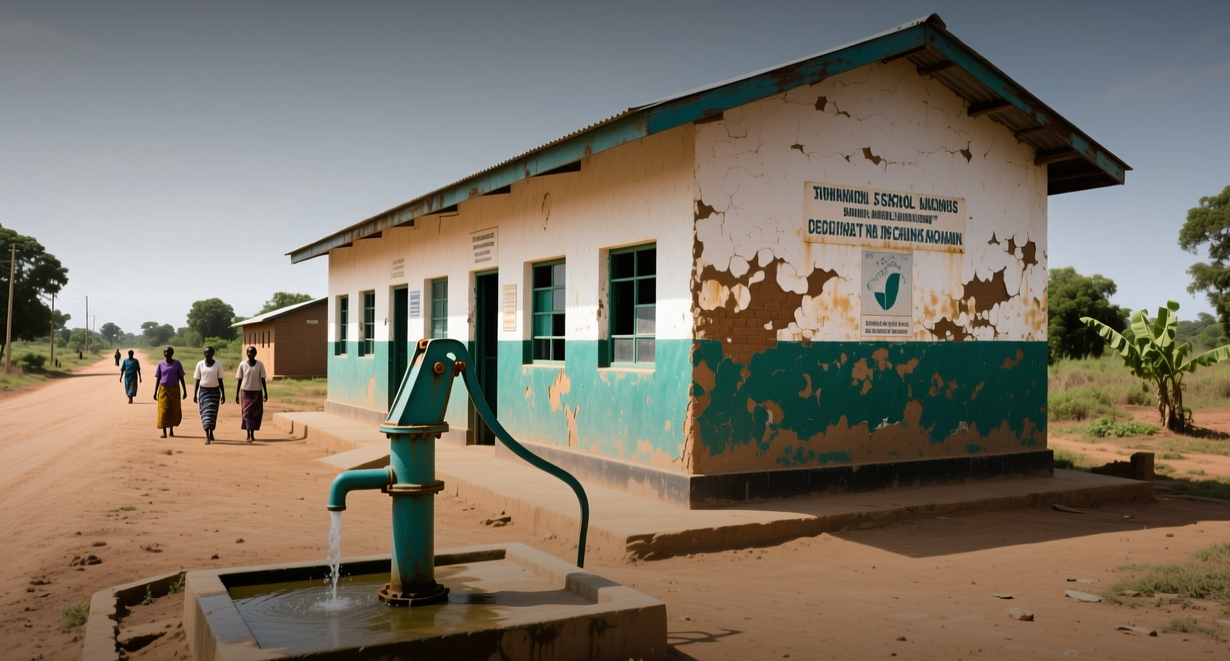
A structural mismatch between how long the World Bank funds projects and how long those projects must operate is undermining the institution's poverty-reduction mission, according to a former staff member who spent nearly three decades working on development programs.
"The bank typically finances a project for roughly five to 10 years, while the schools, health facilities, water systems, irrigation projects and other infrastructure it creates are expected to operate for another 20 to 40 years," Emil Ruderfer, a former World Bank staff member with nearly 30 years of experience on development projects, wrote in a letter published in the Wall Street Journal.
The funding mismatch means governments in developing countries must provide salaries, maintenance, repairs, equipment, utilities and other operating costs for decades after the bank's financing ends. Many lack the fiscal resources to do so, resulting in deteriorating or nonfunctioning facilities — investments intended to serve entire communities of poor people.
Ruderfer called on the U.S. Treasury and other World Bank shareholders to require an independent evaluation of how many projects and assets financed by the bank and other multilateral development banks are still functioning 20 or 30 years later, before committing additional taxpayer funds. No complete long-term study currently answers that question, he said.
The letter responds to a September 1 Wall Street Journal op-ed by Indermit Gill, the World Bank's chief economist, and Bjorn Lomborg, president of the Copenhagen Consensus Center, who argued the bank is directing too much money toward climate investments instead of schools, health centers and other poverty programs. Ruderfer contends the more fundamental problem is not how funds are allocated between climate and poverty priorities but whether any of these investments produce lasting benefits after the bank exits.
The evaluation gap spans the World Bank Group's entire portfolio, including the International Development Association, which provides concessional loans and grants to the world's poorest countries, and the International Bank for Reconstruction and Development, which lends to middle-income nations. Regional development banks face the same structural issue, Ruderfer said.
The debate over development effectiveness comes as the World Bank Group faces competing demands on its balance sheet — from climate finance to pandemic preparedness to debt relief for low-income countries. Gill and Lomborg's argument that climate spending is crowding out poverty reduction reflects a broader tension within the institution about how to allocate scarce concessional resources.
For the U.S. Treasury, the World Bank's largest shareholder, the letter raises a practical question: should additional capital commitments be conditioned on evidence that past investments are still delivering results? Ruderfer argues they should, noting that the current system measures whether money was successfully disbursed, not whether it produced lasting benefits.
The call for long-term evaluation echoes similar demands from development economists who have long questioned the effectiveness of aid. The World Bank's own Independent Evaluation Group conducts project-level assessments, but Ruderfer argues these typically occur shortly after project completion rather than decades later when the true sustainability of an investment becomes apparent.
Without evidence that existing projects endure, Ruderfer argues, additional billions risk repeating the same cycle of construction followed by decay. The question of what happens after the World Bank leaves, he said, is as important as what the bank builds while it is there.
This article is for informational purposes only and does not constitute investment advice.