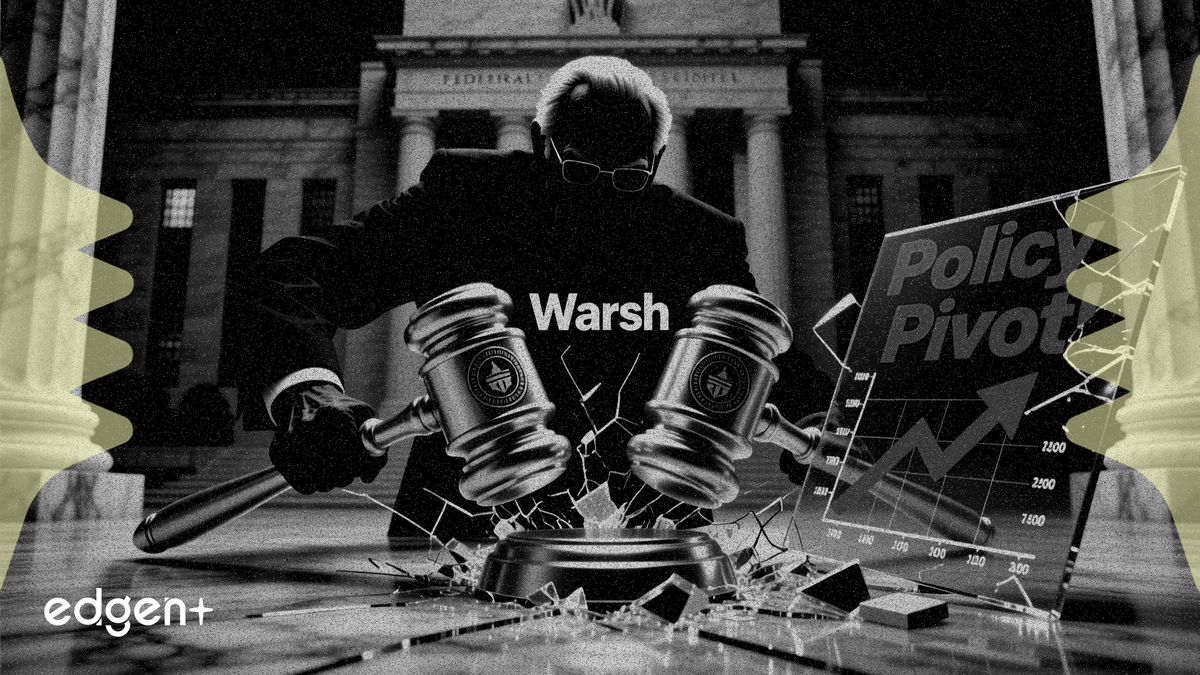
Warsh's appointment of a Project 2025 contributor and a Hoover fellow marks the most conservative shift at the Fed in decades.

Federal Reserve Chairman Kevin Warsh has tapped two conservative policy veterans as interim advisers, including an author of Project 2025's blueprint for central bank overhaul, marking a sharp break from the institution's traditional staffing pipeline.
"I will lead a reform oriented Federal Reserve that learns from past successes and mistakes and escapes static frameworks and models," Warsh said at his White House swearing-in ceremony last month, according to prepared remarks.
The advisers are Paul Winfree, who authored the Federal Reserve chapter in the Heritage Foundation's Project 2025 blueprint, and Daniel Heil, a policy fellow at Stanford's Hoover Institution where Warsh was a distinguished fellow before his confirmation. Both will serve as temporary contractors supporting policy analysis and planning, according to a person familiar with the matter. Neither has worked at the central bank — a departure from predecessors who drew senior policy aides from current or former Fed staff with monetary policy experience.
The appointments come as Warsh prepares to chair his first Federal Open Market Committee meeting June 16-17, where the Fed is expected to hold interest rates steady. His agenda includes paring the central bank's $6.7 trillion balance sheet, reducing specificity around rate guidance and exploring alternative inflation measures — all while a Supreme Court ruling on President Donald Trump's attempt to fire Governor Lisa Cook threatens the institution's political independence.
Project 2025's Blueprint for the Fed
Winfree's chapter in Project 2025 recommended eliminating the central bank's dual mandate to maintain stable prices and full employment, requiring it to focus on price stability alone. It also endorsed substantially shrinking the Fed's $6.7 trillion asset portfolio and limiting its role as a lender of last resort in financial crises. The manifesto's top-ranked option was "free banking" — effectively abolishing the Fed in favor of privately issued, commodity-backed currency — though the report included a disclaimer that the ideas shouldn't be attributed to any individual.
Winfree later distanced himself from the more provocative proposals. "I do think the Fed should be reformed," he told Roll Call in 2024. "But I would not subscribe to the idea of nuking the Fed." His more recent work has been measured: a paper published last year by his now-winding-down Economic Policy Innovation Center found that the Fed's bond buying hasn't driven persistent federal deficits, cutting against a common conservative critique.
A Reform Agenda Takes Shape
Warsh has laid out his own vision for change over the past year in speeches and interviews. Beyond balance sheet reduction, he has called for the Fed to talk less specifically about coming interest rate decisions and to debate whether alternate measures of inflation better capture price pressures. In a memo to staff Tuesday, Warsh struck a conciliatory tone, pledging to "follow the best of the Fed's traditions" while promising "open, clear-eyed discussions of Fed strategies, policies and operations."
The transition is unfolding against an unusual institutional backdrop. Former Chair Jerome Powell, whom Warsh succeeded, has remained on the Board of Governors — a decision tied to the administration's efforts to influence the central bank. The Supreme Court is expected to rule on whether Trump can fire Cook, a case widely viewed as a direct test of the Fed's independence in setting monetary policy.
The appointments of Winfree and Heil — neither of whom has a background in monetary policy or bank regulation — represent the most visible indication yet of the direction Warsh intends to take. His predecessors tapped one or two senior policy advisers upon taking office, but those aides were drawn from the ranks of current or former Fed staff with experience in the central bank's core responsibilities.
The market implications are significant. Warsh's reform agenda introduces uncertainty around the Fed's policy framework at a time when inflation remains above the central bank's target. His push to shrink the balance sheet could tighten financial conditions beyond what rate policy alone would achieve, while his skepticism of forward guidance may reduce the Fed's ability to shape market expectations between meetings. Bond markets are likely to price in greater volatility around Fed communication, and the dollar could strengthen if Warsh's approach is perceived as more hawkish than his predecessor's.
The first test of Warsh's approach will come at the June 16-17 FOMC meeting, where the committee will release updated economic projections. Those forecasts will show whether Warsh's colleagues share his concerns about persistent inflation and how they view the trajectory for rates.
This article is for informational purposes only and does not constitute investment advice.