
Warsh framed AI as a long-term answer to the labor supply problem while keeping inflation at the center of policy in his first Jackson Hole address.
Warsh framed AI as a long-term answer to the labor supply problem while keeping inflation at the center of policy in his first Jackson Hole address.
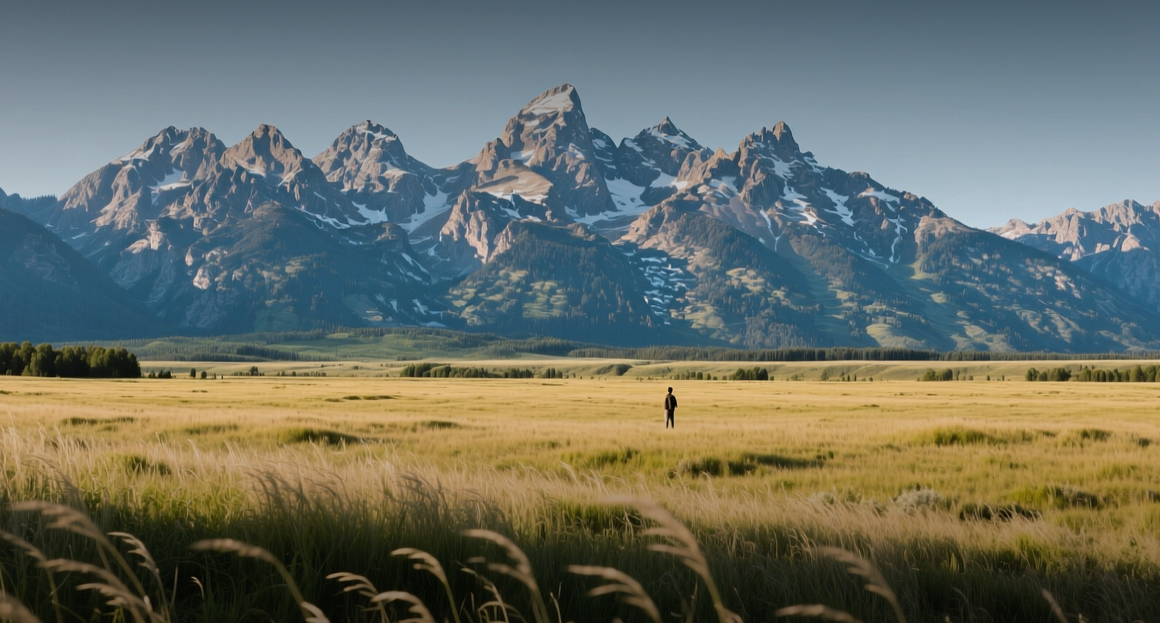
Fed Chair Kevin Warsh told the Jackson Hole symposium Friday that the AI investment boom could help offset a slowing US labor force, while reiterating that inflation at 3.7 percent remains the FOMC's critical concern.
"I'd like to hear him be a bit more communicative," Kathy Bostjancic, chief economist at Nationwide, said ahead of the speech. "We're not talking forward guidance. Just some understanding of how he views the inflation dynamics right now."
Prices climbed 3.7 percent in the 12 months ending in July, according to the Fed's preferred gauge, down from 4.1 percent in May but well above the central bank's 2 percent target. Investors currently price about a one-in-three chance the Fed raises its benchmark rate at its next meeting in mid-September. Warsh and his colleagues voted to hold rates steady last month.
The stakes are high because Warsh, who took charge in May, has deliberately avoided offering a policy roadmap, telling investors to watch the economy rather than Washington. His emphasis on inflation suggests the FOMC will maintain a hawkish stance, which could pressure rate-sensitive sectors while supporting AI-related equities if productivity gains materialize.
Warsh declined to preview his remarks when he met with reporters last month, saying "I look at it like a blank piece of paper right now." He said he had not decided whether the speech would be "a big-picture speech or more of a set-up of all the action that we're going to have between September and December."
The Fed chairman has been deliberately vague since taking office, saying investors and businesses should watch what's happening in the economy, not in the policymaking corridors of Washington. Some economists expect him to maintain that high-altitude approach in Jackson Hole rather than offer a sea-level forecast of what the central bank will do in the coming months.
"If I could, in the high mountain air in Jackson, Wyoming, I'd like to also frame the big questions," Warsh said last month. "What's really happening with productivity? What's really happening with demographics? What's really happening to the global economy amid the shocks?"
Warsh is bullish about the prospects that the artificial intelligence boom will help curb inflation in the years to come. But it's having the opposite effect in the short run, raising prices for construction crews and computer memory chips.
"In the near term at least, there's clear evidence that AI is an inflationary force," said Matthew Luzzetti, chief U.S. economist at Deutsche Bank. "But there's hope that over the medium term, if we look several years out, it will begin to be a disinflationary force by lifting productivity growth, making the economy far more productive, and therefore putting downward pressure on prices as we look ahead."
The AI investment cycle has driven demand for data center construction, semiconductor manufacturing equipment, and specialized labor — all of which feed into higher input costs. But if those investments translate into productivity gains, they could eventually expand the economy's supply capacity and ease price pressures.
The FOMC's next meeting is scheduled for mid-September, and investors see roughly a one-in-three probability of a rate increase. If Warsh's Jackson Hole remarks signal a continued hawkish bias, that probability could shift. If he emphasizes the AI-driven productivity potential, markets may interpret it as a reason to expect disinflation over the medium term.
Jackson Hole has historically been a venue where Fed chairs signal major policy shifts. The last time a new Fed chair used the symposium to frame a broad economic narrative was in 2018, when Jerome Powell used the platform to discuss the business cycle and monetary policy framework.
For investors, the key question is whether Warsh's inflation focus translates into actual rate action in September or whether he's setting up a longer-term framework that allows the Fed to hold steady while AI-driven productivity gains do the disinflationary work.
This article is for informational purposes only and does not constitute investment advice.
