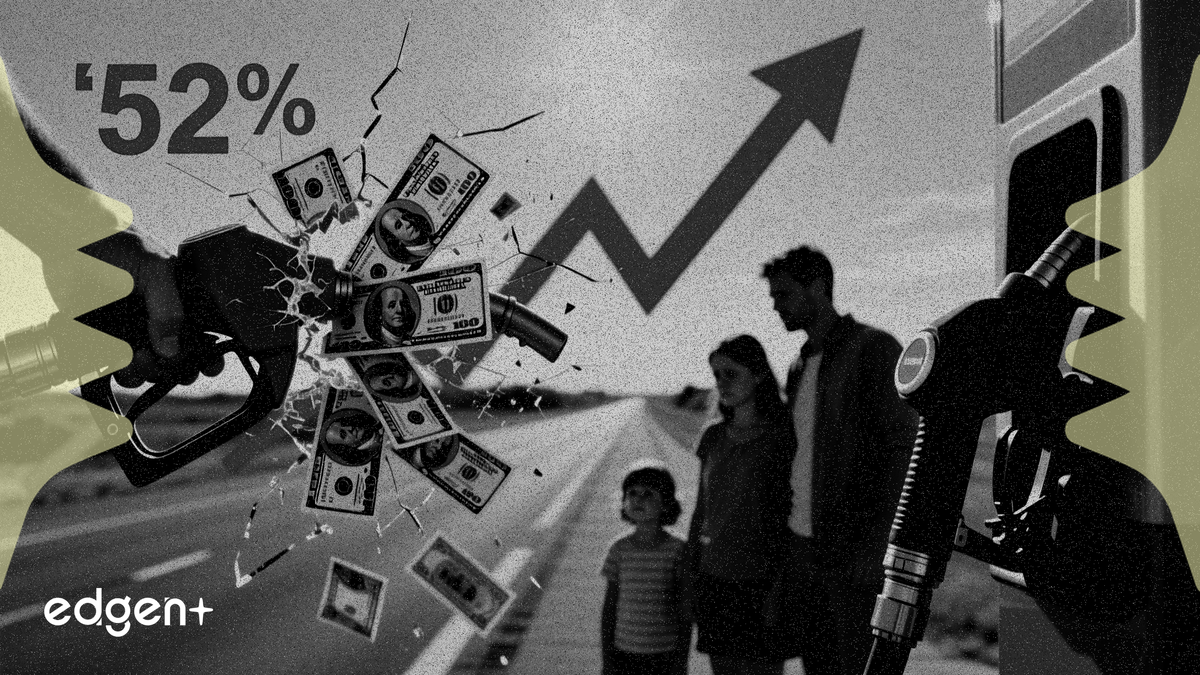
The true cost of the Iran war for Americans is not just the price of crude oil, but the alarming 72 percent spike in jet fuel and gasoline that is grounding summer travel plans.

American wallets are feeling the squeeze ahead of the summer travel season, as soaring fuel costs tied to the Iran war push the national average for gasoline to a four-year high of $4.56 per gallon. The surge is a direct result of global crude oil prices holding above $100 a barrel, creating a ripple effect that extends far beyond the gas pump.
"This matters because consumers don’t buy crude oil — they buy fuels," a J.P. Morgan strategy team led by Natasha Kaneva wrote in a research note. The bank's analysis highlights that the market adjustment is being "pushed down the barrel — out of crude and into refined products."
While global benchmark Brent crude has risen roughly 40 percent since the war began, the impact on consumers is magnified in the products they actually buy. The spot price of U.S. jet fuel has climbed nearly 72 percent, and national average gasoline prices have jumped 52 percent, according to data from OPIS and the Energy Information Administration. A recent poll confirms the impact, with 44 percent of Americans cutting back on driving and 34 percent changing vacation plans.
The core issue is that the global energy system cannot absorb a supply shock of this scale through the crude market alone, according to J.P. Morgan. With the largest supply disruption in history now unfolding, the financial pain is being passed directly to households and travelers as the cost of refining oil into gasoline and jet fuel skyrockets.
The primary driver of the price shock is the effective closure of the Strait of Hormuz, a critical artery for global energy. The strait typically carries about a quarter of the world's oil trade and 20 percent of its liquefied natural gas (LNG). The ongoing blockade has curtailed an estimated 14.5 million barrels per day of crude output from the Persian Gulf, forcing a drawdown of nearly 500 million barrels from global stockpiles, according to Goldman Sachs.
President Donald Trump has stated he expects gas prices to drop "very substantially" when the war ends, but it remains unclear when the shipping lane will reopen. The U.S. Central Command has begun providing military escorts for some vessels, but the situation remains tense after multiple drone and missile attacks on ships in the region.
While consumers and travel-dependent industries face mounting costs, major energy firms are reporting massive profits. Shell announced first-quarter profits of $6.92 billion, up from $5.58 billion a year earlier, citing strong results from its oil trading business and higher refining margins. The results follow similar reports from rival BP, which more than doubled its profits.
The surge in energy company earnings has led to criticism from groups like Friends of the Earth, who are calling for a stronger windfall tax on what they term "indefensible profits." While the UK has an Energy Profits Levy, it applies only to profits from UK extraction, which accounts for less than 5 percent of Shell's global production.
This article is for informational purposes only and does not constitute investment advice.