
Key Takeaways: The US-Iran conflict has re-escalated after a month-long lull, with oil markets re-pricing the Strait of Hormuz supply risk that has defined the war's economic impact.
Key Takeaways: The US-Iran conflict has re-escalated after a month-long lull, with oil markets re-pricing the Strait of Hormuz supply risk that has defined the war's economic impact.
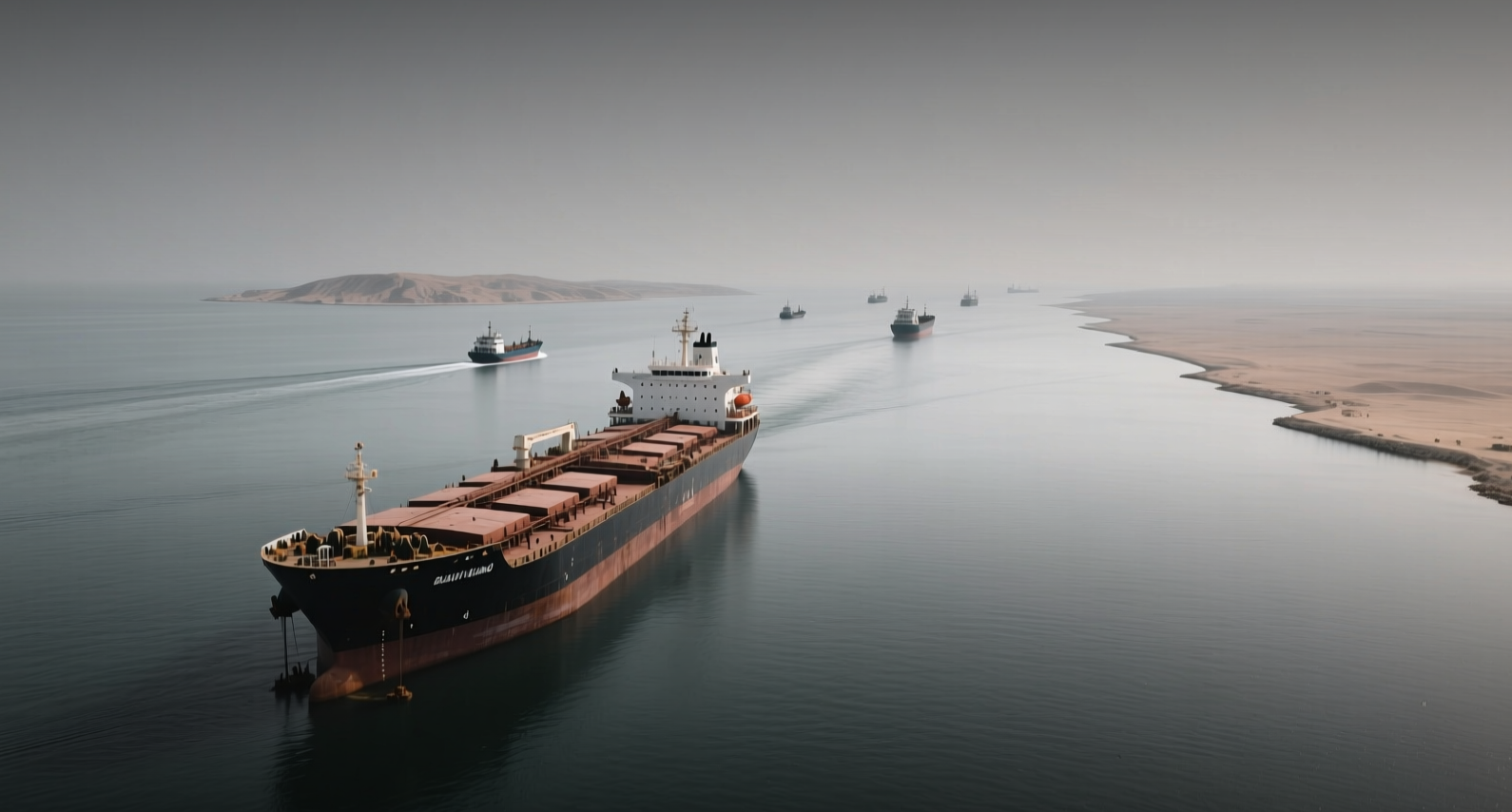
The US-Iran conflict has re-escalated after a month-long lull, with oil markets re-pricing the Strait of Hormuz supply risk that has defined the war's economic impact.
US forces struck Iranian rocket launchers on Larak Island in the Strait of Hormuz on Sunday, the first attack on Iranian territory in a month, pushing Brent crude above $90 a barrel and triggering Tehran's retaliatory missile fire at American bases in Jordan.
"Earlier today, US forces struck two Iranian launchers on Larak Island," a US Central Command spokesman said, adding that Revolutionary Guards "were observed preparing to launch rockets with sea mines into the Strait of Hormuz."
WTI crude jumped 4 percent to $89.19 a barrel, while Brent climbed 3.7 percent toward $93.90, according to trading data. Iran's Islamic Revolutionary Guard Corps responded by launching ballistic missiles at US-operated King Hussein and Al-Azraq airbases in Jordan, with Jordan's military intercepting eight incoming missiles. The UAE air force intercepted an Iranian drone over its territorial waters, the Defense Ministry said.
The exchange marks a major escalation in a conflict that began Feb. 28 and has already disrupted the Strait of Hormuz, through which one-fifth of the world's oil passed in peacetime. With the war entering its seventh month and midterm elections looming in November, the renewed strikes raise the stakes for Washington and global energy markets alike.
The last US strike on Iranian territory before Sunday came July 29, in response to what Washington framed as an attempted surprise attack on its forces in the region. That operation followed 13 consecutive nights of US strikes on Iranian targets earlier in July. The month-long pause had raised hopes of de-escalation, with Trump saying Aug. 1 he would hold off on new strikes at the urging of Gulf allies Qatar, Saudi Arabia and the UAE.
The renewed strikes come as Washington has leaned heavily on economic pressure rather than military force. A US naval counterblockade of Iranian ports is squeezing petrol supplies in Iran, and the Trump administration has declared the "toughest economic sanctions" against Tehran. But the military escalation has re-priced the supply risk that has been the war's primary market transmission channel.
Iran has effectively blocked the Strait of Hormuz since the war began, slowing ship traffic to a trickle. US Central Command said last week it had completed clearing sea mines from the strait's international shipping routes. "US forces are monitoring the area closely and remain prepared to protect the free flow of commerce through this essential waterway," Navy Captain Tim Hawkins, a spokesman for US Central Command, said. Iranian state television reported Monday that a supertanker caught fire and lost propulsion after hitting two mines in the southern stretch of the strait.
The conflict is deeply unpopular with the US public, with midterm elections looming in November. "Six months later, not a single objective has been achieved," Senator Jack Reed, the top Democrat on the Senate Armed Services Committee, said in a Friday statement. "Indeed, he has weakened our position in the Middle East and the world significantly."
The Washington Post reported that senior US military generals warned Defense Secretary Pete Hegseth that a drawn-out large-scale war with Iran is unsustainable, with ammunition stockpiles critically low. Gulf News reported that US forces fired between 96 and 128 Patriot interceptor missiles over Jordan in a single night, with roughly 900 such missiles remaining in the US inventory based on open-source intelligence.
Iran's Foreign Ministry described its counterstrikes against Jordan-based installations as a "legitimate act of self-defense." President Masoud Pezeshkian, who has favored a negotiated end to the conflict, stressed that Iran was not seeking war. "But we will respond decisively to aggressors," he said.
Months of mediation led by Pakistan, Qatar and Egypt have failed to broker a lasting ceasefire. A ceasefire was agreed in April and a memorandum of understanding toward a final peace deal was signed in June, but no agreement has been forthcoming.
For global markets, the question is whether this escalation cycle proves short-lived or marks a return to sustained conflict. Brent crude has risen about 25 percent since the war began, and further supply disruption through the Strait of Hormuz would push prices higher, feeding inflation expectations and pressuring central banks' rate-cut plans. Energy stocks would benefit, while airlines, consumer discretionary and import-dependent economies would face margin pressure.
This article is for informational purposes only and does not constitute investment advice.
