
The US strike on Iran's Larak Island on Aug 30 marks the sharpest escalation in the Strait of Hormuz standoff since the June ceasefire, cutting daily oil transits to a fraction of pre-war levels.
The US strike on Iran's Larak Island on Aug 30 marks the sharpest escalation in the Strait of Hormuz standoff since the June ceasefire, cutting daily oil transits to a fraction of pre-war levels.
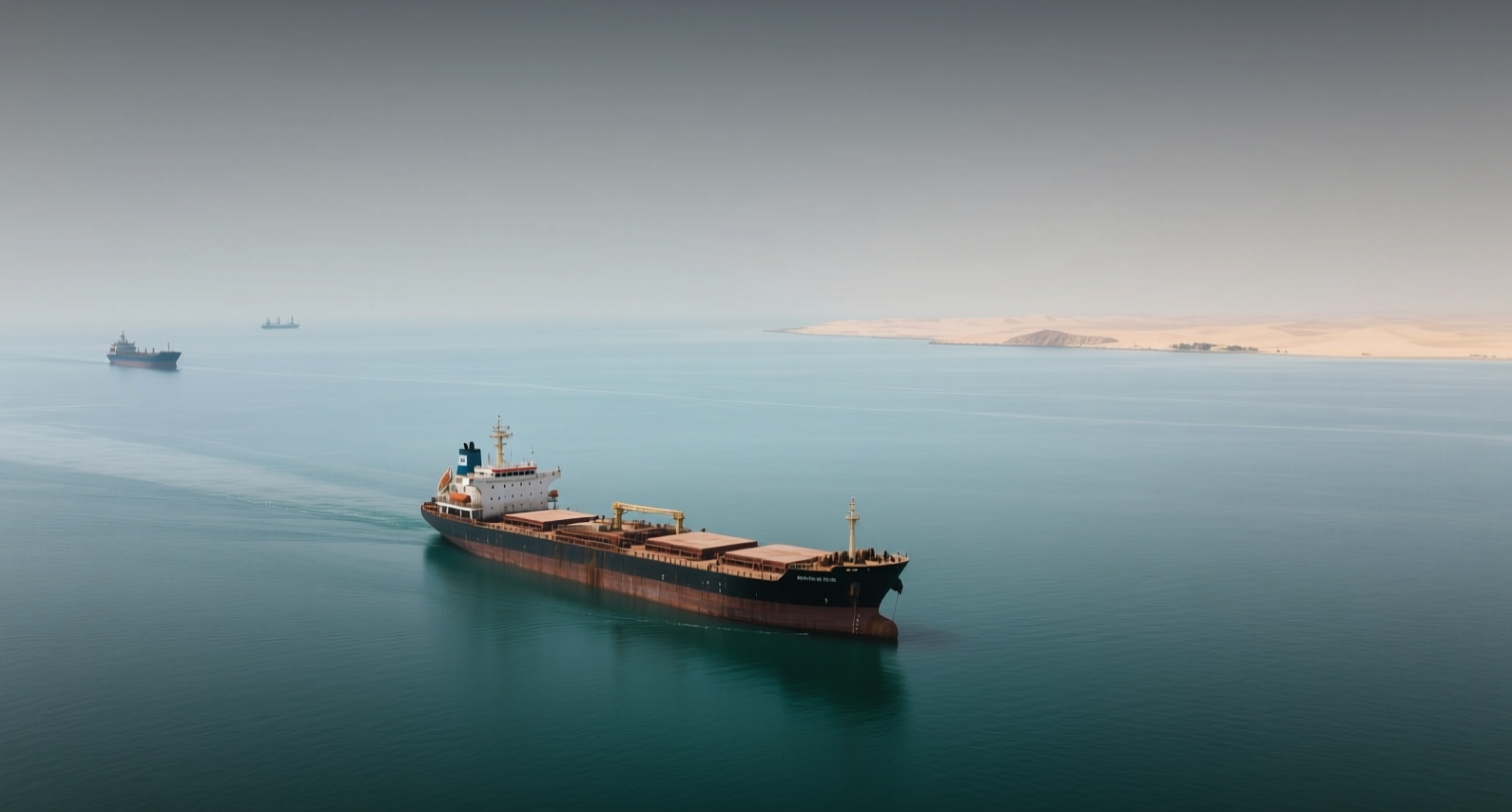
The US strike on Iran's Larak Island on Aug 30 marks the sharpest escalation in the Strait of Hormuz standoff since the June ceasefire, cutting daily oil transits to a fraction of pre-war levels.
The US struck two Iranian launcher systems on Larak Island on Aug 30 after Tehran's Guards tried to lay torpedoes in the Strait of Hormuz, cutting daily oil transits to five ships.
"Today, international shipping lanes are open, and momentum is building," Admiral Brad Cooper, commander of US Central Command, said in a video posted on X late Thursday, crediting US forces for clearing mines from the strait.
The strike deepens a standoff that has already reshaped global energy markets. Brent crude climbed from about $72 a barrel before the war to nearly $120 at its peak and remains about 20 percent above prewar levels, even as oil flows through the strait recover to two-thirds of pre-war volumes, according to Bloomberg data cited by Goldman Sachs. On Aug 24, Washington announced an "economic D-Day" campaign against Tehran, threatening countries that do business with the Islamic Republic.
The Strait of Hormuz handles about 21 percent of global oil trade, and the standoff has pushed the IMF to forecast Iran's economy contracting more than 5 percent this year with inflation near 70 percent. If the blockade persists, higher energy, freight and fertilizer costs will hit emerging markets hardest.
Iran has linked any reopening of the strait to an end to regional wars. Mohsen Rezaei, secretary of Iran's Supreme National Security Council, told Al Manar TV that any understanding with the US must include an end to conflicts in Gaza, Lebanon and Syria, demanding Israel withdraw from Lebanon and halt attacks on Syria. "The US must prove its seriousness in implementing these commitments before any new trust could be established," Rezaei said.
A return to the June framework appears unlikely. The Wall Street Journal reported Thursday that the Trump administration has no interest in returning to the memorandum of understanding reached with Iran in June, instead waiting to see whether its economic pressure strategy works.
Iran's Revolutionary Guards Corps Navy rejected US claims that the strait was open, calling them an attempt to control oil prices and conceal US failures. Restrictions would continue until US military actions against Iran end, it said Saturday. Deputy Foreign Minister Kazem Gharibabadi reiterated that Hormuz remains closed and that Tehran is in no hurry to reopen it.
A Standoff With No Exit
The six-month conflict has unfolded in four acts: intensive airstrikes beginning Feb 28, an April 7 ceasefire and negotiations culminating in the June 17 memorandum signed by Trump and Iran's President Masoud Pezeshkian, then a renewed Iranian campaign against commercial shipping that triggered another military exchange. Since mid-July, the US has reimposed a military blockade on Iranian ports and sanctions on its oil trade while clearing shipping lanes.
The result has been an effective quarantine on Iranian oil shipments — the first since the 1979 Revolution — with global shipments recovering and energy prices stable. Kpler data showed only five ships crossed Hormuz on Tuesday, a fraction of the roughly 130 that transited the waterway before the war. CENTCOM said its forces have helped facilitate the transit of about 1,500 commercial vessels and 750 million barrels of crude oil over the past several months.
Economic Pressure Builds on Tehran
Iran entered the war weakened by years of sanctions, and its position has deteriorated. The IMF expects the economy to contract more than 5 percent this year with inflation approaching 70 percent. The rial has fallen sharply, prices for basic goods have soared, and an Iranian Labor Ministry official estimated more than one million jobs disappeared in the first three months of the war.
The last time Iran faced comparable external pressure was during the 2012-2015 sanctions regime, when oil exports fell by more than half and the economy contracted for two consecutive years before the nuclear deal. Whether Tehran bends this time depends on whether the Guards, which have consolidated power since the war's first act, can withstand a quarantine on their economic lifeline.
For markets, the risk is asymmetric. If Iran escalates by targeting Gulf energy infrastructure or Houthi proxies shut Red Sea commerce, Brent could retest its wartime peak near $120. If the blockade holds and Tehran abandons its claims on the strait, oil's risk premium could unwind quickly. Trump appears more committed than Iranian leaders presumed, but with midterm elections approaching, the political calculus could shift.
This article is for informational purposes only and does not constitute investment advice.
