
US warplanes bombed islands off southern Iran on Friday, drawing an IRGC threat of retaliation in both economic and military domains as Washington's six-month campaign to collapse Tehran's economy escalates.
US warplanes bombed islands off southern Iran on Friday, drawing an IRGC threat of retaliation in both economic and military domains as Washington's six-month campaign to collapse Tehran's economy escalates.
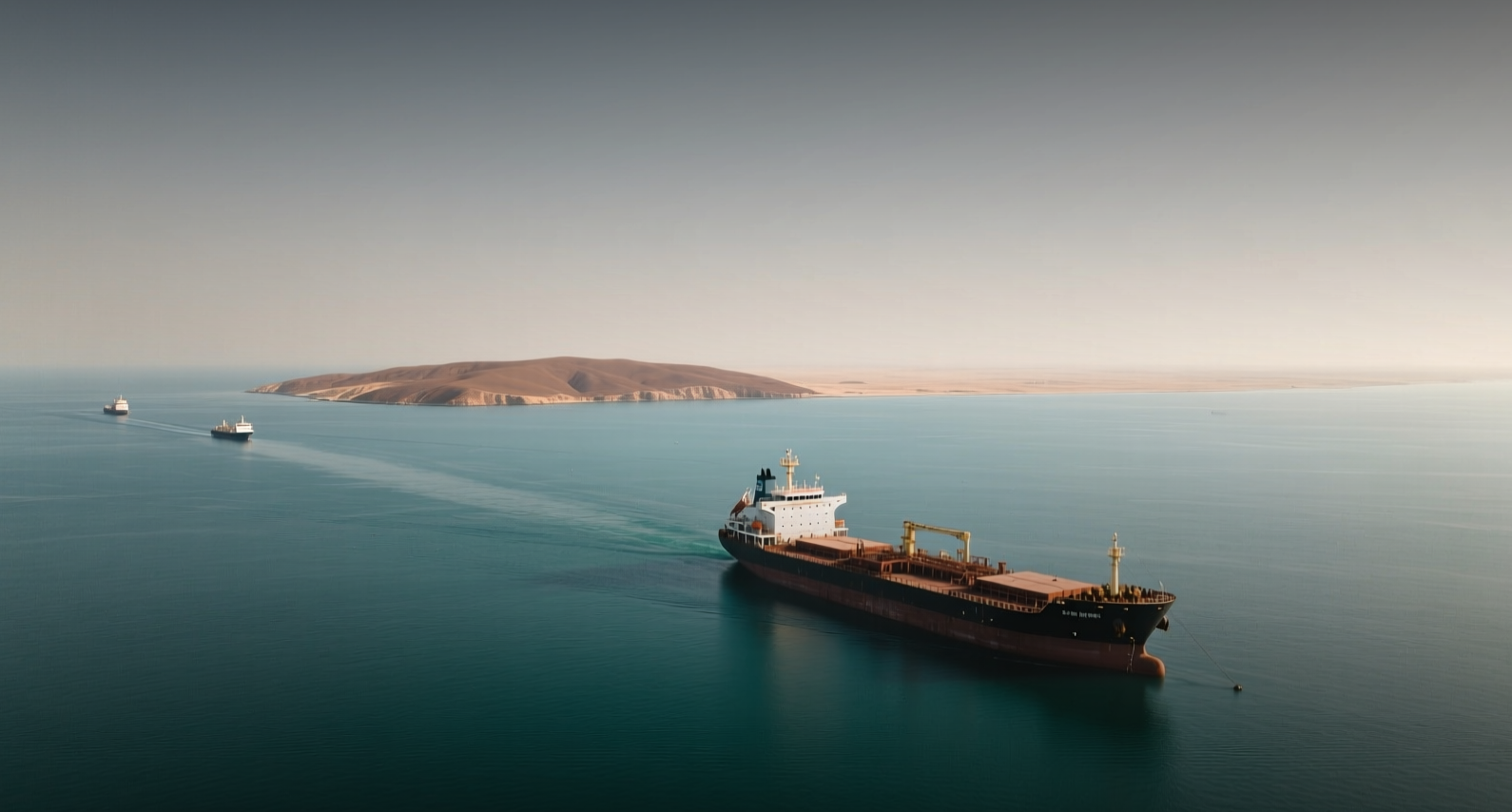
US forces bombed islands in southern Iran on Friday, prompting the Islamic Revolutionary Guard Corps to call the strikes a "strategically fatal mistake" by the Trump administration as Washington's economic blockade of Tehran enters its sixth month.
"This error will turn the situation against the planners and will cost them dearly," the IRGC spokesman said, warning that the enemy "will bear the consequences in both the economic and military domains."
The strikes come as CENTCOM reports nearly 1,500 vessels carrying roughly 750 million barrels of oil have transited US-cleared lanes through the Strait of Hormuz since mid-July, while Iran has exported no crude from its own shores. Iranian President Masoud Pezeshkian acknowledged Friday that imports and exports have fallen 25 to 35 percent under the blockade, with gasoline among goods unable to enter the country.
The escalation threatens to reintroduce the oil risk premium that faded as US forces reopened Hormuz shipping lanes, with the strait handling roughly 21 percent of global oil trade. Trump has kept military options open, saying Thursday "it doesn't mean we're finished with the military," even as Treasury Secretary Scott Bessent declared the administration's goal is to "collapse this regime."
The bombing marks the first direct US military action against Iranian territory since Operation Epic Fury opened on February 28 with a massive US-Israeli air campaign that killed Supreme Leader Ali Khamenei, decimated Iran's senior military leadership, and reportedly left his son and successor Mojtaba severely wounded. Mojtaba Khamenei has remained entirely out of public view since taking power, with no photograph or audio recording released.
The military escalation runs parallel to Operation Economic Outcast, the Treasury-led pressure campaign Bessent launched Monday with a pledge to "sever every economic lifeline" sustaining the regime. On Friday, Treasury proposed cutting Banque Misr UAE off from correspondent access to US banks after identifying its Emirati operations as a "critical node" keeping Iranian networks connected to dollars. The bank processed roughly $1.8 billion for 103 companies potentially tied to Iranian shadow-banking networks over two and a half years, according to Treasury.
Inside Iran, the economic toll is becoming visible. Inflation has reached 84 percent, the rial has fallen to roughly two million to the dollar, and fuel queues have emerged as gasoline supplies tighten. Pezeshkian said the government is considering doubling the price of gasoline purchased beyond subsidized quotas. Iranians have begun listing burial plots for sale to cover living expenses, Iran International reported Friday.
Parliament Speaker Mohammad Bagher Ghalibaf warned this month that economic deterioration threatens the regime's survival. "No matter how much military power we have, if people are hungry and we do not have financial circulation and economic growth, we will not endure," he said. Bessent highlighted the admission as evidence the pressure campaign is working.
Iran's security establishment has been preparing for renewed unrest. Supreme Leader Mojtaba Khamenei placed intelligence hardliner Hossein Taeb at the head of the Basij militia, ordering him to strengthen grassroots intelligence networks through neighborhoods and mosques. Khamenei also issued an explicit directive Friday: "I firmly declare that committing any act that harms social cohesion is prohibited."
Iran continues to dispute US control of the strait. The IRGC Navy insisted Friday its control of the waterway remains "completely decisive" and called US assertions that the strait is open "an obvious lie." Pezeshkian, however, acknowledged hours later that the blockade is preventing goods from entering Iran.
Tehran has called for Washington to return to the June memorandum of understanding that provided a framework for reopening Hormuz before the agreement collapsed. During its implementation, Iran exported nearly 90 million barrels of oil and prepared plans for as much as $300 billion in foreign investment, Pezeshkian said. The Trump administration has rejected a return to the previous arrangement, which US officials say Tehran failed to honor.
"I don't want to meet; they do," Trump said Thursday. "In fact, they are begging to make a deal." Mediators from Qatar, Oman and Pakistan remain active between the sides, but no direct US-Iran negotiations are underway.
The last time the US struck Iranian territory directly was the February 28 opening of Operation Epic Fury, which sent Brent crude surging above $100 a barrel within days before prices retreated as US forces cleared Hormuz lanes. Friday's strikes raise the question of whether that pattern repeats — or whether the economic warfare dimension makes this escalation different.
This article is for informational purposes only and does not constitute investment advice.
