
The request to deploy America's 'Dark Eagle' hypersonic missile to the Middle East shows how quickly geopolitical risk can reprice global energy markets.
The request to deploy America's 'Dark Eagle' hypersonic missile to the Middle East shows how quickly geopolitical risk can reprice global energy markets.
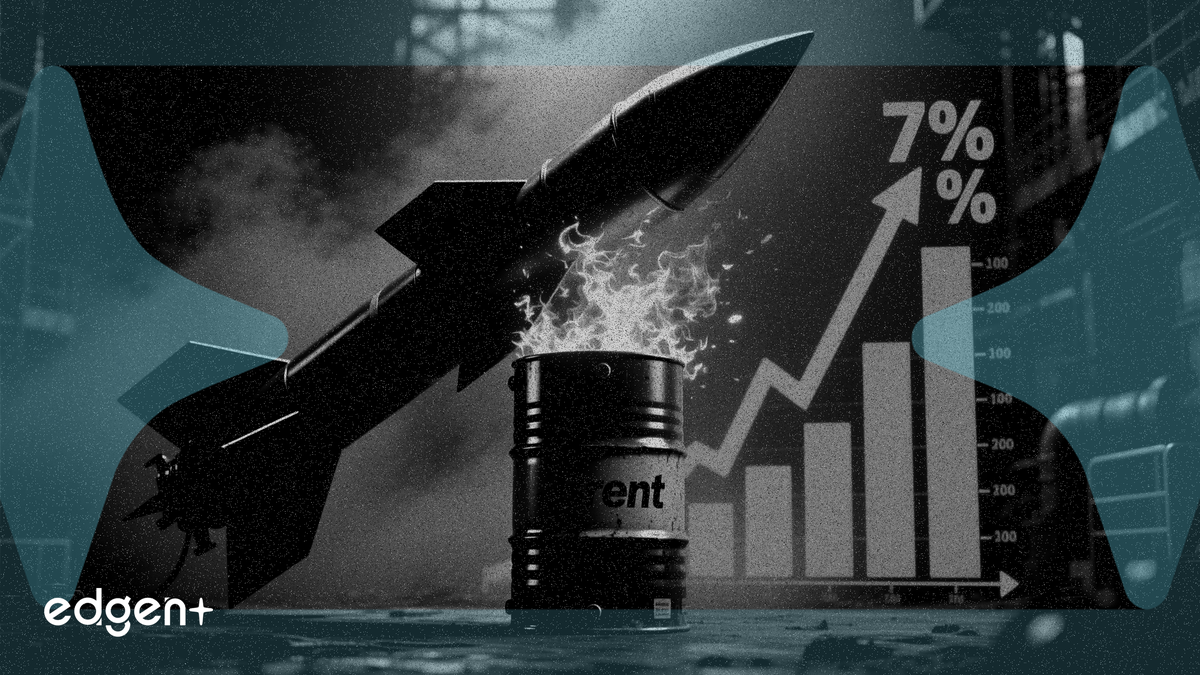
A request from U.S. Central Command to deploy "Dark Eagle" hypersonic missiles for potential use against Iran is sending a clear signal that geopolitical risk is being priced back into oil, sending Brent crude to a four-year high. The move escalates military pressure on Tehran and threatens to inflame a region critical to global energy supply.
"The market is reacting to the specific threat of hypersonic weapons, for which there is little defense, being introduced into the world's most important energy chokepoint," said Michael Reid, a geopolitical risk analyst at a London-based consultancy. "This isn't just posturing; it's a material change in military capability that could disrupt supply with very little warning."
The immediate market reaction was sharp. Brent crude futures for June delivery surged 6.92 percent to $126.2 per barrel, the highest level in four years. The move adds to inflationary pressures globally and comes as the U.S. continues a naval blockade of the Strait of Hormuz, a vital artery for oil shipments that President Trump has called an "economic nuclear weapon."
What is at stake is the stability of the global economy, which remains sensitive to energy shocks. The deployment of advanced weaponry raises the risk of a direct conflict that could close the strait entirely, a scenario that would push oil prices far higher and likely trigger a worldwide recession. For Iran, the pressure campaign threatens to cripple its economy, which has already lost an estimated $2 billion from a 55-day internet blackout, according to monitoring group NetBlocks.
The request to deploy the Army's Dark Eagle missile, a weapon that travels at more than five times the speed of sound, is designed to give U.S. forces the ability to strike high-value targets deep inside Iran. According to reports, CENTCOM specifically wants the weapon to neutralize Iranian ballistic missile launchers that have been moved beyond the range of existing U.S. munitions. The move highlights a gap in U.S. defenses, as both Russia and China have already fielded similar systems. The U.S. operation in the region, dubbed "Operation Epic Fury," has cost an estimated $25 billion to date, according to the Pentagon's acting comptroller.
The military pressure is running parallel to a punishing economic campaign. U.S. officials state the blockade on the Strait of Hormuz has Iran "choking like a stuffed pig." The Treasury Department said its sanctions have disrupted tens of billions of dollars in revenue for Tehran by targeting its shadow banking networks and oil trade with Chinese refineries. Iranian Parliamentary Speaker Mohammad Ghalibaf blamed the U.S. blockade for pushing oil prices above $120, calling advice from U.S. policymakers "junk." The combination of military threats and economic strangulation aims to force Iran back to the negotiating table over its nuclear program, which President Trump has vowed Iran will "never" be allowed to complete.
This article is for informational purposes only and does not constitute investment advice.

