
US President Donald Trump's dissatisfaction with Iran negotiations and fresh military strikes near the Strait of Hormuz sent oil prices surging 2% and dragged Asian equities from record highs.
US President Donald Trump's dissatisfaction with Iran negotiations and fresh military strikes near the Strait of Hormuz sent oil prices surging 2% and dragged Asian equities from record highs.
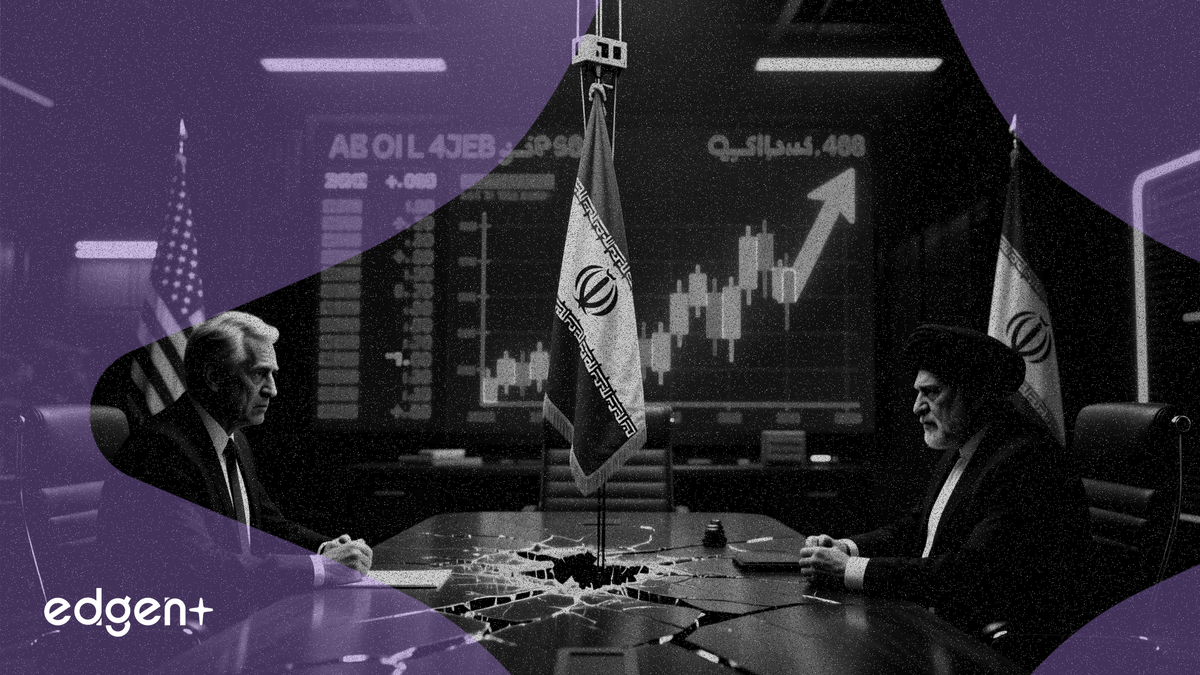
US President Donald Trump's dissatisfaction with Iran negotiations and fresh military strikes near the Strait of Hormuz sent oil prices surging 2% and dragged Asian equities from record highs.
Trump's rejection of Iran peace progress and fresh US strikes near the Strait of Hormuz pushed Brent crude 2.4% higher Thursday, snapping a three-day decline fueled by ceasefire optimism.
"The market had priced in a near-term deal, but Trump's comments and the drone intercepts show how fragile the truce really is," said Patrick Munnelly, market strategy partner at TickMill.
Brent crude rose to session highs near $96 a barrel, while West Texas Intermediate climbed a similar margin. The 10-year Treasury yield edged up 2 basis points to 4.50%, and gold slipped below $4,400 an ounce. The MSCI Asia Pacific index fell 0.4%, with South Korea's KOSPI dropping 1.63% to below 8,100. Japan's Nikkei 225 was flat at 64,999 after giving up earlier gains, while the Topix declined 0.52%.
The breakdown in talks threatens to keep the Strait of Hormuz — which handles about 21% of global oil trade — closed for longer, sustaining the inflation shock that has already pushed US PCE to 3.5% and forced central banks to reconsider rate cuts. If oil breaches $100, the macro drag could intensify, with Goldman Sachs estimating every $10 sustained increase in crude reduces US GDP growth by about 0.2 percentage points.
South Korea's benchmark index has nearly doubled year-to-date, driven almost entirely by Samsung Electronics and SK Hynix, which together account for more than 50% of KOSPI's weight. SK Hynix has surged about 250% in 2026, crossing a $1 trillion market cap on AI-driven demand for high-bandwidth memory chips. Samsung also breached the $1 trillion threshold this month.
Yet the rally is increasingly narrow. Only 42% of KOSPI components trade above their 200-day moving average, and just four of 19 industry sectors posted positive returns over the past month, while 10 sectors fell more than 5%, according to data cited by BTIG.
"The KOSPI faces a rapid downside reversal risk," said Jonathan Krinsky, analyst at BTIG. "Most stocks are not just lagging the index — they are moving in the opposite direction."
The geopolitical uncertainty complicates the policy outlook for central banks. Federal Reserve Governor Lisa Cook said Wednesday that inflation is moving in the "wrong direction" and that she is prepared to support rate hikes if the trend persists. Fed Vice Chairman Philip Jefferson projected inflation would ease later this year as tariff and energy cost impacts fade, but acknowledged upside risks remain.
US PCE inflation stood at 3.5% in March, and economists expect April data due Thursday to show a further acceleration to 3.8% — well above the Fed's 2% target. Markets are now pricing a reduced probability of rate cuts this year.
The last time the Fed signaled a potential tightening bias during a geopolitical oil shock was in mid-2022, when Brent averaged above $100 and the S&P 500 fell into a bear market. Despite the headwinds, Goldman Sachs strategist Ben Snider raised the S&P 500 year-end target to 8,000 from 7,600, citing an "exceptionally strong" first-quarter earnings season.
This article is for informational purposes only and does not constitute investment advice.
